


Where on earth
Satellite imagery flying in from a world view to Seychelles Giant Trevally, Worldwide. Use the + / − buttons, or click the map to zoom with your scroll wheel; drag to pan and pinch to zoom on touch.
- Region
- Seychelles
- Country
- Worldwide
- Biome
- Coral atoll (0 m)
- Best season
- October – May
- Difficulty
- moderate
- Backpacking
- Hiking
Key takeaways
- Biome: Coral atoll (0 m)
- Best season: October – May
- Difficulty: moderate
- Top activity: backpacking
Photos of Seychelles Giant Trevally
Topic summary
Alphonse Atoll and St. François are the world's top GT flats fisheries.
Key takeaways
- Difficulty: moderate
- Best season: October – May
Intended uses
backpacking
Climate suitability
Coral atoll (0 m)
Tools for a trip here
Picked for how, when and where you're going. Free, no signup.
- Sleep System Temp CalculatorCold nights: check your bag and pad add up to a safe sleep.
- Base Weight CalculatorEvery ounce is carried — total your kit and find your base weight.
- Pack Volume SizerSize the pack for your trip length and season.
- Water Purification MatrixTreat water from streams and lakes on trail.
- Layering CalculatorCold-season miles: layer for climbs and camp.
Plan with verified data
Seychelles Giant Trevally trip tools
How to get there
Praslin lies 45 km northwest of Mahé. Transport services, arrival points and transfer times are not established here; confirm travel arrangements before building a fishing itinerary around the island.
- Praslin
The Seychelles’ second-largest island is a geographic planning anchor with beaches, clear coastal waters and a forested interior. A specific fishing launch or shore-access location still needs local confirmation.
- Eve Island
An island just off Praslin, reached by a bridge. Bridge access does not establish permission to fish or a suitable giant trevally location.
Sources: Wikipedia · Wikivoyage. Confirm road and trailhead conditions with the managing agency before you leave.
Popular pursuits at Seychelles Giant Trevally
- Backpacking
Multi-day travel with everything on your back — see the packing blocks below.
- Hiking
Day miles on marked trail, with route notes and trail links below.
Maps, GPS & compass for this trip
Carry a waterproof paper map and a compass you can steer by, and treat the GPS as the backup — not the other way round. Buying links go to Amazon; Wild10 earns a commission at no cost to you.
Waterproof topo maps
- Waterproof topographic map — Seychelles Giant TrevallyAmazon search for waterproof, tear-resistant topo maps covering this area.
- National Geographic Trails IllustratedThe waterproof Trails Illustrated series — check for a sheet covering this area.
- Waterproof map case & compass lanyardKeep a paper map readable in rain, spray and a swamped boat.
Fishing at Seychelles Giant Trevally
Planning to fish Seychelles Giant Trevally? Fishing licences, open seasons and catch limits in Seychelles are set by the local wildlife authority and change every year — check the official source before you cast a line.
Do I need a fishing licence at Seychelles Giant Trevally?
- A Seychelles fishing licence is normally required for anyone over the local youth age.
- Read the current Seychelles fishing regulations for special waters, barbless-hook or catch-and-release rules.
- Clean, drain and dry boats and gear between waters to stop invasive species.
We don't have a verified licensing link on file for Seychelles yet — contact the park or land manager listed on this page for current hunting and fishing rules.
Hunting near Seychelles Giant Trevally
Thinking about hunting Seychelles Giant Trevally? Hunting seasons, tags and draws in Seychelles are set by the wildlife authority each year. Confirm the rules for your species and unit before you go.
Is hunting allowed at Seychelles Giant Trevally?
- Confirm the land around Seychelles Giant Trevally is open to hunting and which management unit it falls in.
What do I need to hunt in Seychelles?
- A Seychelles hunting licence — most jurisdictions also require hunter education certification.
- Species tags or draw results for big game such as deer, elk, moose or bear where they occur.
- Knowledge of firearm and bow transport rules, which differ by land type and border crossing.
We don't have a verified licensing link on file for Seychelles yet — contact the park or land manager listed on this page for current hunting and fishing rules.
Seychelles giant trevally: the planning picture
A Seychelles giant trevally trip needs a clearer fishing plan than an island name alone provides. Praslin, the Seychelles’ second-largest island, offers a specific geographic starting point: it lies 45 km northwest of Mahé and has clear coastal waters, beaches and a forested interior. That setting should not be mistaken for confirmation of a giant trevally fishery at a particular beach or offshore island. Giant trevally occupy tropical Indo-Pacific waters and use several marine habitats, but no specific Seychelles fishing grounds, launch sites or guided fishing routes are established here. Use Praslin as an island-planning anchor, then confirm fishing access, local rules and suitable outings before committing to a fishing-focused itinerary. Keep coastal sightseeing separate from any assumptions about where fishing is allowed or productive.
Understanding the fish and its habitat
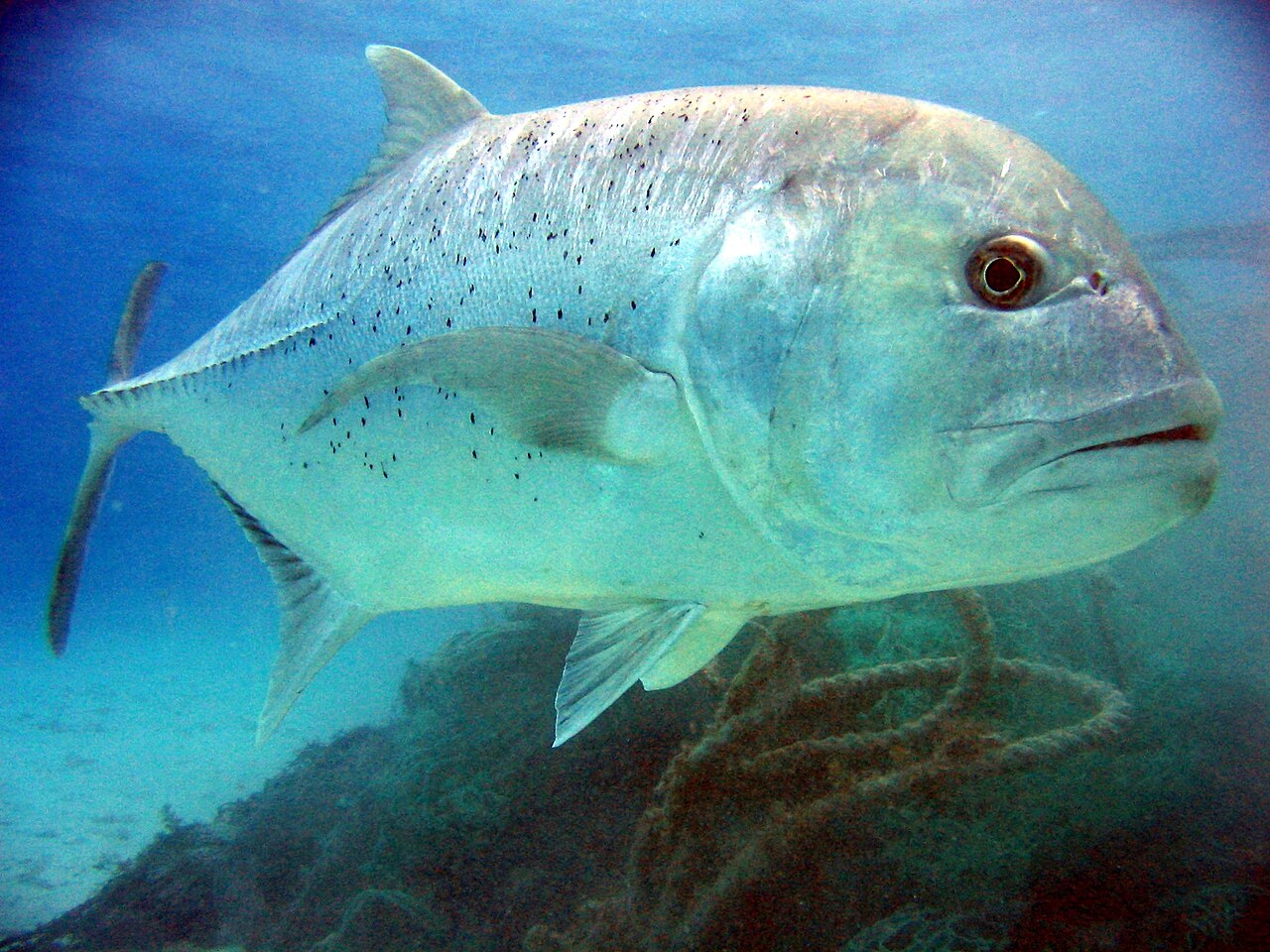
Giant trevally are large members of the jack family, recognisable by a steep head profile and strong tail scutes. Most are silvery, sometimes with dark spots; mature males may be black. The species reaches a maximum known length of 170 cm and weight of 80 kg, figures that describe its overall potential rather than an expected Seychelles catch. Juveniles use estuaries, shallow bays and lagoons, while adults also inhabit deeper reefs, offshore atolls and large embayments. These predators hunt alone or in schools and feed predominantly on fish, with other marine prey contributing to their diet. Anglers take them on bait and lures. Habitat descriptions can help frame questions for a local fishing operator, but they do not establish a reliable fishing location, local season or catch expectation.
Land alternatives and practical limits
Praslin offers a land-based alternative when an itinerary is not entirely devoted to fishing. Praslin National Park covers 324 hectares of the island’s upper lands in the south and includes the World Heritage site Vallée de Mai, known for coco de mer. Offshore landmarks include Aride Island, the Cousin Islands, Curieuse Island and Eve Island; Eve Island is reached by a bridge. Their proximity does not establish public fishing access or permission to land. Confirm access arrangements for any island outing rather than treating nearby land as an automatic stop. For fishing, obtain local advice on handling and consumption: ciguatera poisoning is associated with eating giant trevally. The species’ warmer-month spawning pattern varies by region and is not enough to select a Seychelles fishing season.
Route options
- Praslin coastal orientation
A coastal sightseeing option rather than a verified fishing route. Use the island’s beaches and coastal setting to orient the trip, while confirming any fishing access separately; no defined coastal itinerary or launch point is established.
- Praslin National Park and Vallée de Mai
A land-based alternative centred on Praslin’s southern upper lands and the Vallée de Mai, known for coco de mer. This identifies a destination for a non-fishing outing, not a specified trail or walking circuit.
Sample itineraries
- Praslin orientation and fishing reconnaissance · 2 days
Use Praslin for an island orientation day, then investigate local giant trevally fishing options. Confirm fishing locations, access and rules before committing to an outing; no specific Praslin fishing grounds are established here.
- Praslin land-and-water plan · 3 days
Set aside one day for Praslin’s beaches, one for Vallée de Mai and one for a locally confirmed fishing outing. Keep the fishing day flexible rather than assuming nearby waters offer reliable giant trevally encounters.
Seasonal conditions
Spring
Confirm locally before choosing dates
A Seychelles-specific spring fishing pattern is not established. Giant trevally occupy tropical waters, but that alone does not establish local catch prospects or suitable boating conditions.
Summer
Confirm local spawning and fishing conditions
Giant trevally reproduce in warmer months, with regional differences in peak timing. Do not assume summer is the Seychelles spawning peak or the best fishing period.
Fall
Confirm locally before booking
A Seychelles-specific fall fishing pattern is not established. Check current conditions and local fishing opportunities rather than treating the species’ broad tropical distribution as a seasonal forecast.
Winter
Confirm locally before arranging water travel
Winter catch prospects and sea conditions are not established. Keep any reef or offshore outing conditional on local weather and boating advice.
| Season | Window | Conditions |
|---|---|---|
| Spring | Confirm locally before choosing dates | A Seychelles-specific spring fishing pattern is not established. Giant trevally occupy tropical waters, but that alone does not establish local catch prospects or suitable boating conditions. |
| Summer | Confirm local spawning and fishing conditions | Giant trevally reproduce in warmer months, with regional differences in peak timing. Do not assume summer is the Seychelles spawning peak or the best fishing period. |
| Fall | Confirm locally before booking | A Seychelles-specific fall fishing pattern is not established. Check current conditions and local fishing opportunities rather than treating the species’ broad tropical distribution as a seasonal forecast. |
| Winter | Confirm locally before arranging water travel | Winter catch prospects and sea conditions are not established. Keep any reef or offshore outing conditional on local weather and boating advice. |
Permits, fees & closures
Confirm fishing permissions and any protected-area access requirements with the managing agency before arranging an outing.
Confirm current permits, fees, and closures with the managing agency before you go.
Hazards & regulations
- Eating giant trevally carries a ciguatera poisoning risk; do not assume a catch is safe to eat.
- Giant trevally can reach 170 cm and 80 kg. Use appropriately rated equipment and avoid attempting to control a large fish beyond your ability.
- The species has strong tail scutes. Take care when handling a fish and seek experienced assistance.
- Adult habitat includes deeper reefs and offshore atolls. Treat any offshore trip as dependent on suitable weather, boat safety equipment and local advice.
What to pack for Seychelles Giant Trevally
- Tackle rated for large, powerful fish
- Bait or lures matched to locally advised methods
- Suitable fish-handling equipment
- Sun-protective clothing and hat
- Sunscreen
- Drinking water
- Comfortable footwear for island exploration
- Properly fitted personal flotation device
- Waterproof storage for essentials
- Reliable means of communication
Wildlife you may see
- Giant trevally (Caranx ignobilis): a large jack with a steep head profile and strong tail scutes.
- Usually silvery, sometimes with dark spots; mature males may be black.
- Juveniles use estuaries, shallow bays and lagoons; adults also occupy deeper reefs, offshore atolls and large embayments.
- An apex predator that hunts alone or in schools, feeding mainly on fish, with other marine prey also taken.
Seychelles Giant Trevally FAQ
- Where is Praslin?
- Praslin is the Seychelles’ second-largest island, 45 km northwest of Mahé. It has beaches, clear waters and forest, making it an option for combining island exploration with a separately confirmed fishing outing.
- Which Seychelles fishing spots should be booked?
- No specific giant trevally fishing grounds or fishing access points are established here. Confirm suitable locations and legal access locally rather than assuming every beach, reef or nearby island permits fishing.
- How are giant trevally caught recreationally?
- Anglers take giant trevally with bait and lures. The appropriate local technique, tackle and fishing location need confirmation before an outing.
- What is the best time to fish for giant trevally?
- A Seychelles-specific best season is not established. Spawning occurs in warmer months and at particular lunar stages, but timing varies by region and does not by itself establish the best fishing dates.
- What can be done away from fishing?
- Explore Praslin’s beaches and forest. Praslin National Park covers southern uplands and includes Vallée de Mai, a World Heritage site known for coco de mer. Confirm access arrangements before visiting.
- Is giant trevally safe to eat?
- Ciguatera poisoning is a recognized risk from eating giant trevally. Its reputation as a food fish varies, and a successful catch should not be treated as a safe meal.