The 10 Best Backpacking Stoves for Every Adventure in 2024
Compare 10 backpacking stoves by fuel type, weight and intended use. These picks are research-based, with manufacturer specifications identified where available.
A backpacking stove should suit the trip you are planning: your group size, meals, fuel supply and expected conditions. This guide compares canister stoves, liquid-fuel stoves and integrated cooking systems using the research and product information recorded in each profile.
All ten picks currently carry a research-only evidence label. This is an editorial comparison, not a report of hands-on Wild10 testing. Manufacturer boil times and other published specifications are identified where available; they are not measurements from a controlled Wild10 test. Results in the field depend on conditions, fuel, cookware and use.
Use the comparison table to narrow the options, then check the manufacturer's current instructions and specifications for the exact model before buying. Consider packed weight, pot compatibility, fuel availability, wind exposure and whether you need simmer control or mainly boil water. The existing 2024 edition label identifies this list; this correction does not represent a new round of product testing.
Compare 10 backpacking stoves by fuel type, weight and intended use. These picks are research-based, with manufacturer specifications identified where available.
Key takeaways
#1 WindMaster — Soto
#2 WhisperLite Universal — MSR
#3 Flash — Jetboil
#4 PocketRocket 2 — MSR
#5 Reactor — MSR
#6 BSR-3000S — BRS
Intended uses
Gear
Verification notes
Editorial ranked list, 10 entries. Evidence mix — 10 research only. Buy links open the maker or a retailer search.
The gear reviews
Compare 10 backpacking stoves by fuel type, weight and intended use. These picks are research-based, with manufacturer specifications identified where available.
Rank this list
Loading community ratings… Ratings re-order the picks — they never change which products make the list.
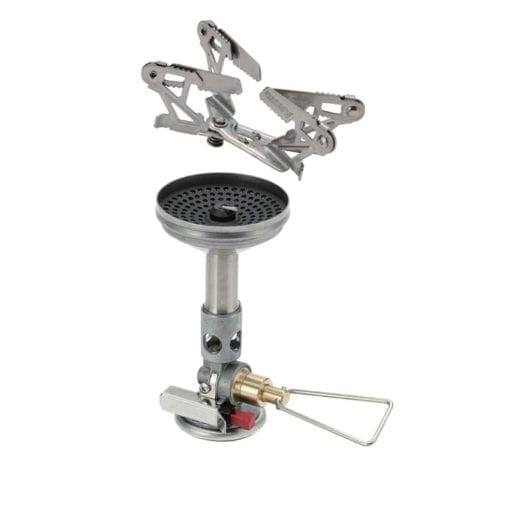
For backpackers who prioritize unwavering performance over chasing grams, the Soto WindMaster stands out. This isn't a stove that will win awards for being the absolute lightest, but it consistently delivers where it counts: in the unpredictable and often challenging conditions of the backcountry. Its engineering subtly yet effectively tackles the primary nemesis of outdoor cooking – wind. By integrating the burner head deeply within the pot support structure, it creates a remarkably sheltered environment for the flame. This design choice translates directly into faster boil times and significant fuel savings, especially when lesser stoves are sputtering or failing to ignite altogether. It’s a tool built for reliability, designed to get your meal cooked and your coffee hot with minimal fuss, regardless of whether you're facing a gentle breeze or a blustery ridge. It's truly a workhorse, a dependable companion for solo excursions or trips with a partner, handling everything from rehydrating a meal to preparing a more involved backcountry dinner. The included versatile pot supports underscore its adaptability, ensuring stability for various pot sizes, reflecting its practical design.
The real genius behind this stove's consistent output, even as fuel levels drop or temperatures plunge, lies in its micro-regulator. This crucial component sets it apart from many of its peers, ensuring that the flame remains steady and strong, eliminating the frustration of dwindling heat. This consistent fuel delivery not only enhances efficiency but also grants precise flame control, making simmering a realistic option—a feature often elusive in the lightweight stove category. Constructed from durable stainless steel and aluminum, it exudes a robust quality that promises longevity, an important consideration for gear that will face repeated use and abuse. While not the choice for the ultralight extremist, the slight weight penalty is a minor trade-off for the peace of mind and performance it consistently delivers. It’s an investment for serious adventurers who demand a stove that works, every time.
Where it fits
Backpacking in exposed conditions
Multi-day solo or duo trips
Cooking diverse backcountry meals
Year-round adventures (non-extreme cold)
Reliable emergency preparedness
Pros
Exceptional wind resistance keeps flame strong and steady
Micro-regulator ensures consistent output in varying conditions
Excellent flame control for true simmering capability
Includes two pot supports for versatile stability
Robust construction built for durability and longevity
Cons
Not the absolute lightest option for extreme ultralight purists
Canister-only operation limits fuel sourcing in some areas
Integrated igniter can eventually fail; requires backup fire source
The WindMaster lives up to its name with exceptional wind resistance, a critical factor often underestimated until conditions turn. Its recessed burner head and the close proximity of the pot support to the flame create a highly effective wind shield. This isn't just about keeping the flame lit; it's about maintaining consistent heat transfer, which directly translates to faster boil times and less fuel consumption when the gusts pick up. While no stove is completely impervious to gale-force winds without an external screen, the WindMaster comes closer than most integrated-burner designs, outperforming many competitors in real-world breezy conditions that would otherwise force a user to seek shelter or waste significant fuel.
Fuel Efficiency & Control
The integrated micro-regulator is a standout feature, providing consistent fuel output regardless of the canister's pressure or the ambient temperature. This means your stove will burn just as strongly with a nearly empty canister as with a full one, and it performs reliably in colder conditions where unregulated stoves falter. This precise regulation also allows for excellent flame control, moving beyond the typical 'on-or-off' experience of many canister stoves. Being able to truly simmer a meal, rather than just boil, opens up a wider range of backcountry cooking possibilities and prevents scorching, making for a more versatile and enjoyable cooking experience.
Weight & Packability
At 67 grams (stove body only), or 87 grams with the included four-flex pot support, the WindMaster isn't the lightest option available, but the weight penalty is negligible when considering its robust performance. It’s compact, easily fitting into the smallest nooks of a pack or even nestled inside a cooking pot. The detachable pot supports are a thoughtful touch, allowing for even smaller packing dimensions when necessary. This slight increase in weight over ultra-minimalist designs is a justifiable trade-off for the superior stability and efficiency it offers, particularly when carrying larger pots or cooking in less than ideal conditions.
Durability & Construction
Constructed primarily from stainless steel and aluminum, the WindMaster feels sturdy and well-built, designed to withstand the rigors of backcountry travel. There are no flimsy components that feel prone to breaking under normal use. The overall impression is one of quality engineering and practical design. While the integrated piezo igniter is convenient, it's generally good practice to carry a separate fire source like a mini-Bic lighter as a backup, as these components are often the first point of failure on any stove over time. However, the core burner unit itself is exceptionally durable and reliable.
Versatility & Stability
The inclusion of both a tri-flex and a four-flex pot support is a significant advantage, enhancing the stove's versatility. The standard tri-flex is perfectly adequate for smaller, solo-sized pots, offering a lightweight and stable platform. However, the four-flex support truly shines when using wider, larger-capacity pots for multiple people or more elaborate meals, providing exceptional stability that minimizes the risk of spills. This adaptability allows the WindMaster to comfortably serve as a primary stove for solo adventurers up to duos, accommodating various cooking vessel sizes without compromise on safety or performance.
As an Amazon Associate, Wild10 earns from qualifying purchases.
No ratings yet
Pick 02Research-based review
WhisperLite Universal
MSR
Maker
MSR
Fuel Types
White Gas, Kerosene, Canister Fuel
Construction
Stainless Steel, Brass, Aluminum
Ignition
Manual
Weight (stove only)
Approx. 11.5 oz (326 g)
Boil Time
Approx. 3.5 min/liter (white gas)
The MSR WhisperLite Universal isn't just a stove; it's a testament to MSR's commitment to expedition-grade reliability, tailored for the backpacker whose adventures know no geographic bounds. It earned its spot for its unmatched versatility, capable of burning white gas, kerosene, and even canister fuel. This makes it an indispensable tool for international travel or extended wilderness treks where fuel availability can be unpredictable. Unlike many of its counterparts, it thrives in challenging conditions, maintaining strong performance in cold weather and at high altitudes where other stoves falter. Its robust construction and field-serviceable design mean it's built to last, a true workhorse in your gear arsenal.
While newer, lighter canister stoves have emerged, the WhisperLite Universal remains a stalwart for those prioritizing dependability above all else. It requires a bit more hands-on involvement – priming is a small ritual before cooking – but this minor inconvenience is a small price to pay for bombproof reliability. It’s heavier and bulkier than many contemporary options, which is a key consideration for ounce-counters. However, its stable pot supports and powerful heat output make it suitable for cooking for groups or melting snow quickly, attributes that often outweigh the weight penalty when conditions get tough. This stove is for the serious outdoors enthusiast who values preparedness and performance in any environment.
The standout feature of this stove is its multi-fuel capability. Being able to switch between white gas, kerosene, and canister fuel isn't just convenient; it's a crucial aspect for global travelers or those embarking on extended trips into remote regions. White gas offers clean burning and consistent heat in most conditions, while kerosene provides a fallback option when white gas is unavailable. The canister compatibility, while not its primary strength, offers a lightweight, convenient option for shorter trips when conditions are mild. This adaptability ensures you can find fuel almost anywhere, a critical factor for peace of mind in the backcountry.
Performance & Reliability
Performance is where this stove truly shines, particularly in adverse conditions. Its pressurized liquid fuel system maintains strong, consistent output even as temperatures plummet or at higher altitudes, situations where many canister stoves struggle. The robust pump and simple, yet effective, design contribute to its legendary reliability. While priming takes a moment, it's a small trade-off for a stove that consistently lights and produces vigorous heat. It excels at rapid boiling and efficient snow melting, making it a dependable companion when you need hot food or water quickly and reliably.
Construction & Durability
MSR built the WhisperLite Universal like a tank. Its construction features durable stainless steel and brass components, designed to withstand the rigors of expedition use. The pot supports are notably sturdy, providing a stable platform for larger pots, which is a boon for cooking for multiple people. While it's heavier than some ultra-light options, this weight translates directly into a feeling of bombproof reliability. Perhaps its greatest strength is its field-serviceable design; MSR offers maintenance kits and replaceable parts, ensuring that with basic care, this stove can literally last for decades.
Ease of Use & Maintenance
Operating this stove involves a brief priming process, which requires a small amount of liquid fuel to burn off before the main flame ignites. This isn't as 'instant on' as a piezo-ignited canister stove, but it's a simple skill to master. Flame control, particularly for simmering, isn't as precise as some regulated canister stoves, but it's adequate for most backpacking meals. Maintenance is straightforward: the shaker jet technology helps clear clogs, and the ability to disassemble and clean components in the field ensures continued optimal performance. MSR's reputation for robust, user-maintainable products holds true here.
Trade-offs & Alternatives
The primary trade-offs are weight and bulk. It's not the stove for ultralight enthusiasts counting every gram. The need for priming also adds a minute or two to setup. While the Universal model offers canister compatibility, its liquid fuel performance is where it truly excels. For those prioritizing absolute minimum weight and instant-on convenience, a modern regulated canister stove might be preferable, but they won't offer the same cold-weather performance or multi-fuel versatility. At a similar price point, few alternatives offer the same combination of durability and fuel flexibility.
As an Amazon Associate, Wild10 earns from qualifying purchases.
No ratings yet
Pick 03Research-based review
Flash
Jetboil
Boil Time
100 seconds per 0.5 liter (manufacturer spec)
Packed Weight
13.1 oz (371 g)
Volume
1.0 L
Ignition
Push-button (piezo)
Fuel Type
Isobutane/Propane Canister
Included
Burner, 1L cooking cup, lid, fuel stabilizer
The Jetboil Flash earned its spot as a top contender for good reason: it’s engineered for speed and simplicity. This integrated cooking system is a favorite among solo trekkers and duos who prioritize getting hot water fast, whether for rehydrating meals, brewing coffee, or enjoying a hot beverage on the trail. Its design is a masterclass in efficiency, with the burner, cooking cup, and a small fuel canister nesting together into a compact, self-contained unit. This thoughtful integration means less fumbling with separate components and more time enjoying your surroundings.
At the core of the Flash's performance is Jetboil's FluxRing technology, which wraps around the base of the cooking cup. This corrugated finned heat exchanger maximizes surface area, funneling heat directly into the liquid with impressive efficiency. The result is boil times that consistently outperform most traditional stove setups, saving precious fuel and time in the backcountry. While its primary strength is boiling, the Flash also offers a level of convenience that makes trail cooking feel less like a chore and more like a seamless part of the adventure. It’s an ideal choice for those who value a reliable, no-nonsense hot water solution without the bulk or complexity of multi-pot gourmet setups.
The Flash is purpose-built for the backpacker, thru-hiker, or day-tripper whose primary need is rapidly boiling water. If your trail menu consists of freeze-dried meals, instant coffee, or tea, this stove excels. It’s a superb choice for solo adventurers or pairs due to its 1-liter pot capacity. Those who value an integrated, self-contained system that packs down neatly will appreciate its design. It's not for gourmet chefs looking to simmer sauces or fry fish, but for quick, efficient rehydration and hot drinks, it’s hard to beat. If you prioritize speed and minimal fuss over cooking versatility, the Flash is right up your alley.
Materials and Construction
Jetboil uses a hard-anodized aluminum pot with its proprietary FluxRing heat exchanger on the base. This design is critical for its rapid boiling. The burner assembly features stainless steel for durability and a plastic base for stability with the fuel canister. The cooking cup comes wrapped in an insulating neoprene cozy, which not only protects your hands from heat but also adds a splash of color and some minor insulation to keep contents warm longer. The lid is made of BPA-free plastic, featuring a pour spout and a built-in strainer. Everything feels robust enough for regular trail use, with components fitting snugly for secure transport.
Real-World Performance
In the field, the Flash lives up to its name. Boiling half a liter of water in under two minutes is consistently achievable in calm conditions, often faster than advertised. The push-button igniter is generally reliable, but like all piezo systems, carrying a small lighter as backup is wise. Flame control is limited; it’s mostly an on/off affair, making true simmering difficult without scorching. The tall, narrow profile, while efficient, does mean you need to be mindful of stability, especially with a full pot on uneven ground. The included fuel canister stabilizer mitigates this somewhat, but a flat surface is always preferred.
Weight and Packability
Weighing in at just over 13 ounces for the burner and 1-liter cooking cup, the Flash is relatively light for an integrated system. Its genius lies in its packability: a 100g fuel canister (sold separately) fits inside the cooking cup, and the burner unit then nests on top, creating a single, compact unit roughly the size of a large Nalgene bottle. This 'all-in-one' design eliminates rattling and wasted space in your pack, a significant advantage for those who meticulously organize their gear. While not the absolute lightest setup, its convenience and efficiency often outweigh the slight weight penalty for many users.
Durability and Longevity
The Flash is built to last. The hard-anodized aluminum pot resists dings and scratches well, and the FluxRing is surprisingly resilient to minor impacts. The burner components are robust, with stainless steel where it matters. The weakest link, as with most integrated systems, is often the piezoelectric igniter; while generally reliable for years, it can eventually fail. The neoprene cozy is durable but can get dirty over time. With reasonable care and avoiding hard drops, the Flash will provide many seasons of reliable service. Keeping the burner clean of food debris is also key to its long-term performance.
Comparable Alternatives
At this price point, the main competitors are other integrated systems like the MSR WindBurner or certain Soto models. The WindBurner offers superior wind performance and more precise simmering control, but is often heavier and pricier. For sheer boiling speed, the Flash often comes out on top. Traditional canister stoves with separate pots offer more cooking versatility and can be lighter, but lack the Flash's integrated efficiency and rapid boil times. Backpackers looking for a slightly more versatile Jetboil might consider the MiniMo for its wider pot and better simmer control, though it comes at a higher cost and weight.
As an Amazon Associate, Wild10 earns from qualifying purchases.
No ratings yet
Pick 04Research-based review
PocketRocket 2
MSR
Weight
2.6 oz (73 g)
Fuel Type
Isobutane-propane canister
Boil Time (1L)
Approx. 3.5 mins (lab conditions)
Ignition
Manual (separate lighter required)
Packed Size
Compact, fits inside most cook pots
The MSR PocketRocket 2 has earned its place as a backpacking icon for legitimate reasons. It’s the embodiment of simplicity and efficiency for those who count every gram. When space and weight are non-negotiable, this stove consistently delivers. It’s not just small; it’s genuinely tiny, vanishing into a cook pot or a spare corner of your pack with ease. This isn't a stove for gourmet backcountry meals; it's a workhorse for boiling water efficiently and quickly, getting you fed and hydrated with minimal fuss.
What sets it apart is the balance it strikes: minimal bulk with surprising output. For its featherlight stature, it throws off enough heat to bring water to a boil in a hurry, assuming the weather cooperates. There are no complicated parts, just a direct connection to a fuel canister. Unfold, screw on, light. It’s the kind of gear you set and forget until you need it, and it rarely disappoints within its intended use. For hikers who value speed and lightness above all else, this stove is a reliable, no-nonsense companion.
Where it fits
Ultralight backpacking
Fast-and-light hiking
Solo trips
Weekend overnight adventures
Pros
Extremely lightweight and compact, disappears in your pack
Fast boil times in calm conditions for its size
Simple, dependable operation with minimal moving parts
Relatively stable pot supports for a micro-stove design
Affordable and widely available, excellent value
Cons
Very susceptible to wind, requiring careful sheltering or a windscreen
Limited simmering capability, best for boiling
No integrated igniter, need to carry a separate lighter
Canister-only fuel limits performance in extreme cold
In the field, this stove excels at its primary job: boiling water fast. The flame is robust for its size, making quick work of dehydrated meals or coffee. However, its Achilles' heel is wind. Without a proper windscreen (used carefully to avoid canister overheating), boil times stretch considerably, and fuel consumption rises. Simmering is possible with a delicate touch, but it’s not its strong suit; the heat output is more geared toward a full boil. Performance at higher altitudes remains consistent as long as the canister stays warm enough, a common trait for direct-connect canister stoves. It's truly a minimalist's boiling machine.
Materials and Construction
The PocketRocket 2 is primarily constructed from a mix of stainless steel and brass, materials chosen for their durability and heat resistance without adding unnecessary weight. The folding pot supports are surprisingly robust for their thin profile, holding typical backpacking pots securely. The build quality feels solid, despite its delicate appearance. There are no plastic components that are prone to breaking under heat or stress, which speaks to its longevity. This simple, elegant design contributes to its reliability and ease of maintenance; there's very little to go wrong or wear out over time.
Weight & Packability
This is where the PocketRocket 2 truly shines. At a mere 2.6 ounces, it's one of the lightest fully functional canister stoves available. Its packed size is equally impressive, folding down to roughly the size of a golf ball. This tiny footprint allows it to nest inside almost any cook pot or find a home in the smallest pack pockets, freeing up valuable space. For anyone aiming to keep their pack weight down, the negligible impact of this stove is a significant advantage, making it a staple for ultralight enthusiasts and fast-and-light trekkers.
Durability
Given its minimalist design and robust material choices, the PocketRocket 2 is remarkably durable for its weight class. There are no fragile hoses, pumps, or complex electronic igniters to fail. The folding pot supports, while slim, are made of steel and can withstand considerable use and some accidental knocks. Its simplicity is its strength in terms of longevity. As long as it's not subjected to extreme abuse or lost, this stove is built to offer many years of reliable service on the trail. Its track record over years of production speaks to its resilience.
Alternatives & Value
At its price point, the PocketRocket 2 offers exceptional value for a lightweight, reliable stove. Comparable alternatives like the Soto Amicus or Snow Peak LiteMax are excellent, often offering similar performance with slight variations in features like an integrated igniter or improved wind resistance. However, the PocketRocket 2 typically comes in at a slightly lower price point, making it an accessible entry into the ultralight stove category without compromising on core functionality. For budget-conscious backpackers who prioritize basic, effective boiling, it's hard to beat the overall package.
As an Amazon Associate, Wild10 earns from qualifying purchases.
No ratings yet
Pick 05Research-based review
Reactor
MSR
Maker
MSR
Fuel Type
Canister (Isobutane/Propane)
System Type
Integrated
Best Use
Expedition, Winter, Mountaineering
Wind Resistance
Exceptional
Simmer Control
Poor / None
The MSR Reactor is an integrated canister stove system built for serious conditions. It's not the lightest or most versatile stove on the market, but for expeditions, high-altitude trips, or any scenario where you need to boil water fast and reliably in harsh weather, it's in a league of its own. Its radiant burner technology makes it exceptionally windproof and efficient, allowing it to melt snow and boil water with impressive speed, even when other stoves sputter and struggle. The system includes a proprietary pot with a heat exchanger, which optimizes performance by creating a sealed, efficient cooking environment. This level of focused engineering makes it an indispensable tool for mountaineers and anyone pushing into extreme environments where reliable performance is non-negotiable.
However, this specialization comes with trade-offs. The Reactor is heavier and bulkier than many other canister stoves, which might be a deal-breaker for ultralight backpackers. Its primary function is boiling, and it lacks the fine simmer control needed for more nuanced cooking. It's an investment, both in terms of cost and space in your pack, but for those who demand uncompromising performance in challenging conditions, it consistently delivers. This is a stove for survival and essential hydration, not gourmet camp meals. If your trips frequently involve high winds, freezing temperatures, or the need to process large amounts of snow into water, the Reactor earns its keep.
Where it fits
Mountaineering expeditions
Winter camping trips
High-altitude environments
Group cooking in harsh weather
Emergency water purification
Pros
Unmatched wind resistance and cold-weather performance
Extremely fast boil times, ideal for melting snow
Excellent fuel efficiency in harsh conditions
Rugged, expedition-grade construction built to last
Integrated system maximizes heat transfer and stability
Cons
Significantly heavier and bulkier than many other canister stoves
No true simmer control; primarily for boiling water
Proprietary pot system limits cookware compatibility
This stove is designed for expedition leaders, mountaineers, and winter campers who prioritize raw boiling power and absolute reliability in the face of adverse conditions. If you're frequently melting snow for hydration or cooking for a group in biting winds, the Reactor is built for you. It's overkill for casual car camping or fair-weather backpacking where weight and versatility are higher priorities. Its specialized design means it excels at one thing: getting water hot, quickly and efficiently, no matter what the weather throws at it. It's not a general-purpose stove, but rather a purpose-built tool for specific, demanding scenarios where failure isn't an option.
Materials & Construction
The Reactor features a robust construction typical of MSR's expedition-grade gear. The burner unit is largely stainless steel and brass, built to withstand abuse and extreme temperatures. The integrated pot, available in various sizes, is hard-anodized aluminum with a heat exchanger, designed to maximize efficiency and capture every bit of radiant heat. The lid is also durable, often clear to monitor contents without losing heat. Every component feels solid and well-engineered, reflecting its intended use in challenging environments. This is a piece of gear that inspires confidence when you're far from civilization.
Real-World Performance
In the field, the Reactor lives up to its reputation. Its radiant burner technology makes it virtually impervious to wind, a common killer of efficiency for many canister stoves. We've used it in exposed alpine environments with gusts strong enough to make other stoves struggle, and the Reactor kept churning out hot water without skipping a beat. Boil times are consistently fast, even when starting with ice-cold water or snow. Fuel consumption is impressively low for the amount of heat it generates, particularly in cold and windy conditions where other stoves would rapidly deplete a canister. Its performance shines brightest when conditions are at their worst.
Weight & Packability
This is where the Reactor demands a trade-off. It is not an ultralight option. The burner unit itself is substantial, and the integrated pot, while efficient, adds to the overall bulk and weight. For example, the 1.7L system weighs around 18.3 oz (520g) without fuel. While the burner packs neatly inside its dedicated pot, the system as a whole takes up a significant amount of pack space compared to minimalist setups. This weight and bulk are the price you pay for its extreme performance and durability, making it less appealing for gram-counting backpackers but acceptable for those prioritizing reliability over minimal load.
Durability & Longevity
The Reactor is built to last. MSR has a strong reputation for producing durable expedition gear, and this stove is no exception. The robust materials and straightforward design minimize potential points of failure. The burner head is well-protected, and the pot is thick enough to handle the rigors of backcountry use without denting easily. With proper care, including regular cleaning of the burner, this system can reliably serve for many years of demanding trips. It's an investment that holds up over time, which is a key consideration for gear meant for critical applications in remote areas.
As an Amazon Associate, Wild10 earns from qualifying purchases.
No ratings yet
Pick 06Research-based review
BSR-3000S
BRS
Weight
Under 1 oz (approx. 25g)
Fuel Type
Canister (isobutane/propane blend)
Material
Titanium alloy
Folded Size
Extremely compact
Best For
Ultralight backpacking, thru-hiking
Simmer Control
Poor
The BRS BSR-3000S, often misidentified as the BRS-3000T, carved out its niche as a truly ultralight option, and for good reason. This stove is for the backpacker who scrutinizes every gram, someone for whom ounces add up to pounds. It’s a minimalist marvel, designed to do one thing well: boil water, and do it with negligible weight. You'd be hard-pressed to find a lighter stove that actually functions reliably. It’s the kind of gear you almost forget is in your pack until you need it, which for many ultralight enthusiasts, is the highest praise.
However, this featherlight stature comes with a set of well-defined trade-offs. It's not a stove for everyone, nor every trip. While it excels in calm, fair weather conditions, its performance can plummet with even a whisper of wind. The construction, typically titanium, is robust for its weight class, but it’s still inherently delicate compared to more substantial stoves. This means careful handling and packing are non-negotiable. For the right user, with the right expectations, the BSR-3000S is an unparalleled piece of kit, offering incredible value and minimalist efficiency.
Where it fits
Ultralight backpacking
Thru-hiking
Fair-weather trips
Boiling water only
Pros
Extremely lightweight, ideal for ultralight endeavors
Incredibly compact, fits anywhere
Very affordable, exceptional value for weight savings
Simple and fast to set up and operate
Good heat output for boiling in calm conditions
Cons
Very fragile; pot supports prone to bending/breaking
Extremely poor wind resistance, needs a windscreen
Tiny, unstable pot supports limit pot size and stability
Virtually no simmer control, only good for boiling
This stove is purpose-built for the gram-counting crowd: ultralight backpackers, thru-hikers, and anyone whose primary goal is to minimize base weight. If your trail diet consists mainly of rehydrated meals and instant coffee, and you prioritize speed and lightness over culinary versatility, this is your stove. It's not for gourmet camp cooks or those who venture into consistently high winds or extreme cold. It suits experienced users who understand how to operate delicate gear and are willing to adapt their setup (like using a windscreen) to optimize its performance. Beginners might find its fragility and wind sensitivity frustrating.
Materials and Construction
The BSR-3000S is predominantly constructed from titanium alloy, which is how it achieves its astonishingly low weight. The design is starkly minimalist: a simple burner head, three tiny pot supports, and a valve assembly that screws directly onto a fuel canister. There are no fancy igniters or elaborate folding mechanisms. This simple architecture contributes to its reliability – fewer moving parts mean less to break. However, the thin titanium pot supports are its Achilles' heel; they can bend or snap if mishandled or if a heavy pot is placed on them without care. It's a testament to minimalist engineering, prioritizing function and weight above all else.
Real-World Performance
In a controlled environment, or on a calm day, the BSR-3000S boils water with surprising speed for its size. Its heat output is quite good, delivering a focused flame. The moment a breeze picks up, however, its efficiency plummets. Wind is its kryptonite, stealing heat and drastically increasing boil times. A robust windscreen is essential for any real-world use, transforming it from a frustrating sputtering flame to a functional boiler. Simmering is practically non-existent; it’s either on or off, making it unsuitable for anything beyond boiling water. For simple trailside hot drinks and rehydrated meals, it gets the job done when conditions are favorable.
Weight and Packability
Weight and packability are where the BSR-3000S truly shines. Tipping the scales at well under an ounce, it's one of the lightest functional stoves available. It folds down to an incredibly small size, easily fitting into the smallest nooks of a pack, or even a pot itself. You literally won't notice it's there until you pull it out. This minimalist footprint is its primary selling point and a major reason for its enduring popularity among the ultralight community. For those chasing the lightest possible pack, its diminutive size and weight are unmatched by most competitors, offering unparalleled space and weight savings.
Durability and Trade-offs
Durability is the primary trade-off for the BSR-3000S's ultralight design. While titanium is strong, the thin gauge used for the pot supports makes them susceptible to bending or breaking under stress. Dropping the stove or packing it carelessly with heavier items could easily render it unusable. It demands careful handling and thoughtful packing. The tiny pot supports also mean that pot stability is poor, especially with wider or heavier pots, requiring vigilance to prevent spills. While its low price point makes replacement feasible, users should be aware that this is not a bombproof piece of gear designed for rough and tumble use. It’s a precision tool for a specific task.
As an Amazon Associate, Wild10 earns from qualifying purchases.
No ratings yet
Pick 07Research-based review
WindBurner Duo System
MSR
Capacity
1.8L pot, 2-person
Fuel Type
Canister (Isobutane-propane)
Burner Type
Radiant
Wind Performance
Exceptional
Integrated System
Yes
Packed Dimensions
Nests compactly
The MSR WindBurner Duo System isn't just another stove; it's a dedicated tool for those who prioritize reliability and efficiency in challenging conditions. Built upon the proven technology of MSR's Reactor line, this integrated canister system takes that exceptional wind resistance and applies it to a more versatile package designed for two. The core strength lies in its radiant burner, which is largely impervious to wind, making it a go-to for exposed alpine camps or blustery ridge lines where other stoves falter. It consistently delivers hot water and simple meals when you need them most, without fuss or excessive fuel consumption.
While primarily a water boiler, the Duo offers a degree of flame control that improves on its Reactor siblings, allowing for a bit more finesse when simmering, which expands its utility beyond just rehydrating meals. Its 1.8-liter pot is perfectly sized for two backpackers, ensuring enough hot water for drinks and two dehydrated meals simultaneously. The system's thoughtful design includes a cozy for insulation and comfortable handling, and a lid with integrated strainer and pour spout. For those venturing into unpredictable environments, or simply wanting a robust and dependable cooking solution for a small group, the WindBurner Duo offers peace of mind. It's a heavy hitter, both in performance and packed weight, but its ability to perform in adverse conditions often outweighs that consideration for the right user.
Where it fits
Backpacking for two
High-altitude cooking
Windy conditions
Winter camping
Reliable water boiling
Pros
Exceptional wind resistance and fuel efficiency
Fast boil times in adverse conditions
Integrated 1.8L pot with heat exchanger for two people
This system truly shines for couples or small groups of two to three who frequently encounter windy conditions, higher altitudes, or just value unwavering reliability. It's for the backpacker who prioritizes getting a hot meal or drink, no matter what the weather is doing. If you're an ultralighter counting every gram or a gourmet backcountry chef, this isn't your stove. But if consistent performance, especially in adverse conditions, is paramount for your trips, then the WindBurner Duo is a top contender. It excels where less integrated or exposed-flame stoves struggle, ensuring you always have a hot option.
Materials and Construction
MSR’s reputation for robust gear holds true here. The WindBurner Duo is built with durable anodized aluminum for the pot, a stainless steel burner, and sturdy plastics for the lid and integrated handles. The pot features a heat exchanger on the bottom, which is critical for its efficiency and wind performance, effectively capturing and transferring heat directly to the contents. The entire system feels solid and engineered to withstand the rigors of frequent backcountry use, from being tossed in a pack to enduring countless boil cycles. There are no flimsy parts or shortcuts in its construction.
Real-World Performance
In the field, the WindBurner Duo is a workhorse. Its radiant burner design makes it incredibly fuel-efficient and virtually immune to strong gusts that would extinguish or severely hamper open-flame stoves. Boiling times are consistently fast, even in cold and windy conditions. While it offers better flame control than the MSR Reactor, don't expect a true simmering experience for complex cooking. It's best suited for boiling water for dehydrated meals, hot drinks, or simple one-pot meals. The insulated cozy on the pot is a genuine convenience, keeping contents warm longer and allowing for comfortable handling without a separate pot grabber.
Weight and Packability
There's no sugarcoating it: this is not a lightweight stove. At over a pound for the system, it's a significant commitment compared to minimalist canister stoves. However, for a two-person integrated system with a 1.8L pot, it's a reasonable trade-off given its unparalleled performance. The entire system, including a 4oz fuel canister, nests neatly inside the pot, creating a compact and rattle-free package that's easy to stash in a pack. While bulky for solo use, its efficient design consolidates multiple items, which can simplify packing for a duo.
Durability and Trade-offs
MSR gear generally lasts, and the WindBurner Duo is no exception. The sturdy construction ensures it can take a beating on the trail. The main trade-offs are its weight and its proprietary nature; you're locked into using WindBurner-specific pots. This limits flexibility but ensures optimal performance within the system. The upfront cost is also higher than many basic stoves. However, the investment pays off in reliability, fuel efficiency, and the peace of mind that comes from knowing your stove will perform when you need it most, regardless of the conditions. It's a specialized tool, and its strengths directly address specific backpacking challenges.
As an Amazon Associate, Wild10 earns from qualifying purchases.
No ratings yet
Pick 08Research-based review
Zip
Jetboil
Maker
Jetboil
Model
Zip
Capacity
0.8 L
Fuel Type
Canister (Propane/Isobutane blend)
Igniter
External required
Boil Time
Fast (approx. 2.5 min / 0.5L)
The Jetboil Zip holds its ground as a solid choice for backpackers prioritizing hot water over gourmet trail meals. It’s Jetboil’s most stripped-down integrated system, and that simplicity is its strength. This unit is built around the fundamental need to boil water quickly and efficiently, a task it performs exceptionally well thanks to the FluxRing technology. If your trail diet consists primarily of rehydrated meals, instant coffee, or hot drinks, the Zip delivers consistent performance without unnecessary bulk or features. It's essentially a personal rapid-boil system, designed for minimal fuss and maximum thermal efficiency.
While it shares the core heating tech with its pricier siblings, the Zip deliberately foregoes amenities like an integrated igniter or nuanced flame control. This isn't a stove for simmering sauces or frying fish; it’s a dedicated water boiler. The 0.8-liter cup is perfectly sized for solo adventurers or as a supplemental boiler for a small group. Its compact, all-in-one design means less fumbling around, and the system nests together cleanly for efficient packing. For those entering the world of integrated canister stoves, or seasoned hikers who know exactly what they need from a minimalist setup, the Zip offers a compelling blend of speed, efficiency, and affordability.
Where it fits
Solo backpacking trips
Rehydrating freeze-dried meals
Making coffee and hot drinks
Emergency preparedness kit
Budget-conscious adventurers
Pros
Exceptionally fast water boiling for its price point
Excellent fuel efficiency due to FluxRing technology
Compact, nested design for easy packing
Affordable entry into integrated canister stove systems
Simple, reliable operation for essential backcountry needs
Cons
No integrated igniter – must carry external lighter/matches
Virtually no simmering control, only good for boiling
Tall, narrow profile can be unstable on uneven surfaces
Plastic components feel less durable than higher-end models
This stove is for the solo hiker, the weekend warrior, or anyone whose trail menu revolves around rehydrated meals, coffee, and tea. It's an excellent entry-point into integrated canister systems, offering Jetboil's core efficiency without the premium price tag. If you need a reliable, fast water boiler and aren't concerned with complex trail cooking, the Zip is a sensible choice. It's also a good secondary stove for larger groups needing to quickly churn out hot water for multiple people without tying up the main cook system.
Materials and Construction
The Jetboil Zip utilizes an anodized aluminum cooking cup with the signature FluxRing heat exchanger. This system is designed to maximize surface area contact with the flame, ensuring exceptional heat transfer and fuel efficiency. The burner assembly is a standard brass valve with a simple control knob, connecting directly to an ISO-butane/propane fuel canister. While the plastic components are robust enough for regular use, they don't have the heavy-duty feel of higher-end models, a trade-off that keeps the cost and weight down. The overall build is practical and functional, designed for its specific purpose.
Real-World Performance
In the field, the Zip consistently delivers on its promise of rapid water boiling. The FluxRing technology is no gimmick; it brings half a liter of water to a rolling boil in short order, even in moderately breezy conditions. Fuel consumption is impressively low for a system of this speed, meaning you can often stretch a small canister further than expected. The narrow, tall design, however, can be a stability concern on uneven ground, requiring careful placement or a stable base. Simmering is practically non-existent, as expected; it's an on-or-off proposition, ideal for boiling and little else.
Weight and Packability
Weighing in at around 12 ounces (excluding fuel), the Zip is commendably light for an integrated system. Its strength lies in its nested design: the burner, a small fuel canister (100g), and the included stabilizer can all fit inside the 0.8-liter cooking cup. This creates a compact, self-contained unit that slips easily into a pack without rattling or taking up odd-shaped space. While not ultralight backpacking territory, it's efficient packing for its capabilities, making it a favorite for those conscious of volume as much as weight.
Honest Trade-offs
The biggest trade-offs with the Zip are the lack of a piezo igniter and poor flame control. Forgetting a lighter or matches means no hot meals. The inability to simmer means delicate cooking is out of the question; it's a dedicated water boiler. Stability on rough terrain can also be an issue due to its height and narrow base, though a canister stabilizer is included. While robust enough for its price point, some components, particularly plastic, feel less substantial than those found on higher-end Jetboil models like the Flash or MiniMo, hinting at a focus on affordability and core function over premium durability.
As an Amazon Associate, Wild10 earns from qualifying purchases.
No ratings yet
Pick 09Research-based review
XGK EX
MSR
Fuel Type
Multi-liquid fuel
Best Use
Expeditions, winter camping, international travel
Boil Time
Approx. 3.5 min/L (white gas)
Packed Weight
Approx. 13.9 oz (stove only)
Fuel Bottle Included
No
The MSR XGK EX is less a stove and more a declaration of intent for serious wilderness travel. This isn't your casual weekend warrior's butane burner. The XGK EX is built for the unforgiving, the remote, and the downright hostile. Its legend is built on raw, unadulterated performance in conditions that would send lesser stoves to an early retirement. We're talking extreme cold, high winds, and altitudes that thin the air and test every piece of gear. This stove's primary function is survival: reliably melting snow for water and cooking hot meals when failure isn't an option.
What sets it apart is its remarkable fuel versatility. It doesn't care if you've got white gas, kerosene, diesel, or even jet fuel. In a pinch, it'll make do with unleaded auto gas. This global adaptability is why it’s a staple for international expeditions and mountaineers venturing into places where specialized fuels are a pipe dream. It's a loud, unrefined beast with a roaring jet flame, but when the mercury plummets and the wind howls, that raw power is exactly what you need. It demands respect and a bit of practice to operate cleanly, but the payoff is unwavering dependability when it matters most.
Where it fits
Mountaineering expeditions
Extreme cold weather camping
International travel with uncertain fuel
High-altitude environments
Emergency preparedness
Pros
Burns virtually any liquid fuel type, unmatched global adaptability
Exceptional performance in extreme cold, wind, and high altitude
Bombproof durability and field-serviceable design
Powerful flame for rapid snow melting and boiling
Robust, wide pot supports handle large expedition cookware
Cons
Very loud operation with a characteristic roar
Requires practice for clean priming and operation
Poor flame control; not suitable for simmering or fine cooking
Heavier and bulkier than most other stoves
Higher initial cost and maintenance learning curve
The XGK EX is engineered from the ground up for harsh environments. Its robust construction minimizes failure points, a critical factor when you're miles from civilization. The materials chosen are durable, designed to withstand repeated thermal cycles and mechanical stress. There are no delicate parts to snap off in a cold tent. This isn't a stove built for aesthetics; it's built for function. From the pump to the fuel line to the burner head, every component is overbuilt to ensure that when you need a hot meal or vital melted snow, the XGK EX delivers, regardless of what the weather throws at you. It prioritizes resilience over everything else, a true workhorse.
Unmatched Fuel Versatility
This stove's ability to burn a wide array of liquid fuels is its cornerstone feature. In places where white gas is a luxury, the XGK EX can reliably run on kerosene, diesel, or even jet fuel. This makes it an indispensable tool for globetrotting adventurers, mountaineers, and anyone venturing into regions with unpredictable or limited fuel supplies. While some fuels burn cleaner or more efficiently than others, the fact that it can function at all with whatever you find is a lifeline. This adaptability significantly simplifies logistical planning for extended trips in remote parts of the world, reducing worries about fuel sourcing.
Real-World Performance
In the field, the XGK EX is a powerhouse. Its roaring jet flame is not subtle, but it's incredibly effective at boiling large volumes of water and melting snow rapidly, even in high winds and sub-zero temperatures. Expect a steep learning curve with priming – it's a skill that needs to be practiced for clean, efficient operation. Flame control is minimal; simmering is not its strong suit. This is a stove for boiling, not gourmet cooking. The flexible fuel line makes packing easier than older XGK models, and the retractable pot supports are wide and sturdy, confidently holding heavy, large expedition pots without wobbling.
Durability and Maintenance
Durability is legendary with the XGK EX. This stove is a tank, designed to be repairable in the field with minimal tools. MSR provides comprehensive maintenance kits, and the design allows for easy access to jets and seals, which can be swapped out even with cold, gloved hands. This field-serviceability is crucial for expedition-grade gear, ensuring that minor issues don't become trip-ending problems. Its robust metal components can take a beating and continue to perform. This isn't a stove you replace every few years; it's a lifetime investment for the right user.
Who It's For
The XGK EX is unequivocally for the serious adventurer. It's for mountaineers tackling Denali, explorers trekking through polar regions, and international travelers facing unreliable fuel sources. It's for those whose safety and success depend on a stove that will always light, always burn, and always provide heat, no matter the conditions. If your adventures involve extreme cold, high altitude, or extended trips into the wild where gear failure is unacceptable, this stove is an essential piece of your kit. It's overkill for casual car camping but indispensable for true expeditions.
As an Amazon Associate, Wild10 earns from qualifying purchases.
No ratings yet
Pick 10Research-based review
Fire-Maple FMS-300T
Weight
1.6 oz (45g)
Fuel Type
Isobutane-propane canister
Material
Titanium alloy, stainless steel
Boil Time
Approx. 3-4 minutes per liter (ideal conditions)
Construction
Folding ultralight canister
Best Use
Ultralight backpacking, solo trips
The Fire-Maple FMS-300T carves out a niche for itself as a solid, budget-friendly ultralight stove, particularly for backpackers who prioritize shaving ounces above all else. It's not a gourmet kitchen by any stretch, but it reliably performs its primary function: boiling water. This stove is a direct answer to the minimalist's call, offering a balance between weight, cost, and functional stability that many competitors at this price point miss. If your typical trail meal involves rehydrating something or brewing a hot beverage, and you're meticulous about your gear, this model delivers. It’s a compelling alternative to other bare-bones ultralight options, standing out with its slightly more robust build.
Who's it for? The FMS-300T is tailored for the solo or duo backpacker who's counting every gram, doesn't mind careful handling, and understands the limitations of a stove weighing little more than a golf ball. It's not designed for group cooking or complex meals, nor for conditions where high winds are a constant factor without proper shielding. This stove shines on fair-weather trips, short overnighters, or as a reliable backup when weight is paramount. It’s an honest, no-frills tool for boiling water efficiently in the right conditions, without breaking the bank or your back.
Where it fits
Ultralight backpacking
Solo thru-hiking
Emergency backup stove
Boiling water for rehydrated meals
Pros
Extremely lightweight and compact, excellent for ultralight kits
Improved pot support stability compared to similar budget ultralight stoves
Strong boil performance in calm conditions
Very affordable, offering great value for the weight savings
Durable titanium construction for its class
Cons
Highly susceptible to wind, requires a windscreen for efficiency
Limited flame control, making simmering challenging
Small pot supports still require careful pot placement
Canister-only design has limitations in extreme cold
In the field, the FMS-300T performs exactly as expected for its class. It’s a rapid boiler, particularly for smaller volumes of water, assuming you've got it sheltered from the wind. The flame is strong and focused, heating up a small pot quickly. However, don't expect fine-tuned simmering; the control valve is more an on/off switch with a few increments in between. In breezy conditions, performance drops off sharply, necessitating a windscreen – a critical accessory for this type of stove. Without one, boil times can double, and fuel consumption skyrockets. It's a reliable workhorse for coffee and rehydrated meals, not a camp chef's dream.
Materials & Construction
Fire-Maple utilizes titanium alloy for the main body and pot supports, which is key to its featherlight weight and respectable strength-to-weight ratio. The burner head itself is stainless steel, designed to withstand the intense heat. While it feels minimalist in hand, the folding pot supports are surprisingly sturdy for their size, offering a slightly wider and more stable base than some ultra-budget competitors. The threads for the canister connection are clean and secure, indicating decent manufacturing tolerances. It’s not bombproof, but for careful users, the construction holds up well to repeated use and packing.
Weight & Packability
This is where the FMS-300T truly shines. At a reported 1.6 ounces, it's one of the lightest functional stoves you can buy. When folded, it’s tiny, easily fitting inside a small mug or nesting perfectly within a 750ml pot. Its minuscule footprint makes it a non-issue in any pack, no matter how tightly loaded. This level of weight savings is ideal for gram-counting ultralighters, or anyone looking to minimize bulk without resorting to alcohol or wood stoves. It essentially disappears into your kit until you need it, a testament to its efficient design.
Durability & Trade-offs
The FMS-300T's durability is good for an ultralight stove, but it's not indestructible. The titanium construction resists corrosion and provides adequate strength for normal handling. The pot supports, while an improvement over some, are still thin and can bend if mishandled or if a heavy, unbalanced pot is placed on them. The primary trade-offs are wind vulnerability, lack of fine flame control, and the inherent instability of any top-mounted canister stove, especially with larger pots. These are not flaws but rather design compromises made to achieve such a low weight and price point. Users must be aware of these limitations and adapt their cooking methods accordingly.
Who It's Really For
This stove is perfect for the experienced ultralight backpacker who prioritizes minimal pack weight and understands how to manage an open-flame canister stove in various conditions. It's a solid choice for solo hikers, fastpackers, or anyone embarking on section hikes where every gram counts. It's less suited for beginners, families, or those who need a versatile stove for simmering or gourmet cooking. If your primary goal is boiling water for freeze-dried meals, coffee, or hot drinks, and you appreciate robust engineering at an accessible price, the FMS-300T is a serious contender.
As an Amazon Associate, Wild10 earns from qualifying purchases.
No ratings yet
How we picked
Ranked by Wild10 Editorial Team, Research desk
We started with a long list of backpacking stoves that people actually buy, cut anything that could not clear our baseline for durability and field performance, then ranked the 10 that were left against the same criteria. Rankings are editorial. No brand pays for placement, and affiliate links never move a pick up or down.
Load carriage
How the suspension handles the loads the pack is actually rated for, over long days.
Throughput and fuel economy
Boil times, flow rates, and how much fuel or effort a real trip consumes.
Real-world durability
How the material, stitching, or steel holds up after a season of hard use — not how it looks new.
Performance in bad conditions
Wind, rain, cold, and grit are the test. Anything that only works on a nice day gets marked down.
Weight and packability
Every ounce has to earn its place in the pack, but not at the cost of something that fails in the field.
Ease of use
Setup, adjustment, and maintenance with cold hands, in the dark, without the manual.
How often we recheck this: Reviewed on a rolling basis and rechecked at least once a year, or sooner if a pick is discontinued, revised, or beaten by something new.
Deep-dive product reviews
Catalog specifications, photos and reader ratings for 9 picks.
Skip the ranking — jump to the pick that matches how you actually use it.
Best for backpacking in exposed conditions
#1 WindMaster — SotoThe Soto WindMaster isn't the flashiest stove, but it consistently outperforms nearly everything else in its class, especially when the weather turns sour. This canister stove excels in real-world conditions where a gentle breeze quickly becomes a full-blown wind tunnel. Its secret lies in the unique design where the burner head is recessed and the pot support sits very close to the flame, essentially shielding it from the elements. This means less wasted fuel and faster boil times when other stoves are struggling to even stay lit. It's a workhorse for solo or duo trips, easily handling everything from boiling water for dehydrated meals to simmering a proper backcountry stew. The standard tri-flex pot support is solid, but the (included) four-flex support offers fantastic stability for larger pots. It's not the absolute lightest stove on the market, but the negligible weight penalty is more than offset by its reliability and efficiency.
Construction is robust, using stainless steel and aluminum, and it feels built to last. The micro-regulator is a standout feature, providing consistent output regardless of fuel level or ambient temperature, which is a common downfall of cheaper canister stoves. This means you get excellent flame control for simmering, a rare feat for many lightweight options. Fuel efficiency is impressive, partially due to the wind-resistant design, meaning you can carry less fuel on most trips. It’s a solid investment for serious backpackers who demand performance without undue complexity.
### Highlights
* Superior wind resistance due to integrated burner and pot support design
* Micro-regulator ensures consistent output in varying temperatures and fuel levels
* Comes with two pot supports (tri-flex and four-flex) for versatility
* Excellent flame control for simmering
* Robust stainless steel and aluminum construction
### Watch-outs
* Not the absolute lightest option for ultralight purists
* Canister-only operation, not suitable for extreme cold or international fuel sourcing
* The igniter, while functional, is often the first thing to fail on any stove; carry a lighter.Read the full profile
Best for international backpacking
#2 WhisperLite Universal — MSRThe MSR WhisperLite Universal lives up to its name, offering unparalleled versatility for backpackers who venture into diverse environments. This stove truly shines in its ability to burn multiple fuel types: white gas, kerosene, and even canister fuel (isobutane/propane). If you're planning international travel or extended trips where specific fuels might be scarce, this is your stove. It's a classic liquid-fuel design that has been refined over decades, known for its bombproof construction and reliable performance in cold weather. Unlike canister stoves that struggle as temperatures drop or fuel levels deplete, the pressurized liquid fuel system maintains strong output.
Setting up and priming takes a little practice compared to a simple canister stove, but it’s a skill worth mastering for the reliability it provides. It's heavier and bulkier than most canister options, but the trade-off is expedition-grade dependability. The pot supports are stable, handling larger pots with ease, making it a good choice for groups. MSR’s engineering is evident in the robust pump and fuel bottle connection, which inspires confidence even in harsh conditions. While the Universal version offers canister compatibility, the liquid fuel performance is where it truly excels, delivering vigorous heat output for quick boils and melting snow. Maintenance is straightforward, and MSR provides field-serviceable parts, allowing you to keep it running for years.
### Highlights
* Multi-fuel capability (white gas, kerosene, canister fuel) for global use
* Reliable performance in cold weather and high altitudes
* Durable, field-serviceable design built for expeditions
* Stable pot supports accommodate larger cookware
* Excellent heat output for rapid boiling and snow melting
### Watch-outs
* Heavier and bulkier than canister-only stoves
* Requires priming, adding a few minutes to setup and increasing potential for minor soot
* Flame control for simmering is not as precise as regulated canister stoves
* Pumps can wear out over time, though MSR's are robust.Read the full profile
Best for solo backpacking
#3 Flash — JetboilThe Jetboil Flash is aptly named—it's built for speed. If your primary goal is boiling water, and quickly, for dehydrated meals, coffee, or hot drinks, this integrated system is incredibly efficient. It's designed as an all-in-one unit, with the burner, pot, and fuel stand all nesting together. The FluxRing technology on the bottom of the pot is the secret to its rapid boil times, efficiently transferring heat from the burner to the liquid. This system is ideal for solo backpackers or duos who prioritize fast, fuss-free meals and drinks.
Ease of use is a major selling point. The piezoelectric igniter typically works reliably (though always carry a backup), and the push-button start means you're boiling water almost instantly. The neoprene cozy on the cooking cup makes it easy to handle when hot, and the lid includes a pour spout and strainer. While excellent at boiling, it's not designed for true simmering or complex cooking; the flame control, while present, isn't precise enough for delicate tasks. Its tall, narrow profile can also be a bit top-heavy, especially on uneven ground, so finding a stable spot is key. Despite this, its convenience, speed, and integrated design make it a go-to for those who value efficiency above all else.
### Highlights
* Extremely fast boil times thanks to FluxRing technology
* Integrated design (burner, pot, fuel stand) for convenience and compact packing
* Push-button igniter for quick starts
* Neoprene cozy and lid with pour spout/strainer enhance user experience
* Ideal for single-person or small-group water boiling needs
### Watch-outs
* Poor simmering control; not suitable for gourmet cooking
* Tall, narrow profile can be unstable on uneven surfaces
* Integrated pot limits cooking versatility to only Jetboil pots/pans
* Piezo igniters can fail over time; always carry a backup.Read the full profile
Best for ultralight backpacking
#4 PocketRocket 2 — MSRThe MSR PocketRocket 2 is a classic for a reason: it's incredibly compact, feathery light, and remarkably effective for its size. This miniature canister stove is an ideal choice for ultralight backpackers, fast-and-light adventures, or anyone prioritizing pack space and minimal weight. It folds down to practically nothing, easily disappearing into even the smallest cook pots or packs. Despite its diminutive size, it puts out a respectable amount of heat, boiling a liter of water in a reasonable timeframe, assuming calm conditions.
The design is straightforward: screw it onto a standard threaded fuel canister, unfold the pot supports, and light it. There are no finicky hoses or pumps to deal with. The pot supports are surprisingly sturdy for such a small stove, accommodating pots up to a reasonable size without feeling precariously balanced (though care is always advised). Flame control is decent for a regulated canister stove, allowing for some simmering, but it's undoubtedly better at wide-open boiling. Its main Achilles' heel, like many open-flame canister stoves, is wind. A strong breeze will significantly impact boil time and fuel efficiency, so finding a sheltered spot or using a robust windscreen (carefully, to avoid overheating the canister) is crucial. Still, for its weight and simplicity, the PocketRocket 2 is tough to beat for its target user.
### Highlights
* Extremely lightweight and compact, excellent for ultralight backpacking
* Simple and fast setup; no priming required
* Strong heat output for its size, decent boil times in calm conditions
* Relatively sturdy pot supports for a minimalist stove
* Affordable and widely available
### Watch-outs
* Very susceptible to wind, significantly impacting boil times and fuel efficiency
* Canister-only operation, limited in extreme cold or at very high altitudes
* Pot stability, while decent for its class, requires caution with larger or heavier pots
* No integrated igniter, requiring a separate lighter or matches.Read the full profile
Best for mountaineering expeditions
#5 Reactor — MSRThe MSR Reactor is a beast of an integrated canister stove system, designed for extreme conditions and situations where raw power and efficiency are paramount. Think melting snow quickly at altitude, or cooking for a group in biting winds. Unlike traditional open-flame burners, the Reactor uses radiant heat through a specialized burner head, which makes it incredibly efficient and virtually impervious to wind. This stove isn’t about simmering delicate sauces; it’s about boiling water, and it does that faster and more reliably in tough conditions than almost anything else on the market.
Each Reactor system comes with a dedicated MSR pot featuring a heat exchanger and an integrated lid, creating a highly efficient, sealed cooking environment. The result is astonishingly fast boil times, even when battling strong gusts. Fuel efficiency is also excellent, allowing you to carry less fuel for demanding trips. The trade-off is weight and bulk: this is not an ultralight option. It's built rugged, with quality materials and solid construction meant for abuse. The lack of a true simmer makes it less versatile for varied cooking, but for its intended purpose – high-performance water boiling in harsh environments – it’s unmatched. If you're a mountaineer, an expedition leader, or simply demand the best cold-weather performance from a canister stove, the Reactor is a serious contender.
### Highlights
* Exceptional wind resistance due to radiant burner technology
* Extremely fast boil times, especially for melting snow
* Highly fuel-efficient in adverse conditions
* Integrated system with heat-exchanger pot for maximum performance
* Rugged and durable construction, built for expedition use
### Watch-outs
* Heavy and bulky compared to most canister stoves
* No true simmering capability, primarily designed for boiling water
* System is proprietary; only MSR Reactor pots are compatible
* High initial cost.Read the full profile
Best for backpacking for two
#7 WindBurner Duo System — MSRThe MSR WindBurner Duo System takes the excellent wind resistance and efficiency of the Reactor and scales it into a more versatile package for two people. Like the Reactor, it uses a highly efficient radiant burner that is almost immune to the effects of wind, making it ideal for exposed campsites or high-altitude cooking. This integrated system comes with a 1.8-liter pot, perfect for boiling enough water for two dehydrated meals or ample hot drinks. The cozy on the pot adds insulation and makes it comfortable to handle, and the lid has a useful strainer and pour spout.
What sets the WindBurner apart from the Reactor for general backpacking is its slightly improved flame control, allowing for a bit more finesse when simmering, though it's still primarily a water-boiling machine. It's also part of a larger ecosystem of WindBurner accessories, including a coffee press and a hanging kit, which adds to its versatility for those deep in the backcountry. The system nests together compactly for transport, and the overall construction is rock-solid, as expected from MSR. It's not a lightweight choice for solo ultralighters, but for couples or small groups who need reliable, efficient performance in a range of conditions, especially windy ones, the WindBurner Duo is tough to beat. It provides confidence you’ll have hot food and drinks regardless of what the weather throws at you.
### Highlights
* Exceptional wind resistance and fuel efficiency in gusty conditions
* Integrated 1.8L pot with heat exchanger, ideal for 2 people
* Proprietary pot securely locks to burner for stability
* Better simmering control than the MSR Reactor, more versatile
* Robust and durable construction for demanding use
### Watch-outs
* Heavy and bulky for a canister stove system
* Proprietary system; only WindBurner pots are compatible
* High cost compared to traditional canister stoves
* Still not ideal for true gourmet cooking.Read the full profile
Best for solo backpacking trips
#8 Zip — JetboilThe Jetboil Zip is Jetboil's most basic and affordable integrated canister stove system, making it an excellent entry point for those seeking efficient water boiling without breaking the bank. It offers the same core FluxRing heat exchanger technology as its more expensive siblings, ensuring impressively fast boil times, particularly for its price point. Like other Jetboil systems, it's designed for primary purpose: quickly heating water for rehydrating meals, making coffee, or preparing hot drinks. Its compact 0.8-liter cooking cup is ideally sized for solo adventurers or as a backup for a small group.
The Zip strips away some of the bells and whistles found on the Flash or MiniMo. Most notably, it lacks a built-in igniter, so you'll need to remember to pack a lighter or matches. Flame control is also more rudimentary than on higher-end models, meaning simmering is practically non-existent. However, for sheer speed and fuel efficiency when all you need is boiling water, it performs admirably. The overall construction is solid for its price, and it nests neatly into a compact unit. While it won't handle intricate cooking or major snow melting, for the typical backpacker who relies on dehydrated meals and hot beverages, the Zip provides a reliable, fast, and remarkably efficient solution in a compact, wallet-friendly package. It's a great choice for those taking their first steps beyond a simple cook kit.
### Highlights
* Fast boil times due to FluxRing technology
* Most affordable integrated Jetboil system
* Compact and lightweight, ideal for solo use
* Efficient fuel consumption for water boiling
* Simple and intuitive to operate
### Watch-outs
* No integrated igniter, requires external lighter
* Very poor simmering control; almost exclusively for boiling
* Tall, narrow profile can be less stable on uneven surfaces
* Limited to Jetboil pots (0.8L cup included and compatible).
* Less robust construction than higher-end Jetboils.Read the full profile
Best for multi-day solo or duo trips
#1 WindMaster — SotoThe Soto WindMaster isn't the flashiest stove, but it consistently outperforms nearly everything else in its class, especially when the weather turns sour. This canister stove excels in real-world conditions where a gentle breeze quickly becomes a full-blown wind tunnel. Its secret lies in the unique design where the burner head is recessed and the pot support sits very close to the flame, essentially shielding it from the elements. This means less wasted fuel and faster boil times when other stoves are struggling to even stay lit. It's a workhorse for solo or duo trips, easily handling everything from boiling water for dehydrated meals to simmering a proper backcountry stew. The standard tri-flex pot support is solid, but the (included) four-flex support offers fantastic stability for larger pots. It's not the absolute lightest stove on the market, but the negligible weight penalty is more than offset by its reliability and efficiency.
Construction is robust, using stainless steel and aluminum, and it feels built to last. The micro-regulator is a standout feature, providing consistent output regardless of fuel level or ambient temperature, which is a common downfall of cheaper canister stoves. This means you get excellent flame control for simmering, a rare feat for many lightweight options. Fuel efficiency is impressive, partially due to the wind-resistant design, meaning you can carry less fuel on most trips. It’s a solid investment for serious backpackers who demand performance without undue complexity.
### Highlights
* Superior wind resistance due to integrated burner and pot support design
* Micro-regulator ensures consistent output in varying temperatures and fuel levels
* Comes with two pot supports (tri-flex and four-flex) for versatility
* Excellent flame control for simmering
* Robust stainless steel and aluminum construction
### Watch-outs
* Not the absolute lightest option for ultralight purists
* Canister-only operation, not suitable for extreme cold or international fuel sourcing
* The igniter, while functional, is often the first thing to fail on any stove; carry a lighter.Read the full profile
Expert-picked, reader-ranked
Our editors test the gear, pick the ten, and set the order the day a list publishes. After that, the ranking is live: every member star rating feeds the community order, so picks climb or slide as real owners report back. Editorial judgment decides what earns a spot — you help decide where it sits.
Editors set the field
Verified specs, feature and use-case comparison, and outside sources choose the ten and the published order; field-tested picks are labeled.
Readers re-rank it
Your 1–5 star ratings drive the community order on every list.
Rankings keep moving
Picks rise or fall over time — nothing is frozen at launch day.
Award picks
The ranking above is price-blind and judged on merit. These awards call out the pick we'd hand a specific person with a specific need.
The editorial ranking places the Soto WindMaster first, followed by the MSR WhisperLite Universal and Jetboil Flash. These are research-based recommendations, not Wild10 field-test results. Compare their fuel systems, cookware requirements and intended uses against your trip rather than treating a single ranking as the best choice for every backpacker.
How to choose backpacking stoves
Every pick on this page was judged against the same criteria. If you want the short answer, WindMaster by Soto is the one we point most people at. If you want to decide for yourself, here is what actually separates a good backpacking stove from an expensive one.
Load carriage
How the suspension handles the loads the pack is actually rated for, over long days.
Throughput and fuel economy
Boil times, flow rates, and how much fuel or effort a real trip consumes.
Real-world durability
How the material, stitching, or steel holds up after a season of hard use — not how it looks new.
Performance in bad conditions
Wind, rain, cold, and grit are the test. Anything that only works on a nice day gets marked down.
Weight and packability
Every ounce has to earn its place in the pack, but not at the cost of something that fails in the field.
Ease of use
Setup, adjustment, and maintenance with cold hands, in the dark, without the manual.
Match the pick to your use
The right backpacking stoves depends on what you are actually doing with it: Backpacking in exposed conditions; Multi-day solo or duo trips; Cooking diverse backcountry meals; Year-round adventures (non-extreme cold); Reliable emergency preparedness; International backpacking. Start from the use case, then work down the ranking until you hit the first pick that covers it.
Common mistakes
Buying the lightest backpacking stoves you can find and discovering it cannot take a season of hard use.
Paying for a specialist feature you will use once a year instead of the versatile option.
Comparing headline specs across tiers instead of within the same class.
Skipping fit, sizing, or adjustment checks that decide whether you actually carry it.
Frequently asked questions
What is the best backpacking stoves in 2024?
WindMaster by Soto takes the top spot. The Soto WindMaster isn't the flashiest stove, but it consistently outperforms nearly everything else in its class, especially when the weather turns sour.
How did The Wild10 choose and rank these backpacking stoves?
We judged every pick against the same criteria — load carriage, throughput and fuel economy, real-world durability, performance in bad conditions — and ranked them on merit regardless of price. Compare 10 backpacking stoves by fuel type, weight and intended use. These picks are research-based, with manufacturer specifications identified where available.
What is the best budget backpacking stoves?
Flash by Jetboil — The Jetboil Flash is aptly named—it's built for speed.
WindMaster vs WhisperLite Universal — which should I pick?
WindMaster ranks first: The Soto WindMaster isn't the flashiest stove, but it consistently outperforms nearly everything else in its class, especially when the weather turns sour. WhisperLite Universal is the close second: The MSR WhisperLite Universal lives up to its name, offering unparalleled versatility for backpackers who venture into diverse environments. Our full head-to-head compares them side by side.
How often is this list updated?
We review this ranking on a rolling basis and update it whenever a pick is discontinued, meaningfully revised, or beaten by something new. Rankings are editorial — brands do not see them before publication and affiliate links never change the order.