


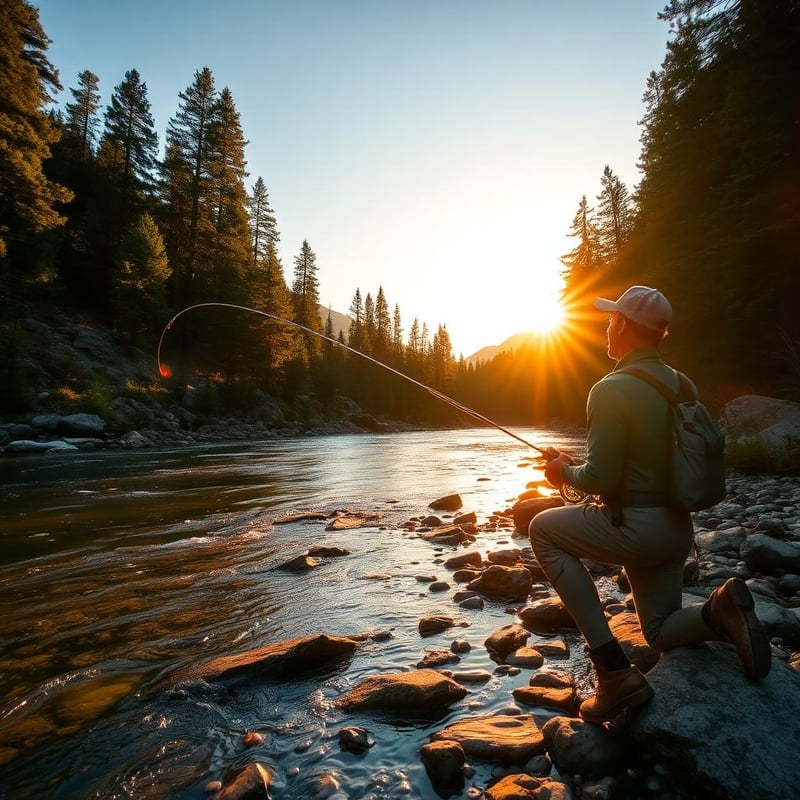
California's state freshwater fish, the golden trout (*Oncorhynchus aguabonita*), is an evolutionary relic of the last ice age, adapted to survive in frigid, low-nutrient waters where few other salmonids can persist. While the fish originally evolved in the isolated sub-alpine drainages of the Kern Plateau, extensive pack-train transplants during the late 19th and early 20th centuries established populations across the high-elevation cirques of the Sierra crest. Today, finding genetically uncompromised, vibrantly colored goldens requires climbing above the treeline into cold, deep water where hybridization with introduced rainbow trout has been held at bay. Water depth is a critical filter in this environment. Shallow alpine tarns freeze solid or lose dissolved oxygen during long winters, resulting in periodic winterkill that stunts populations or wipes them out entirely. The premier fisheries sit in deep glacial gouges—often exceeding 30 feet in depth—that harbor established food webs of midges, caddis, and freshwater scuds beneath seasonal ice sheets. These deep waters protect fish through seven-month winters and give them the runway to reach maturity, even in environments with ninety-day growing seasons. We evaluated dozens of alpine waters across the Inyo, Sierra, and Sequoia-Kings Canyon wilderness complexes, narrowing the field to ten distinct lakes situated strictly above 10,000 feet. Rankings reflect genetic strain integrity, average fish condition, water volume, and the physical commitment required to reach them. None of these lakes give up their fish easily; each demands off-trail route-finding, lung-burning approaches, and careful barbless presentation.
Quick picks


Rank this list
Loading community ratings… Ratings re-order the picks — they never change which products make the list.
Sign in to add your own ratings — it's free.
- Pros
- Genetically pure California golden trout in pristine alpine water
- Deep water structure prevents winterkill and supports larger fish
- Rugged off-trail approach keeps crowds out of the upper basin
- Unobstructed views of the sheer 1,700-foot north face of Cirque Peak
Cons- Extremely steep and loose talus requires careful cross-country footwork
- High starting elevation brings acute risk of altitude sickness
- Very few flat, sheltered camping spots exist along the rockbound rim
Key features- Elevation
- 11,120 feet
- Primary Trailhead
- Cottonwood Lakes / Horseshoe Meadow (10,040 ft)
- Target Species
- California golden trout (Oncorhynchus aguabonita)
- Managing Agency
- Inyo National Forest
- Trail Distance
- Roughly 11 miles round-trip with off-trail scramble
- Permit System
- Inyo wilderness quota via Recreation.gov
Best forTechnical sight-fishing for trout, High-altitude off-trail backpacking, Golden Trout Wilderness exploration, Alpine landscape photography
Pros- Genetically pure California golden trout in pristine alpine water
- Deep water structure prevents winterkill and supports larger fish
- Rugged off-trail approach keeps crowds out of the upper basin
- Unobstructed views of the sheer 1,700-foot north face of Cirque Peak
Cons- Extremely steep and loose talus requires careful cross-country footwork
- High starting elevation brings acute risk of altitude sickness
- Very few flat, sheltered camping spots exist along the rockbound rim
Assessed by Wild10 Editorial Team against our ranking criteria.No ratings yet - Pros
- Virtually zero fishing pressure due to severe physical access barriers
- Pristine, pure-strain golden trout genetics in their native drainage system
- Incredible stark solitude flanked by the 13,000-foot Kings-Kern Divide
- Exceptional water clarity offering world-class sight fishing along structural drop-offs
Cons- Grueling approach over Shepherd Pass demands exceptional physical conditioning
- Fragile, short open-water season lasting only six to eight weeks per year
- Zero natural protection against violent high-altitude summer lightning storms
Key features- Elevation
- 11,941 feet (3,640 m)
- Location
- Upper Kern Basin, Sequoia National Park
- Primary Route
- Shepherd Pass Trail to Upper Kern Basin
- Round-Trip Distance
- 36 miles minimum
- Target Fish
- California golden trout
- Permit Authority
- Inyo National Forest / Sequoia National Park
Best forExtended backcountry fly fishing expeditions, Sierra golden trout grand slams, Ultralight alpine wilderness route-finding, Solitude-focused multi-day backpack hunting
Pros- Virtually zero fishing pressure due to severe physical access barriers
- Pristine, pure-strain golden trout genetics in their native drainage system
- Incredible stark solitude flanked by the 13,000-foot Kings-Kern Divide
- Exceptional water clarity offering world-class sight fishing along structural drop-offs
Cons- Grueling approach over Shepherd Pass demands exceptional physical conditioning
- Fragile, short open-water season lasting only six to eight weeks per year
- Zero natural protection against violent high-altitude summer lightning storms
Assessed by Wild10 Editorial Team against our ranking criteria.No ratings yet - Pros
- Home to genetically pure native South Fork Kern strain golden trout
- Substantial multi-day route filters out virtually all day-use crowds
- Extensive deep water holding areas provide reliable late-season action
- Scenic mix of volcanic geology and rare subalpine foxtail pines
Cons- Long, dry trail approach requires heavy water carries across the plateau
- Rigid fire closures and fragile alpine soils demand strict camp discipline
- Average fish length is small due to the short high-elevation growing season
Key features- Elevation
- 10,800 feet
- Wilderness Area
- Golden Trout Wilderness
- Managing Agency
- Inyo National Forest
- Target Species
- Native South Fork Kern golden trout
- Primary Trailhead
- Blackrock Trailhead
- Round-Trip Distance
- 42 miles minimum
Best forPurist native trout fly fishing, Multi-day remote wilderness backpacking, High-elevation off-trail navigation
Pros- Home to genetically pure native South Fork Kern strain golden trout
- Substantial multi-day route filters out virtually all day-use crowds
- Extensive deep water holding areas provide reliable late-season action
- Scenic mix of volcanic geology and rare subalpine foxtail pines
Cons- Long, dry trail approach requires heavy water carries across the plateau
- Rigid fire closures and fragile alpine soils demand strict camp discipline
- Average fish length is small due to the short high-elevation growing season
Assessed by Wild10 Editorial Team against our ranking criteria.No ratings yet - Pros
- Supports significantly larger golden trout than surrounding high-altitude waters
- Spectacular high-alpine amphitheater with stunning turquoise water clarity
- Cross-country access filters out casual day hikers and ensures solitude
- Abundant daylight cruising along sheer granite shorelines allows prime sight-fishing
Cons- Exhausting approach with more than 4,000 vertical feet of climbing
- Virtually no shelter from howling winds, hail, and high-altitude lightning
- Extremely limited flat ground for setting up tents without rock interference
Key features- Elevation
- Approximately 11,740 feet
- Managing Agency
- Sierra National Forest / Inyo National Forest
- Primary Trailhead
- Pine Creek Pack Station (Rounds Valley)
- Round-Trip Distance
- Roughly 18 to 22 miles depending on route
- Target Species
- California golden trout (Oncorhynchus aguabonita)
- Best Window
- Mid-July through late September
Best forStalking trophy backcountry goldens, Advanced cross-country alpine backpacking, High-elevation photography and scrambling, Multi-day High Sierra fly fishing circuits
Pros- Supports significantly larger golden trout than surrounding high-altitude waters
- Spectacular high-alpine amphitheater with stunning turquoise water clarity
- Cross-country access filters out casual day hikers and ensures solitude
- Abundant daylight cruising along sheer granite shorelines allows prime sight-fishing
Cons- Exhausting approach with more than 4,000 vertical feet of climbing
- Virtually no shelter from howling winds, hail, and high-altitude lightning
- Extremely limited flat ground for setting up tents without rock interference
Assessed by Wild10 Editorial Team against our ranking criteria.No ratings yet - Pros
- True backcountry solitude within a mile of the crowded Whitney corridor
- Consistently larger golden trout than found in typical Sierra timberline tarns
- Exceptional sight-fishing opportunities along clear granite drop-offs
- Unmatched high-alpine scenery beneath the sheer face of Mount Hitchcock
Cons- Navigating competitive permit quotas requires extensive forward planning
- Near-constant high winds frequently impede delicate fly-line delivery
- Completely exposed granite basin offers zero protection from severe weather
Key features- Elevation
- 11,570 feet
- Location
- Sequoia National Park, California
- Fish Species
- California Golden Trout
- Access
- Off-trail route from Mount Whitney Trail
- Permit Agency
- Inyo National Forest / NPS
- Best Window
- Mid-July through early September
Best forHigh-Sierra fly fishing treks, Off-trail layover day exploration, Targeting specimen golden trout, Experienced alpine cross-country travel
Pros- True backcountry solitude within a mile of the crowded Whitney corridor
- Consistently larger golden trout than found in typical Sierra timberline tarns
- Exceptional sight-fishing opportunities along clear granite drop-offs
- Unmatched high-alpine scenery beneath the sheer face of Mount Hitchcock
Cons- Navigating competitive permit quotas requires extensive forward planning
- Near-constant high winds frequently impede delicate fly-line delivery
- Completely exposed granite basin offers zero protection from severe weather
Assessed by Wild10 Editorial Team against our ranking criteria.No ratings yet - Pros
- Glacial water tint reduces fish wariness along shoreline shelves
- Striking high-alpine setting beneath hanging glaciers and 13,000-foot peaks
- Isolated basin stays relatively quiet compared to nearby Evolution Valley
- Vibrant pure-strain golden trout that aggressively take dry flies
Cons- Demanding off-trail navigation over steep, loose Class 2-3 mountain passes
- Completely treeless camps exposed to violent alpine winds and lightning
- Narrow weather window limited to late summer and early autumn
Key features- Elevation
- 11,500 to 11,700 feet
- Location
- Northern Kings Canyon National Park
- Target Species
- California golden trout
- Primary Access
- Lamarck Col (Class 2-3) or Evolution Valley
- Trailhead
- North Lake near Bishop, California
- Wilderness Area
- John Muir and Kings Canyon Wilderness
Best forTechnical alpine fly fishing, Cross-country high route backpacking, Solitary backcountry trout hunting, Wilderness landscape photography
Pros- Glacial water tint reduces fish wariness along shoreline shelves
- Striking high-alpine setting beneath hanging glaciers and 13,000-foot peaks
- Isolated basin stays relatively quiet compared to nearby Evolution Valley
- Vibrant pure-strain golden trout that aggressively take dry flies
Cons- Demanding off-trail navigation over steep, loose Class 2-3 mountain passes
- Completely treeless camps exposed to violent alpine winds and lightning
- Narrow weather window limited to late summer and early autumn
Assessed by Wild10 Editorial Team against our ranking criteria.No ratings yet - Pros
- Productive fishery with wild, brilliantly colored golden trout
- Excellent sight-fishing opportunities along shallow northern gravel shelves
- Far less foot traffic than the heavily used trails of Humphreys Basin
- Unobstructed high-alpine panoramic views of the French Canyon peaks
Cons- Zero natural timber for wind protection or shelter from storms
- Requires strenuous off-trail cross-country navigation with a full pack
- Short fishable season due to high elevation and persistent snowpack
Key features- Elevation
- 11,160 feet
- Primary Fish
- Golden trout (self-sustaining)
- Trailhead
- North Lake (Piute Pass Trail)
- One-Way Distance
- Approx. 13 to 14 miles
- Jurisdiction
- Sierra National Forest / John Muir Wilderness
- Required Gear
- Approved hard-sided bear canister
Best forTargeted alpine fly fishing, Multi-day off-trail backpacking, High Sierra wilderness photography, Golden trout grand slams
Pros- Productive fishery with wild, brilliantly colored golden trout
- Excellent sight-fishing opportunities along shallow northern gravel shelves
- Far less foot traffic than the heavily used trails of Humphreys Basin
- Unobstructed high-alpine panoramic views of the French Canyon peaks
Cons- Zero natural timber for wind protection or shelter from storms
- Requires strenuous off-trail cross-country navigation with a full pack
- Short fishable season due to high elevation and persistent snowpack
Assessed by Wild10 Editorial Team against our ranking criteria.No ratings yet - Pros
- Historic pure-strain golden trout genetics in their native high basin
- Gentle, well-marked trail access starting from a 10,000-foot trailhead
- Superb sight fishing along clear granite shelves and drop-offs
- Convenient staging area for non-technical summits of Mount Langley
Cons- Substantial camping and angling pressure compared to off-trail lakes
- High winds and barren shorelines offer zero protection from afternoon storms
- Strict seasonal closures cut short early summer angling opportunities
Key features- Elevation
- 11,200 feet
- Trailhead
- Horseshoe Meadow (Cottonwood Lakes Trail)
- Hiking Distance
- 6.0 miles one-way
- Elevation Gain
- 1,200 feet from trailhead
- Primary Quarry
- Pure-strain California golden trout
- Managing Agency
- Inyo National Forest / Golden Trout Wilderness
Best forTechnical sight fishing, First-time alpine backpacking, Mount Langley ascent basecamp, Native trout species quest
Pros- Historic pure-strain golden trout genetics in their native high basin
- Gentle, well-marked trail access starting from a 10,000-foot trailhead
- Superb sight fishing along clear granite shelves and drop-offs
- Convenient staging area for non-technical summits of Mount Langley
Cons- Substantial camping and angling pressure compared to off-trail lakes
- High winds and barren shorelines offer zero protection from afternoon storms
- Strict seasonal closures cut short early summer angling opportunities
Assessed by Wild10 Editorial Team against our ranking criteria.No ratings yet - Pros
- Vibrant, clean-strain golden trout with consistent surface-feeding habits
- Grueling 14-mile route naturally screens out casual hikers and large groups
- Varied shore topography featuring fishable talus drops and shallow sight-casting bays
- Expansive campsite options across durable granite benches with sweeping views
Cons- Exhausting 2,200-foot climb back over Mono Pass on the return hike
- Intense mosquito pressure from snowmelt through late July
- Strict 10,000-foot campfire ban leaves chilly evenings without fire
Key features- Elevation
- 10,860 feet
- Location
- John Muir Wilderness, Sierra National Forest
- Standard Trailhead
- Mosquito Flat (Rock Creek Road)
- Access Route
- Mono Pass Trail to Pioneer Basin Use Trail
- One-Way Distance
- 14 miles
- Target Species
- California golden trout
Best forMulti-day backcountry fly fishing, High-elevation wilderness trek, Alpine sight-casting practice, Solitary Sierra granite exploration
Pros- Vibrant, clean-strain golden trout with consistent surface-feeding habits
- Grueling 14-mile route naturally screens out casual hikers and large groups
- Varied shore topography featuring fishable talus drops and shallow sight-casting bays
- Expansive campsite options across durable granite benches with sweeping views
Cons- Exhausting 2,200-foot climb back over Mono Pass on the return hike
- Intense mosquito pressure from snowmelt through late July
- Strict 10,000-foot campfire ban leaves chilly evenings without fire
Assessed by Wild10 Editorial Team against our ranking criteria.No ratings yet - Pros
- Substantially less human impact and tent congestion than Lower Soldier Lake
- Clean sight-casting to brightly colored, pure-strain golden trout
- Dramatic amphitheater setting directly beneath the walls of Mount Langley
- Straightforward off-trail access that avoids technical mountaineering terrain
Cons- Fully exposed basin with zero shelter from severe alpine wind or lightning
- Extremely limited flat ground for low-impact tent pitches along the shore
- Rigid quota limits on Cottonwood Basin trailheads during summer peak
Key features- Elevation
- 10,900 feet (3,322 m)
- Jurisdiction
- Inyo National Forest, Golden Trout Wilderness
- Primary Trailhead
- Horseshoe Meadow (Cottonwood Lakes / New Army)
- Round-Trip Distance
- Approximately 20 miles
- Target Species
- California golden trout
- Campsite Quota
- Wilderness permit required year-round
Best forHigh-altitude dry fly stalking, Mount Langley ascent side-trip, Weekend off-trail navigation practice, Backcountry fly-fishing photography
Pros- Substantially less human impact and tent congestion than Lower Soldier Lake
- Clean sight-casting to brightly colored, pure-strain golden trout
- Dramatic amphitheater setting directly beneath the walls of Mount Langley
- Straightforward off-trail access that avoids technical mountaineering terrain
Cons- Fully exposed basin with zero shelter from severe alpine wind or lightning
- Extremely limited flat ground for low-impact tent pitches along the shore
- Rigid quota limits on Cottonwood Basin trailheads during summer peak
Assessed by Wild10 Editorial Team against our ranking criteria.No ratings yet


Compare all 10 picks at a glance
Editorial ranking, what each pick is best at, and how we assessed it. Tap a name to jump to the full write-up.
| # | Pick | Best for | Key spec | Evidence |
|---|---|---|---|---|
| 1 | Cirque Lake Inyo National Forest, California | Technical sight-fishing for trout | Elevation: 11,120 feet | Research only |
| 2 | Lake South America Sequoia National Park, California | Extended backcountry fly fishing expeditions | Elevation: 11,941 feet (3,640 m) | Research only |
| 3 | Rocky Basin Lakes Golden Trout Wilderness, California | Purist native trout fly fishing | Elevation: 10,800 feet | Research only |
| 4 | Royce Lake #2 Sierra National Forest, California | Stalking trophy backcountry goldens | Elevation: Approximately 11,740 feet | Research only |
| 5 | Hitchcock Lakes Sequoia National Park, California | High-Sierra fly fishing treks | Elevation: 11,570 feet | Research only |
| 6 | Darwin Lakes (Upper) Kings Canyon National Park, California | Technical alpine fly fishing | Elevation: 11,500 to 11,700 feet | Research only |
| 7 | Puppet Lake Sierra National Forest, California | Targeted alpine fly fishing | Elevation: 11,160 feet | Research only |
| 8 | Cottonwood Lake #5 Inyo National Forest, California | Technical sight fishing | Elevation: 11,200 feet | Research only |
| 9 | Pioneer Basin Lake #4 Sierra National Forest, California | Multi-day backcountry fly fishing | Elevation: 10,860 feet | Research only |
| 10 | Upper Soldier Lake Inyo National Forest, California | High-altitude dry fly stalking | Elevation: 10,900 feet (3,322 m) | Research only |
How we chose
Last updated
Ranked by Wild10 Editorial Team, Research desk
We built this ranking from land-manager and agency sources, permit records and published trip reports. Each of the 10 places was compared against the same criteria below. This is desk research unless a pick is marked field tested.
- Quality of the terrain
- Landscape, route variety, and whether the place rewards multiple days rather than one overlook.
- Season and weather windows
- How long the reliable window is, and how badly the shoulder seasons punish a bad forecast.
- Access and permits
- Trailhead logistics, permit odds, quotas, and how much lead time a trip realistically takes.
- Solitude vs. crowding
- How far you have to walk before the place feels like wilderness instead of a queue.
- Wildlife and ecology
- What you can reasonably expect to see, and what you have to plan around.
- Risk and skill required
- Navigation, water crossings, exposure, and rescue distance — stated plainly.
How often we recheck this: Reviewed on a rolling basis and rechecked at least once a year, or sooner if a pick is discontinued, revised, or beaten by something new.
Best of the Best · Head to Head
Cirque Lake vs Lake South America
#1 vs #2 — side-by-side specs, pros & cons, and the final verdict.
Compare any two picks
Build your own side-by-side
Choose any two of these 10 picks and compare specs, price, pros, cons and reader ratings.
Topic summary
High-elevation Sierra lakes ranked by water depth, strain purity, and foot-traffic difficulty above 10,000 feet.
Key takeaways
- #1 Cirque Lake — Inyo National Forest, California
- #2 Lake South America — Sequoia National Park, California
- #3 Rocky Basin Lakes — Golden Trout Wilderness, California
- #4 Royce Lake #2 — Sierra National Forest, California
- #5 Hitchcock Lakes — Sequoia National Park, California
- #6 Darwin Lakes (Upper) — Kings Canyon National Park, California
Intended uses
Places
Verification notes
Editorial ranked list, 10 entries. Evidence mix — 10 research only. Buy links open the maker or a retailer search.
Best sierra golden trout lakes for a specific job
Skip the ranking — jump to the pick that matches how you actually use it.
- Best for technical sight-fishing for trout
- #1 Cirque Lake — Inyo National Forest, CaliforniaPerched at 11,120 feet beneath the sheer granite headwall of Cirque Peak, this deep tarn represents the gold standard of California golden trout angling. Originally stocked from the nearby Cottonwood Creek drainage—the historic broodstock source for western golden trout propagation—Cirque Lake holds genetically intact fish that display the unmistakable fiery orange bellies, deep crimson lateral bands, and bright white-tipped fins characteristic of pure *O. aguabonita*. The lake sits in a steep, talus-choked bowl that keeps water temperatures colder than the lower Cottonwood chain. Its notable depth—plunging well past 40 feet in the central depression—insulates the fishery from winterkill, allowing fish to reach respectable 10- to 13-inch sizes on a steady diet of chironomid pupae and micro-crustaceans. Fishing here requires careful stalking along granitic ledges; the water is gin-clear, and the trout cruise the perimeter drop-offs with wary caution. Access begins at the Cottonwood Lakes Trailhead out of Horseshoe Meadow at 10,000 feet. While the approach via New Army Pass trail is well-maintained, reaching Cirque Lake itself demands an off-trail detour over broken talus and sandy granite slabs. The season runs from July through September, though early season can see the lake locked in ice well into mid-summer.Read the full profile
- Best for extended backcountry fly fishing expeditions
- #2 Lake South America — Sequoia National Park, CaliforniaShaped like the continent from which it takes its name, Lake South America sits at 11,941 feet in the barren upper Kern River amphitheater. It is one of the highest named lakes holding an established, self-sustaining golden trout population in North America. The setting is stark, moon-like, and utterly dominated by fractured metamorphic rock and high-angle granite towers that block weather systems coming off the Great Western Divide. The fish here are direct descendants of the Kern River drainage stock, maintaining pristine phenotypic markers. Because the growing season at nearly 12,000 feet lasts barely eight weeks, the trout grow slowly, but the lake's sheer volume and deep northern trench prevent the freeze-outs common to adjacent shallow tarns. Golden trout here cruise the inlet snowmelt channels and submerged shelf lines, feeding aggressively on terrestrial blow-ins and small dark gnats. Reaching this lake is a major expedition. The most direct approach crosses Shepherd Pass—a punishing 6,000-foot vertical grind over loose scree from the Owens Valley—before traversing the Kern Headwaters via the John Muir Trail. Most anglers tackle it as part of a five- to seven-day wilderness pack trip. The physical barrier keeps angler pressure near zero, preserving both the fish and the fragile alpine shoreline.Read the full profile
- Best for purist native trout fly fishing
- #3 Rocky Basin Lakes — Golden Trout Wilderness, CaliforniaTucked away in the southern reaches of the Golden Trout Wilderness at 10,800 feet, the Rocky Basin chain contains some of the least-disturbed waters within the native territory of the South Fork Kern strain. Unlike the stark granite moonscapes of the central Sierra, this basin features rolling volcanic and granitic terrain flanked by ancient foxtail pines and subalpine meadows, providing a richer aquatic habitat than typical high-elevation tarns. The middle and upper lakes in the chain exceed 25 feet in depth, offering thermal stability and robust winter holding water. Trout here are exceptional examples of *Oncorhynchus aguabonita aguabonita*, with deep olive backs, vibrant crimson flanks, and distinct parr marks that remain prominent even on adult fish. The fish feed readily on surface flies, responding enthusiastically to Adams, elk hair caddis, and small beetle patterns drifted close to the deadfall along the western shoreline. Access is long and remote, typically staged out of Blackrock Trailhead or Kennedy Meadows. Expect a multi-day trek covering more than 20 miles across dry plateau country before dropping into the isolated basin. Very few day hikers ever reach these waters, making this one of the most reliable locations for finding undisturbed golden trout in their native geographical province.Read the full profile
- Best for stalking trophy backcountry goldens
- #4 Royce Lake #2 — Sierra National Forest, CaliforniaThe Royce Lakes Basin sits suspended above French Canyon at roughly 11,700 feet, a stark, windswept granite plateau containing five distinct lakes. Royce Lake #2 is the crown jewel of the basin, featuring profound water depth, sheer talus borders, and a self-sustaining population of golden trout that regularly out-measures fish found in neighboring drainages. The water holds a striking turquoise tint caused by ultra-fine glacial flour and extreme depth. Because the lake drops off steeply within feet of the shoreline, adult goldens have space to retreat into cold sanctuary zones during the heat of late August. The trout cruise the narrow littoral fringe hunting for chironomids and caddis larvae, then slip back into the dark blue depths when startled. Anglers who stay low against the white granite boulders and fish long, light fluorocarbon leaders (6x or 7x) can sight-fish to heavy, deep-bodied trout pushing 12 to 14 inches. Reaching Royce Lake #2 requires departing the Pine Creek Pass Trail near the pass summit and ascending a steep, trackless cross-country ramp over loose talus and slick bedrock. The approach from the Owens Valley side involves climbing out of the Pine Creek Trailhead, conquering over 4,000 feet of switchbacks past old tungsten mines. It is an exhausting trek that filters out all but the most dedicated backcountry fly fishers.Read the full profile
- Best for high-sierra fly fishing treks
- #5 Hitchcock Lakes — Sequoia National Park, CaliforniaSitting quietly beneath the massive western wall of Mount Hitchcock and directly across from Mount Whitney, the Hitchcock Lakes lie at 11,570 feet in an austere granite cirque. While hundreds of hikers march up the nearby Mount Whitney Trail daily, almost none make the off-trail descent into the Hitchcock Basin. The lower lake is massive, exceptionally deep, and fed by permanent snowfields clinging to the 13,000-foot ridgelines above. The golden trout in Hitchcock are historically derived from early Whitney-area stockings and have adapted brilliantly to the lake's sheer, cold profile. Due to the deep water and stable subsurface insect life, the fish exhibit thick shoulders and saturated vermillion bellies. Unlike fish in shallow tarns that stunt at six inches, Hitchcock goldens often reach solid foot-long lengths, patrolling the shoreline drop-offs in small pods during calm morning hours. Access requires securing a highly competitive Mount Whitney Trail permit or an Inyo National Forest wilderness permit over Trail Crest via Cottonwood. From the Whitney Trail near Guitar Lake, you must leave the path and navigate cross-country across stepped granite benches and boulder fields. Wind is a near-constant factor here, rippling the surface and testing casting accuracy, but when the surface calms, the sight-fishing is world-class.Read the full profile
- Best for technical alpine fly fishing
- #6 Darwin Lakes (Upper) — Kings Canyon National Park, CaliforniaThe Darwin Basin is arguably the most dramatic alpine setting in Kings Canyon National Park, resting under the hanging glaciers of Mount Darwin and Mount Mendel. The upper lakes, stair-stepped between 11,500 and 11,700 feet along Darwin Bench, are fed directly by glacial runoff. The water carries an ethereal, milky-teal hue that provides cover for wary golden trout foraging along the shallow boulder edges. The upper Darwin lakes are deep rock sinks carved into crystalline quartz monzonite. While the glacial silt suppresses heavy weed growth, the lakes produce prolific hatches of small midges during warm summer afternoons. The resident goldens are extraordinarily colorful, exhibiting crisp black spotting focused strictly above the lateral line and intensely red throat slashes. They are opportunistic feeders, eager to strike dry flies during short lulls in the alpine wind. The fastest entry point is via North Lake out of Bishop, crossing Lamarck Col at nearly 13,000 feet. This is a formidable mountaineering route requiring comfort on steep snowfields, loose headwalls, and sustained Class 2-3 scree before descending into the basin. Alternatively, a longer, less technical approach winds up Evolution Valley via the John Muir Trail, demanding several days of trail hiking.Read the full profile
- Best for targeted alpine fly fishing
- #7 Puppet Lake — Sierra National Forest, CaliforniaPositioned at 11,160 feet in the French Canyon region of Humphreys Basin, Puppet Lake is widely regarded by backcountry anglers as one of the most productive golden trout waters in the central Sierra. The lake sits in a rugged granite trough with dramatic cliffs dropping straight into cold, deep water along its southern shore, while the northern edge features accessible gravel bars and boulder points. Puppet Lake benefits from an ideal combination of depth, surface area, and wind-driven food circulation. It holds a self-sustaining population of goldens that feed heavily on callibaetis mayflies and midge pupae along the shallow shelves. Fish here routinely hit the 10- to 12-inch mark with exceptional girth and coloration, showing vivid gold flanks speckled with dense, dark spots and clean, white-edged ventral fins. The hike in begins at North Lake Trailhead, climbing over 11,400-foot Piute Pass into the sprawling tundra of Humphreys Basin. From the main trail in French Canyon, anglers break off on unmaintained cross-country routes, climbing over granite ramps and through fractured gullies to gain Puppet Lake's secluded bowl. The open landscape provides zero tree cover, requiring anglers to stalk carefully to avoid casting long shadows over cruising fish.Read the full profile
- Best for technical sight fishing
- #8 Cottonwood Lake #5 — Inyo National Forest, CaliforniaCottonwood Lake #5 is ground zero for California golden trout management. Resting at 11,200 feet in the Cottonwood Lakes Basin, this lake was historically tapped by the state of California as the primary wild broodstock source used to establish golden trout fisheries across the western United States. Because of this management history, the fish here remain pure-strain specimens of unrivaled pedigree. The lake sits in a wide, high-alpine granite basin surrounded by low turf meadows and scree slopes beneath Mount Langley. It offers deep, clear water with large underwater granite slabs where fish cruise in predictable patterns. While fishing pressure is higher here than in the off-trail lakes deeper in the range, strict barbless and gear restrictions have maintained an abundant population of goldens that display textbook golden-yellow and scarlet color profiles. Access is straightforward compared to other waters on this list: a well-trodden, six-mile trail out of Horseshoe Meadow leads directly to the Cottonwood chain. Lake #5 sits in the upper tier of the basin, requiring just a short walk past Lakes #1 through #4. It is the premier destination for anglers seeking pure-strain golden trout without committing to high-hazard mountaineering or off-trail navigation.Read the full profile
Our editors test the gear, pick the ten, and set the order the day a list publishes. After that, the ranking is live: every member star rating feeds the community order, so picks climb or slide as real owners report back. Editorial judgment decides what earns a spot — you help decide where it sits.
- Editors set the field
Verified specs, feature and use-case comparison, and outside sources choose the ten and the published order; field-tested picks are labeled.
- Readers re-rank it
Your 1–5 star ratings drive the community order on every list.
- Rankings keep moving
Picks rise or fall over time — nothing is frozen at launch day.
Award picks
The ranking above is price-blind and judged on merit. These awards call out the pick we'd hand a specific person with a specific need.
Best Overall: Cirque Lake — Inyo National Forest, California
Perched at 11,120 feet beneath the sheer granite headwall of Cirque Peak, this deep tarn represents the gold standard of California golden trout angling.
Ranked #1Runner-Up: Lake South America — Sequoia National Park, California
Shaped like the continent from which it takes its name, Lake South America sits at 11,941 feet in the barren upper Kern River amphitheater.
Ranked #2Best for Solitude: Rocky Basin Lakes — Golden Trout Wilderness, California
Tucked away in the southern reaches of the Golden Trout Wilderness at 10,800 feet, the Rocky Basin chain contains some of the least-disturbed waters within the native territory of…
Ranked #3Best for First-Timers: Puppet Lake — Sierra National Forest, California
Positioned at 11,160 feet in the French Canyon region of Humphreys Basin, Puppet Lake is widely regarded by backcountry anglers as one of the most productive golden trout waters…
Ranked #7Best Big-Mountain Objective: Royce Lake #2 — Sierra National Forest, California
The Royce Lakes Basin sits suspended above French Canyon at roughly 11,700 feet, a stark, windswept granite plateau containing five distinct lakes.
Ranked #4Best Water Trip: Hitchcock Lakes — Sequoia National Park, California
Sitting quietly beneath the massive western wall of Mount Hitchcock and directly across from Mount Whitney, the Hitchcock Lakes lie at 11,570 feet in an austere granite cirque.
Ranked #5For the purest genetic heritage and raw alpine scale, the upper Kern and Cottonwood basins remain the benchmark, with Cirque Lake and Lake South America standing as bucket-list destinations. If your priority is escaping foot traffic altogether to pursue larger fish in technical boulder fields, head deep into Humphreys Basin or over Lamarck Col into the Darwin Lakes with a 3-weight and a map.
How to choose between these sierra golden trout lakes
Every pick on this page was judged against the same criteria. If you want the short answer, Cirque Lake by Inyo National Forest, California is the one we point most people at. If you want to decide for yourself, here is what actually separates a good sierra golden trout lake from an expensive one.
Quality of the terrain
Landscape, route variety, and whether the place rewards multiple days rather than one overlook.
Season and weather windows
How long the reliable window is, and how badly the shoulder seasons punish a bad forecast.
Access and permits
Trailhead logistics, permit odds, quotas, and how much lead time a trip realistically takes.
Solitude vs. crowding
How far you have to walk before the place feels like wilderness instead of a queue.
Wildlife and ecology
What you can reasonably expect to see, and what you have to plan around.
Risk and skill required
Navigation, water crossings, exposure, and rescue distance — stated plainly.
Match the trip to your season and skill
The right sierra golden trout lakes depends on what you are actually doing with it: Technical sight-fishing for trout; High-altitude off-trail backpacking; Golden Trout Wilderness exploration; Alpine landscape photography; Extended backcountry fly fishing expeditions; Sierra golden trout grand slams. Start from the use case, then work down the ranking until you hit the first pick that covers it.
Common mistakes
- Booking travel before checking permit windows and quota draw dates.
- Planning peak-season mileage without a weather-day buffer.
- Assuming an access road or ferry runs year-round.
- Ignoring local fire, bear, and camping regulations for the unit you are entering.
Frequently asked questions
- What is the best sierra golden trout lakes?
- Cirque Lake by Inyo National Forest, California takes the top spot. Perched at 11,120 feet beneath the sheer granite headwall of Cirque Peak, this deep tarn represents the gold standard of California golden trout angling.
- How did The Wild10 choose and rank these sierra golden trout lakes?
- We judged every pick against the same criteria — quality of the terrain, season and weather windows, access and permits, solitude vs. crowding — and ranked them on merit regardless of price. High-elevation Sierra lakes ranked by water depth, strain purity, and foot-traffic difficulty above 10,000 feet.
- Which of these sierra golden trout lakes is easiest to plan on a budget?
- Upper Soldier Lake by Inyo National Forest, California — Perched on a quiet shelf at 10,900 feet below the sheer southern walls of Mount Langley, Upper Soldier Lake is often bypassed by backpackers rushing along the New Army Pass trail toward Soldier Lake and Mount Whitney.
- Cirque Lake vs Lake South America — which should I pick?
- Cirque Lake ranks first: Perched at 11,120 feet beneath the sheer granite headwall of Cirque Peak, this deep tarn represents the gold standard of California golden trout angling. Lake South America is the close second: Shaped like the continent from which it takes its name, Lake South America sits at 11,941 feet in the barren upper Kern River amphitheater. Our full head-to-head compares them side by side.
- How often is this list updated?
- We review this ranking on a rolling basis and update it whenever a pick is discontinued, meaningfully revised, or beaten by something new. Rankings are editorial — brands do not see them before publication and affiliate links never change the order.
Get The Field List
One short, honest email a week: gear we actually trust, planning guides, and survival-TV coverage. Free, unsubscribe anytime.