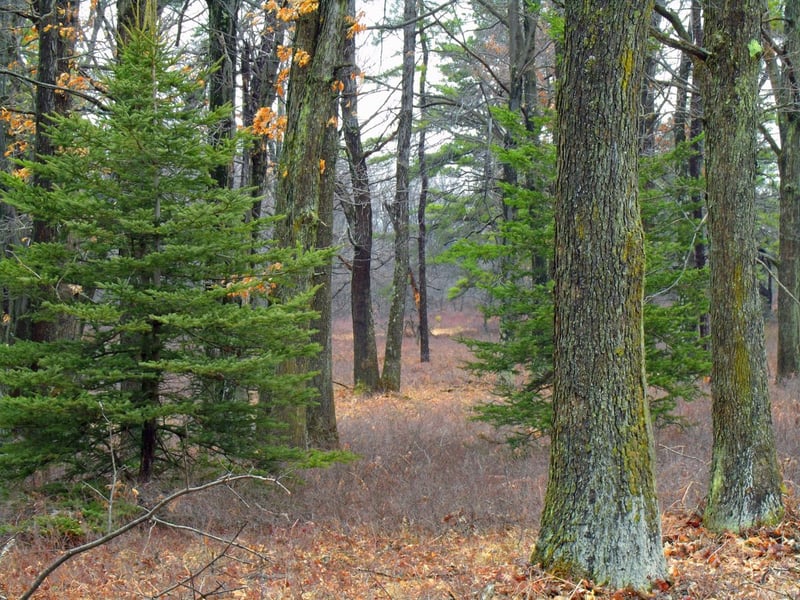
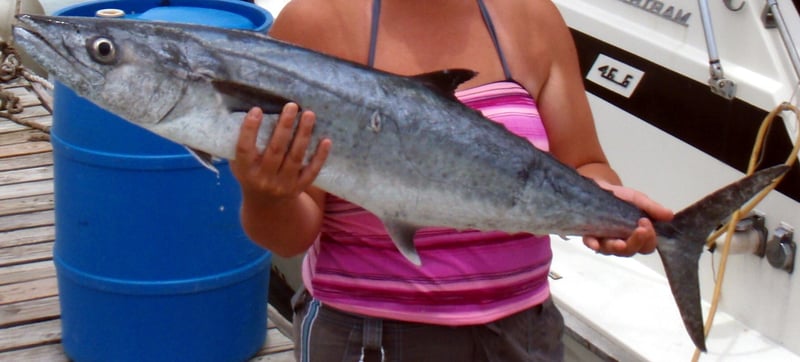
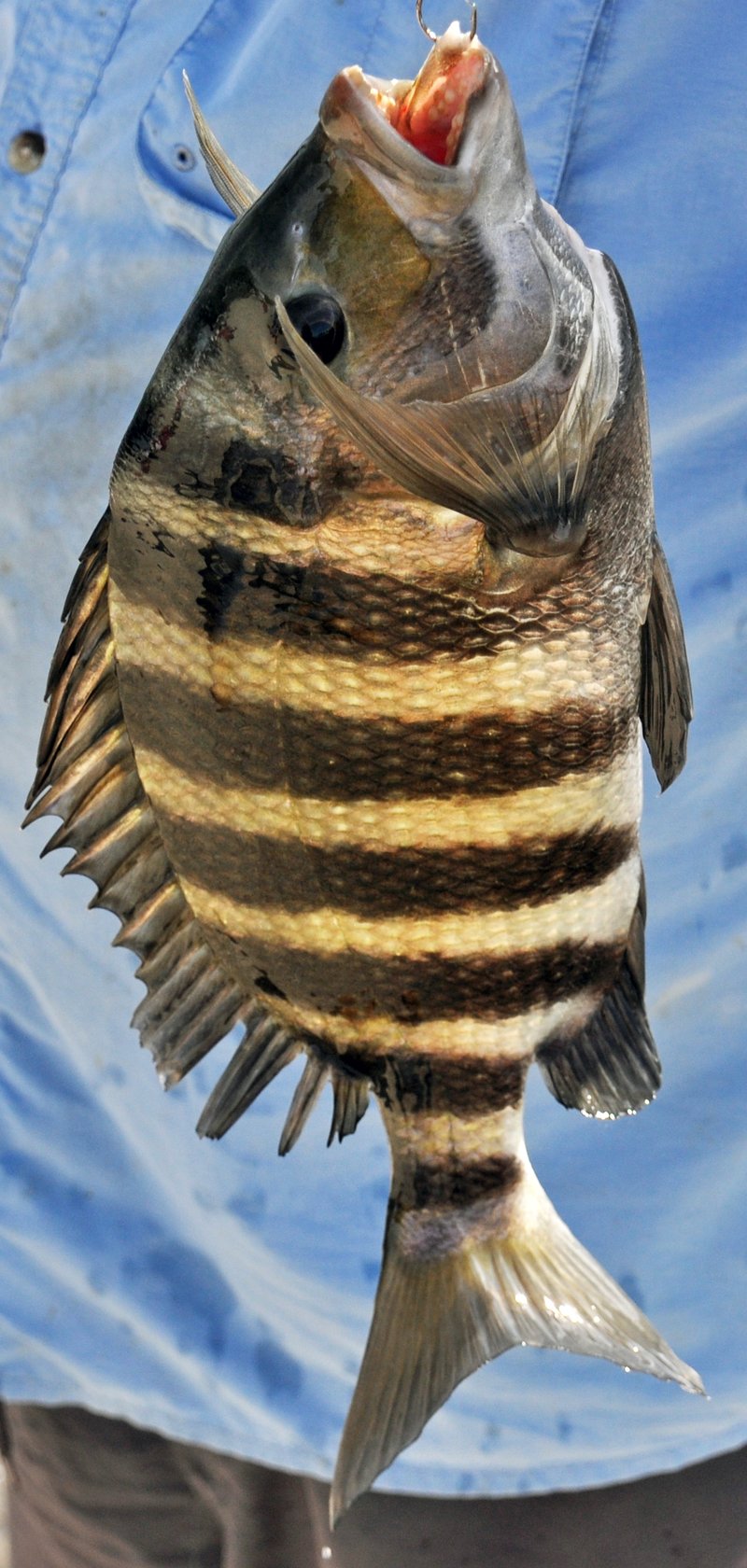
Gravel and sand flats near structure
Core
Flats adjacent to a pinnacle or a reef, 60–250 feet, where fish move up to feed.
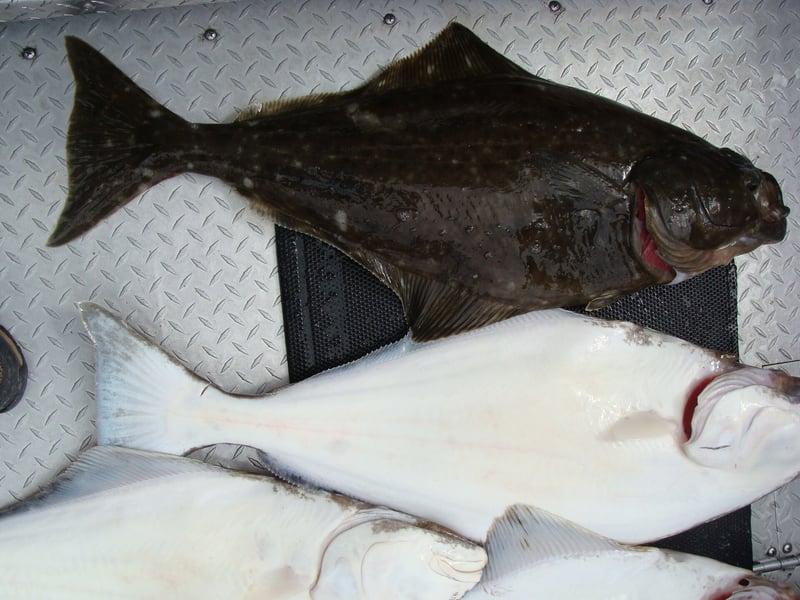
Fishing · Species · Pacific Halibut
A flatfish that reaches four hundred pounds, lives in 150 feet of cold water, and fills a freezer with the best white fillets in the Pacific.
Pacific halibut are the largest flatfish in North America and one of the most tightly managed fish in the world. Seasons are set annually by the International Pacific Halibut Commission, and in some areas the sport fishery opens for only a handful of specific days.
The fishing itself is straightforward in concept and demanding in practice: find a gravel or hard-bottom edge in 100 to 300 feet, put a large piece of bait on the bottom with enough lead to hold it there, and wait for the rod to load.
The payoff is unmatched. A single legal halibut can yield 30 to 60 pounds of the densest, cleanest white fillet available anywhere, which is why most anglers plan a trip around it rather than fishing for it casually.
01
Halibut hold on the edges between soft and hard bottom, and access is almost always by charter or a capable offshore boat.
| Water & region | Why it's worth your time | Access & license |
|---|---|---|
| Homer & Cook Inlet, Alaska | The classic charter fishery with high catch rates | AK license plus a king salmon stamp if combining trips |
| Southeast Alaska (Sitka, Ketchikan) | Protected water and consistent 40–80 lb fish | AK license; charter guideline harvest levels apply |
| Haida Gwaii, British Columbia | Big fish on remote banks | BC tidal waters licence |
| Washington coast (Neah Bay, Westport) | Very short seasons with high demand | WA license plus a catch record card; check open dates |
| Oregon central coast | All-depth and nearshore seasons managed separately | OR license and combined angling tag |
02
Halibut fishing is bottom work. Position, weight, and bait size are the three things you control.
03
Halibut lie on the bottom on structure edges and travel with the tide. You are fishing bottom contours, current, and scent.
Core
Flats adjacent to a pinnacle or a reef, 60–250 feet, where fish move up to feed.
Structure
Fish stage on the up-current side and feed on what sweeps past.
Tidal
Strong tidal flow through a pass delivers food; anchor or drift the edge.
Summer
Halibut come into 30–80 feet in summer to feed on herring and sand lance.
Big fish
The largest fish hold in 200–400 feet on soft bottom adjacent to a rise.
04
These are the presentations that consistently produce pacific halibut, with the conditions each one is actually for — not a tackle-shop wall.
Best bait
Big, oily, and scent-heavy; halibut hunt by smell more than sight.
Tough bait
Stays on the hook through current and pecking; often combined with herring.
Active fishing
16–32 oz jigs bounced on bottom cover water and produce big fish.
Anchored
Keeps bait just off bottom and away from the mainline in heavy current.
Force multiplier
A scent bag or chopped herring on the bottom pulls fish to your drift from a distance.
05
Halibut fishing is season-limited by regulation as much as by biology. Federal and state seasons in Alaska, BC, Washington, Oregon, and California dictate the calendar.
| Season | Where the fish are | What works |
|---|---|---|
| Spring | Moving from deep winter spawning grounds onto shallower feeding banks (100–300 ft) | Bait on the bottom at anchor or on a drift; jigging over gravel and sand |
| Summer (peak) | Feeding on shallower banks, gravel flats, and structure edges in 60–300 ft | Circle hooks with herring and salmon heads; heavy jigs bounced on the bottom |
| Fall | Still on the banks, beginning to move deeper; big fish feeding heavily | Bait and large jigs in deeper water |
| Winter | Deep (600–1,500 ft) spawning grounds; seasons closed in most areas | Not fished recreationally |
06
Tide dictates whether you can fish at all.
Key
You need to hold bottom. On big exchanges the current makes fishing impossible in deep water — plan the trip around the tide table.
Best bite
The hour on either side of slack often produces the strongest bite as the current shifts and scent spreads.
Halibut feed through the day; there's no dawn/dusk requirement.
07
Heavy tackle, heavy weight, and circle hooks.
Wire spreader with 16–32 oz of lead on one arm and a 24 in 130 lb leader with a 16/0 circle hook on the other, baited with a herring and a salmon head.
Sinker slide with 16–48 oz, a bead, a swivel, and 36 in of 130 lb leader to a 16/0 circle hook; better feel than the spreader.
16–32 oz leadhead or a Point Wilson Dart with a large plastic grub or a herring strip, dropped to bottom and lifted 3–4 ft repeatedly.
Not a fishing rig but essential gear: subdue large halibut alongside the boat before bringing them aboard.
08
Big, oily, and smelly. Scent carries in deep water.
#1
One or two on a circle hook; add a salmon belly strip for durability.
Trophy
Oily and enormous scent trail; the classic big-halibut bait.
Extremely durable and effective; often used to keep bait on through smaller fish.
Fresh-caught bycatch turned into effective cut bait.
09
Anchor over the right bottom, chum, and wait.
10
Halibut regulations are federal, seasonal, and change every year. Verify before you book, not after.
11
It is physical fishing. Retrieving 24 ounces of lead from 250 feet repeatedly is work, and cold, wet weather is the norm.
The season structure makes planning critical. Book charters early for the specific open dates, especially in Washington.
Bring a plan for the meat before you catch it — processing, freezing, and shipping fifty pounds of fillet is not something to improvise.
12
The rod, line, and terminal choices that actually change your hookup rate — with the numbers, not vague categories.
Core rod
Rated for 24–32 oz of lead and a 100 lb fish.
Thin diameter to hold bottom in current at depth.
Keeps bait on bottom and off the mainline.
Required in places
Reliable corner hookups and clean releases of undersized fish.
Oily, scent-heavy baits that pull fish from a distance.
Standard charter equipment for safely handling large fish.
13
What happens between the hookset and the cooler decides whether you land the fish and whether it is worth eating.
14
Cleaning a pacific halibut the right way takes about four minutes once you know the sequence.
15
Pacific halibut is a premium fillet — dense, snow-white, mild, and firm enough to grill without falling apart.
Bleed the fish immediately and get it on ice. Handle the fillets gently; halibut cheeks are a separate delicacy worth cutting out.
Portion, vacuum-seal, and freeze quickly. Properly frozen halibut holds quality for the better part of a year.
Size limits, creel limits, and seasons are set water by water and change every year. These agencies publish the current rules.
Annual season dates, area limits, and stock assessment.
Charter and unguided limits, slot rules, and licensing.
Management structure and biology overview.
Questions
Where every fishing guide on The Wild10 starts.
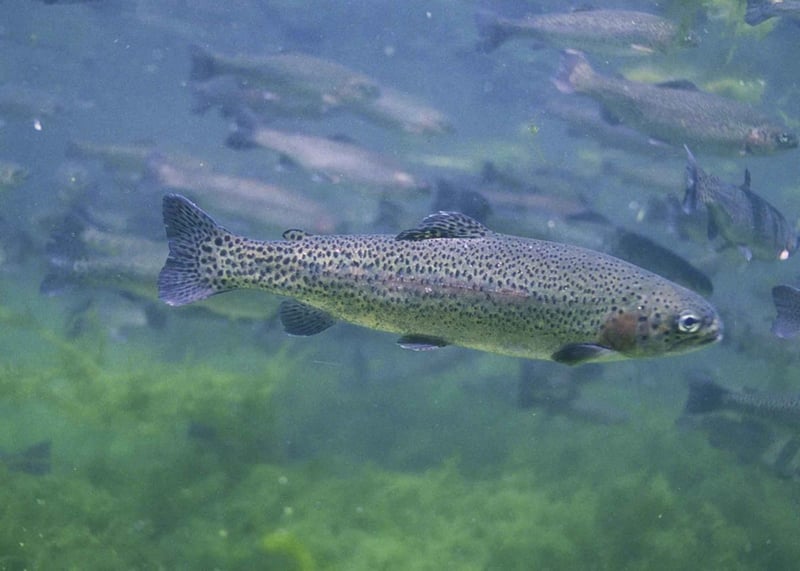
Body shape, fins, mouth, and markings for 30+ North American gamefish.
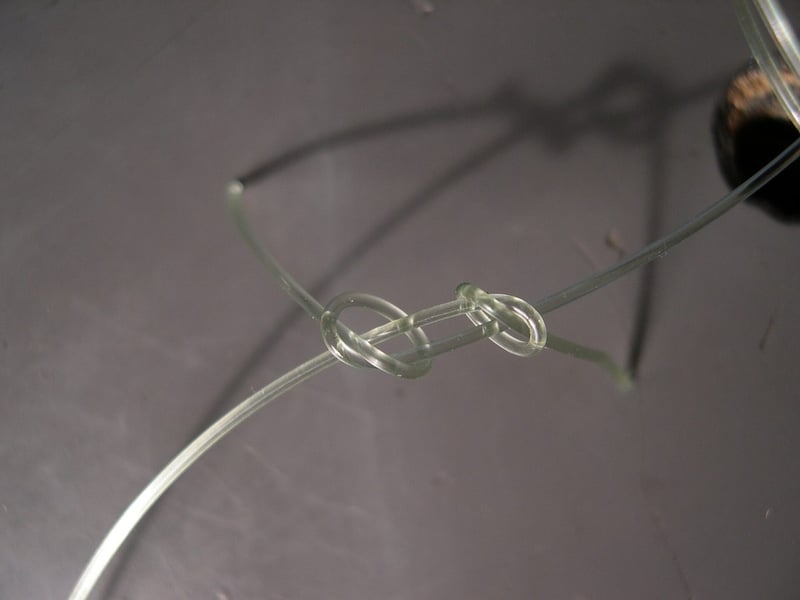
Twelve knots covering every hook, leader, and loop connection you need.
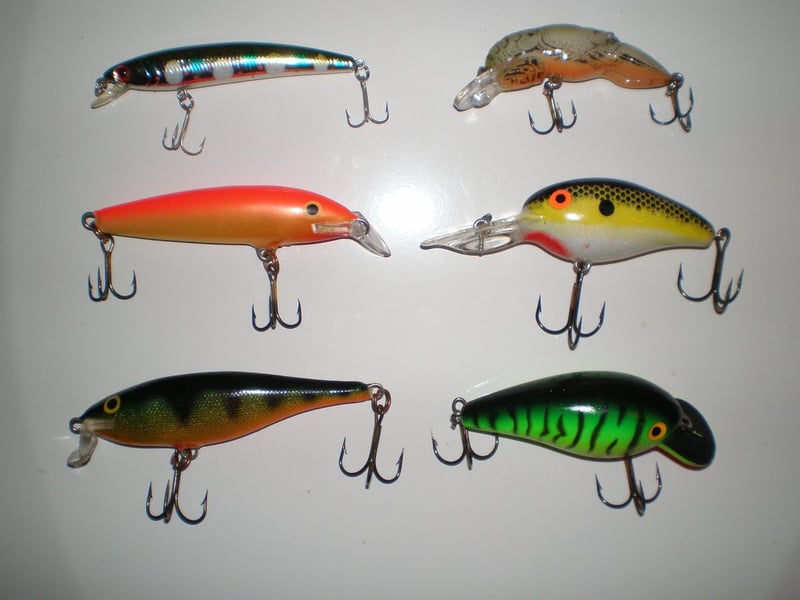
Matching lure category to temperature, clarity, depth, and season.
Reading water, timing the bite, and fixing a slow day on the spot.
Keep going
Tell lookalike species apart by fins, mouth, and markings.
Read →Match lure category to depth, clarity, and water temperature.
Read →The connections that keep big fish attached.
Read →Reading water and fixing a slow day on the spot.
Read →Top 10 lists
Ranked picks with real product photos, specs, and editor notes — the buying side of everything covered in these guides.
Bass, walleye, trout, and panfish rods ranked on feel.
See the ranking →Jig, crank, and heavy-cover rods by blank and taper.
See the ranking →Drag smoothness, line management, and long-haul gears.
See the ranking →Brake systems, backlash control, and drag under load.
See the ranking →Also on The Wild10
Same field-tested approach, applied to game species, rifles, shotguns, and bows — from scouting through meat care.
Open the hunting hub →