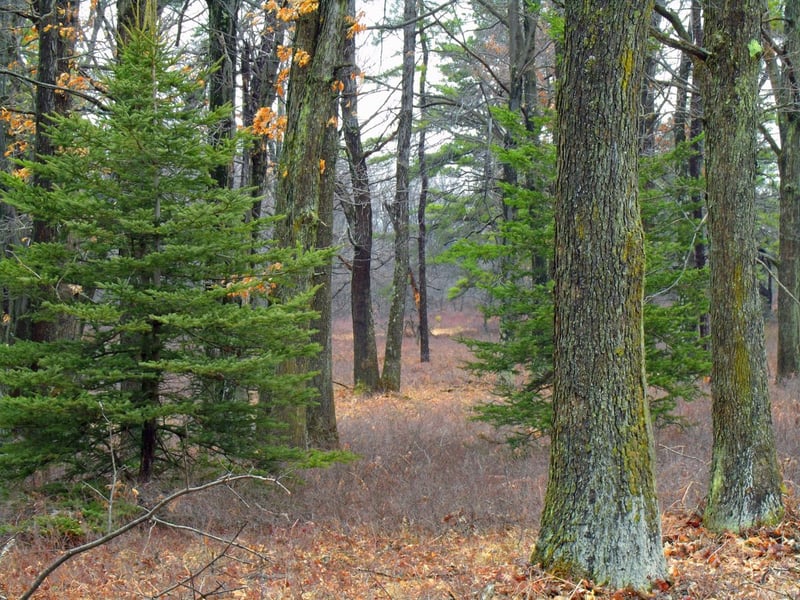
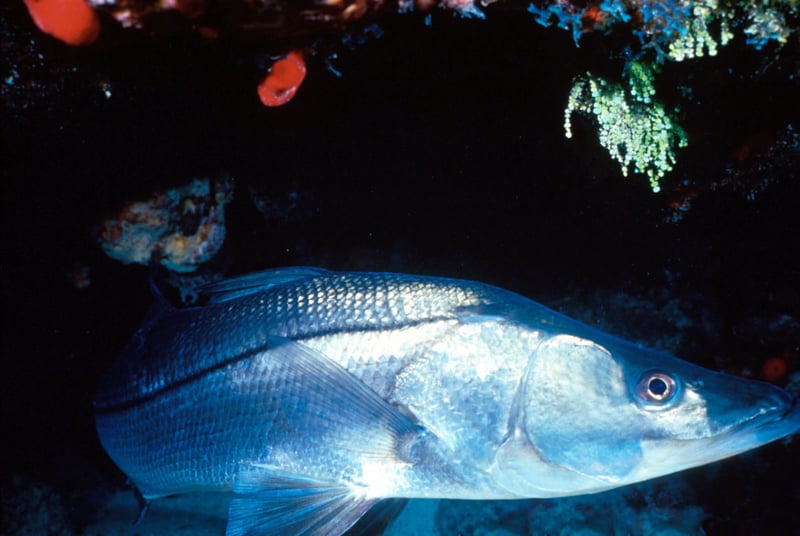
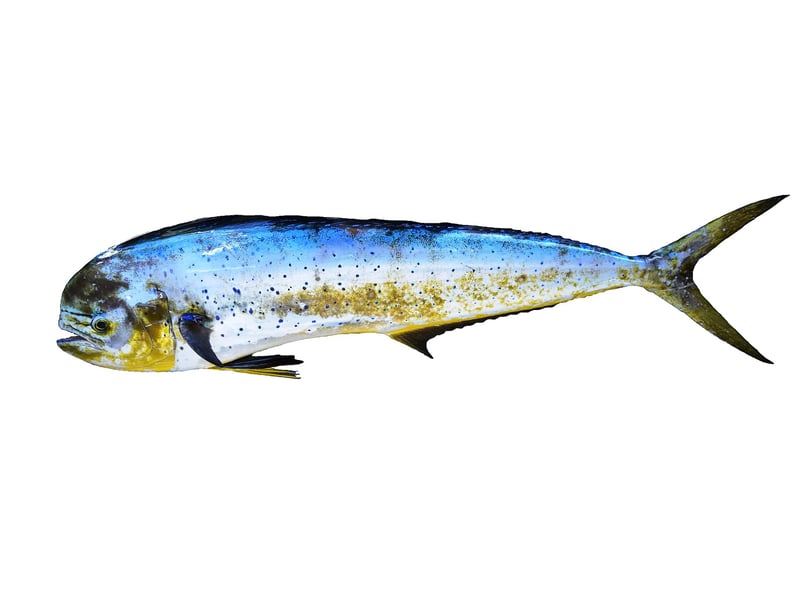
Beach migration lanes
Spring/summer
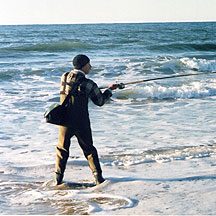
Strings of fish move along the beach just outside the bar; intercept ahead of them, never behind.
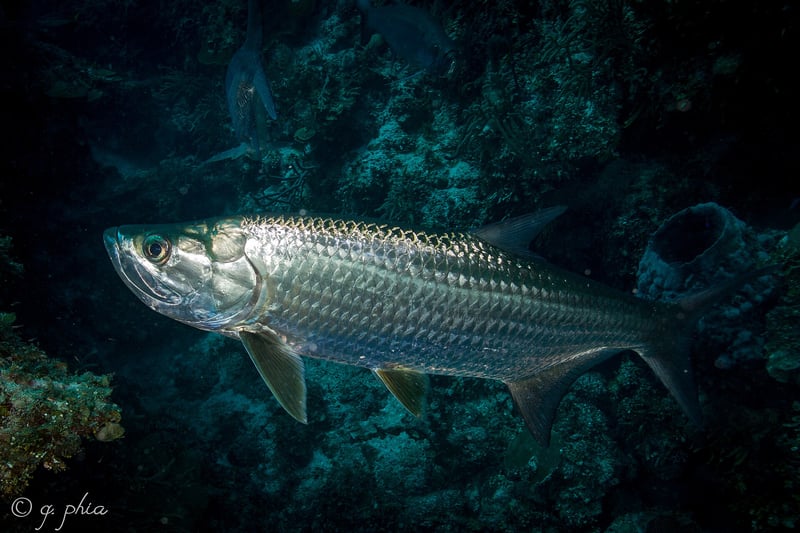
Fishing · Species · Tarpon
A hundred-pound prehistoric fish that jumps six feet out of the water — the most spectacular hookup available from a boat or a bridge in North America.
Tarpon are the reason a lot of anglers save for years for a single week in Florida. They are enormous, they are ancient, they can breathe air from a modified swim bladder, and when hooked they leave the water repeatedly and violently.
They are also almost entirely a catch-and-release fishery. Florida requires a special tag to possess a tarpon at all, and virtually everyone releases fish boatside without lifting them.
The core of the fishery is the spring migration. From April through July, schools of adult fish push north along the Gulf beaches and stage in the passes, and the same fish can be intercepted on fly, on live bait, or from a bridge at night.
01
Tarpon fishing concentrates around passes, beaches, bridges, and backcountry basins where fish stage predictably.
| Water & region | Why it's worth your time | Access & license |
|---|---|---|
| Boca Grande Pass, Florida | The densest concentration of migrating adults anywhere | FL saltwater license; pass has gear-specific rules |
| Florida Keys channels and bridges | Bridge fishing at night on outgoing tide | FL license; some bridges require a walk-on permit |
| Homosassa, Florida | Legendary fly-rod flats fishery for very large fish | FL license; guides book a year out |
| Texas coast beachfront | Late summer school fish along the surf | TX license with saltwater stamp |
| Louisiana marsh passes | Big August fish in the outer marsh | LA license; charters strongly recommended |
02
You are intercepting a moving fish. The work is positioning, timing the tide, and making the first cast count.
03
Tarpon migrate along predictable routes and hold in specific places to rest and eat. Learn the route and the tide stage and you can meet them.
Spring/summer
Strings of fish move along the beach just outside the bar; intercept ahead of them, never behind.
Tide
Fish stack in deep passes on moving water, especially around the full and new moon crab flushes.
Night
Tarpon lie in the shadow line of lit bridges and eat what the tide delivers.
Juveniles
Mangrove creeks and canals hold 5–30 lb juvenile tarpon year-round — the best way to learn.
Sight
Tarpon gulp air and roll; a rolling fish is a locatable fish.
04
These are the presentations that consistently produce tarpon, with the conditions each one is actually for — not a tackle-shop wall.
Pass fishing
A pass crab drifted on the outgoing tide during a crab flush is the highest-percentage bait there is.
Beach/bridge
Free-lined or fished under a float on a circle hook.
Artificial
A 4–6" paddle tail on a jig head cast to rolling fish and swum slowly.
Fly rod
11–12 weight, a black or purple toad, and a cast that lands three feet ahead of a laid-up fish.
Terminal
Non-offset circle hooks are required in many Florida waters and dramatically reduce mortality.
05
Tarpon migrate along the Gulf and Atlantic coasts in a predictable spring-and-summer procession, with resident fish in south Florida year-round.
| Season | Where the fish are | What works |
|---|---|---|
| Spring migration (Apr–Jun) | Beaches, passes, and bridges from the Keys up both Florida coasts and along the Gulf; the big fish arrive | Live crabs and threadfin on the beach; fly-fishing the strings of migrating fish |
| Summer | Passes on the tide, harbor and bridge lights at night, backcountry basins | Live bait on the falling tide in passes; DOA plastics and flies at bridge lights |
| Fall | Fish drop back and scatter; juvenile tarpon in canals and backwaters | Small plugs and flies for juveniles; the last of the big fish in south Florida |
| Winter | Resident fish in south Florida canals, basins, and power-plant outflows | Small live baits and jigs in the warmest water available |
06
Tide is the master variable, then light.
Key
Tarpon stack in the passes and eat crabs flushed out on the falling tide, especially around the full and new moon.
Best (beach)
Migrating strings roll along the beach at first light in calm conditions; sight-fishing at its best.
Bridge and dock lights create a current shadow where tarpon lie waiting for shrimp and baitfish flushed through.
The 'hill tide' around the full moon in June triggers the pass crab flush and the year's most concentrated fishing.
07
Heavy leader, a sharp circle hook, and gear that can survive an hour-long fight.
60–80 lb fluorocarbon leader, 5 ft, to a 5/0–7/0 circle hook through the corner of a crab's shell or through the nose of a threadfin. No weight on the beach; a small egg sinker in the pass.
3–8 oz weight on a break-away dropper, 80–100 lb leader, 8/0 circle hook with a live mullet or a crab, fished on the up-current side of a bridge.
11–12 wt, floating or intermediate line, 60 lb bite tippet to a 20 lb class tippet, toad or baitfish pattern; cast 10 ft ahead of the string and strip-set.
3 in shrimp imitation or a 1/4 oz jig on 50 lb leader, cast up-current into a bridge light shadow and drifted down naturally.
08
Crabs and live baitfish.
#1
Small blue crabs flushed out of the bay on outgoing tide; hook through the corner of the shell and free-line them into the school.
Cast-netted and free-lined or chummed; excellent on the beach and in the pass.
Big baits for big fish around bridges and inlets.
Mullet or ladyfish chunks on the bottom in inlets — a proven big-fish approach at night.
09
Position, patience, and a proper hookset.
10
Tarpon are among the most protected gamefish in the country. Possession requires a specific tag, and handling rules are legally enforced.
11
The jump is the whole experience and also where most fish are lost — plan to lose a lot of them and enjoy the ones you touch.
It is physically demanding fishing. A long fight in Florida summer heat will empty you out; bring water and take it seriously.
Guides are worth it here more than almost anywhere. Reading rolling fish and positioning on a moving school is a learned skill.
12
The rod, line, and terminal choices that actually change your hookup rate — with the numbers, not vague categories.
Core rod
Enough lifting power to end a fight before the fish is exhausted.
Tarpon run long and fast; capacity is not optional.
Their jaw plates are sandpaper and will wear through light leader.
Required with bait
Corner hookups that release cleanly and legally.
The most reliable natural bait on migrating fish.
Release fish at the boat without lifting them out of the water.
13
What happens between the hookset and the cooler decides whether you land the fish and whether it is worth eating.
14
Cleaning a tarpon the right way takes about four minutes once you know the sequence.
15
Tarpon are not a food fish. The flesh is bony and poor, and harvest is prohibited without a specialized tag in Florida.
Treat every fish as a release. Keep it in the water, minimize fight time by using heavy tackle, and revive it fully before letting go.
Shark predation on exhausted released tarpon is real. If sharks are working the area, move the fight and the release away from them.
Size limits, creel limits, and seasons are set water by water and change every year. These agencies publish the current rules.
Tag rules, handling law, and gear restrictions by area.
Migration research, tagging data, and best-practice release science.
Texas licensing and coastal tarpon regulations.
Questions
Where every fishing guide on The Wild10 starts.
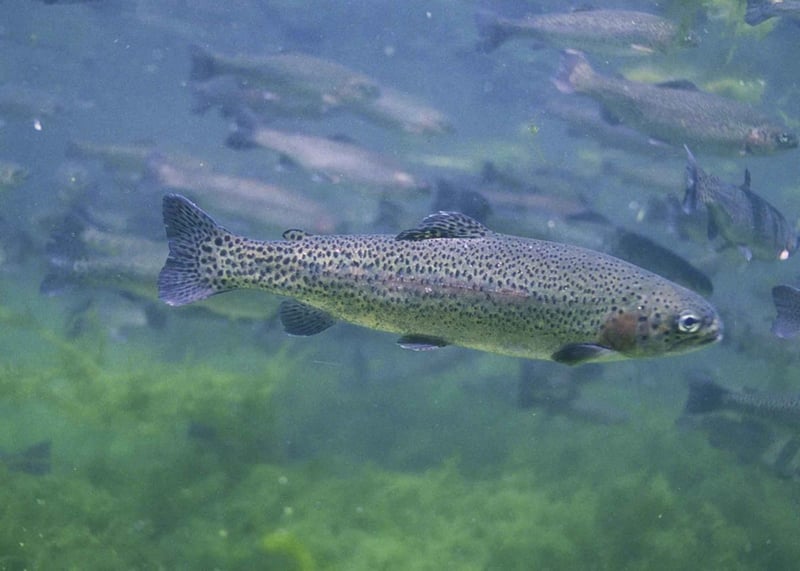
Body shape, fins, mouth, and markings for 30+ North American gamefish.
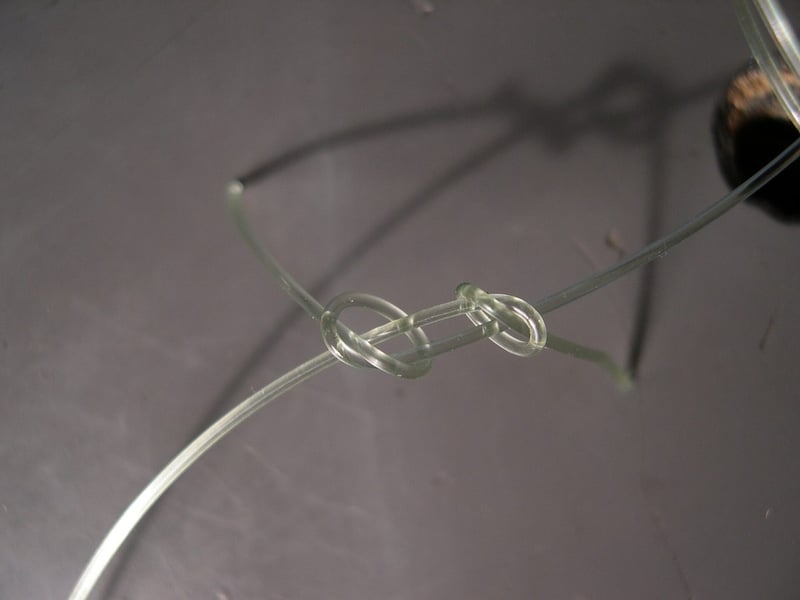
Twelve knots covering every hook, leader, and loop connection you need.
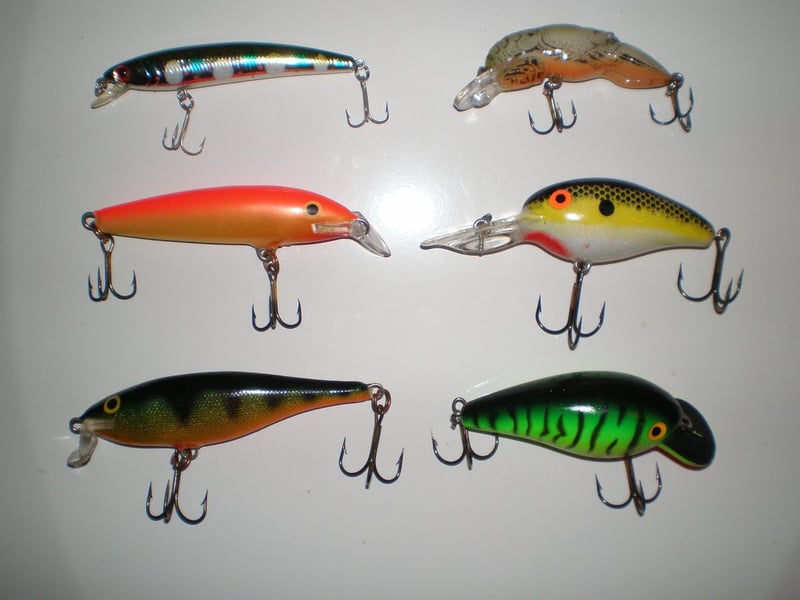
Matching lure category to temperature, clarity, depth, and season.
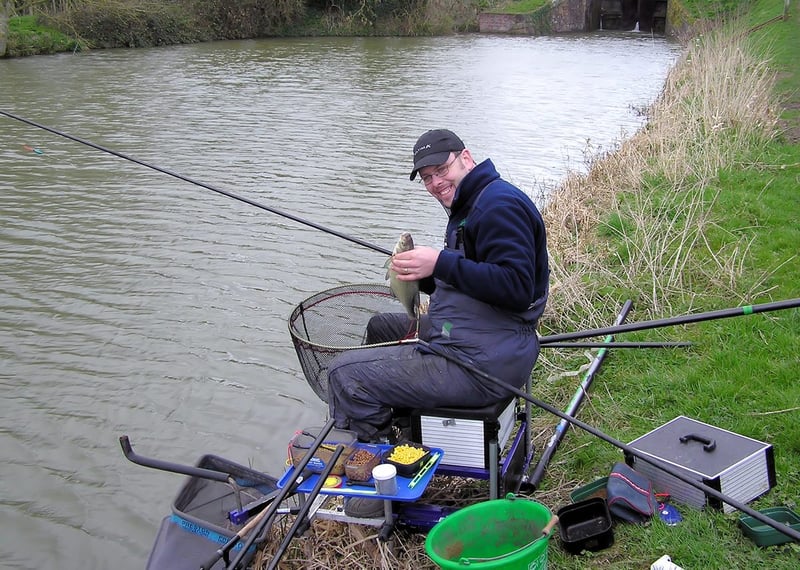
Reading water, timing the bite, and fixing a slow day on the spot.
Keep going
Tell lookalike species apart by fins, mouth, and markings.
Read →Match lure category to depth, clarity, and water temperature.
Read →The connections that keep big fish attached.
Read →Reading water and fixing a slow day on the spot.
Read →Top 10 lists
Ranked picks with real product photos, specs, and editor notes — the buying side of everything covered in these guides.
Bass, walleye, trout, and panfish rods ranked on feel.
See the ranking →Jig, crank, and heavy-cover rods by blank and taper.
See the ranking →Drag smoothness, line management, and long-haul gears.
See the ranking →Brake systems, backlash control, and drag under load.
See the ranking →Also on The Wild10
Same field-tested approach, applied to game species, rifles, shotguns, and bows — from scouting through meat care.
Open the hunting hub →