Skip to content
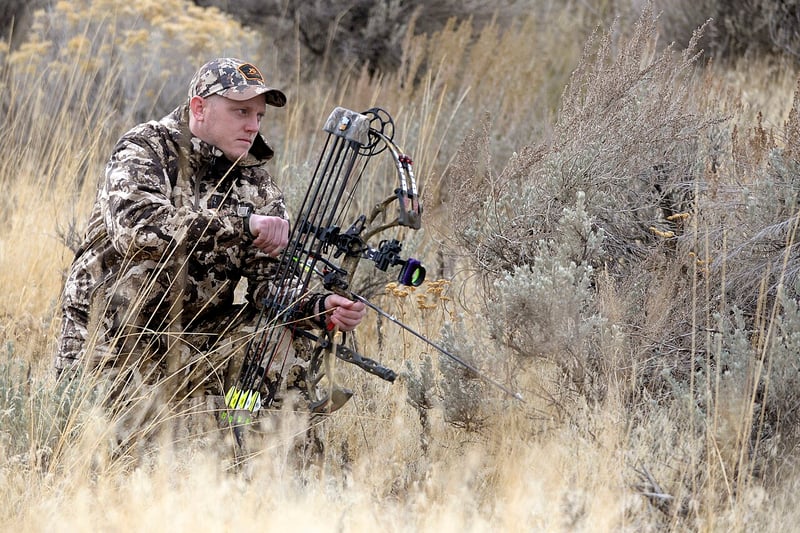
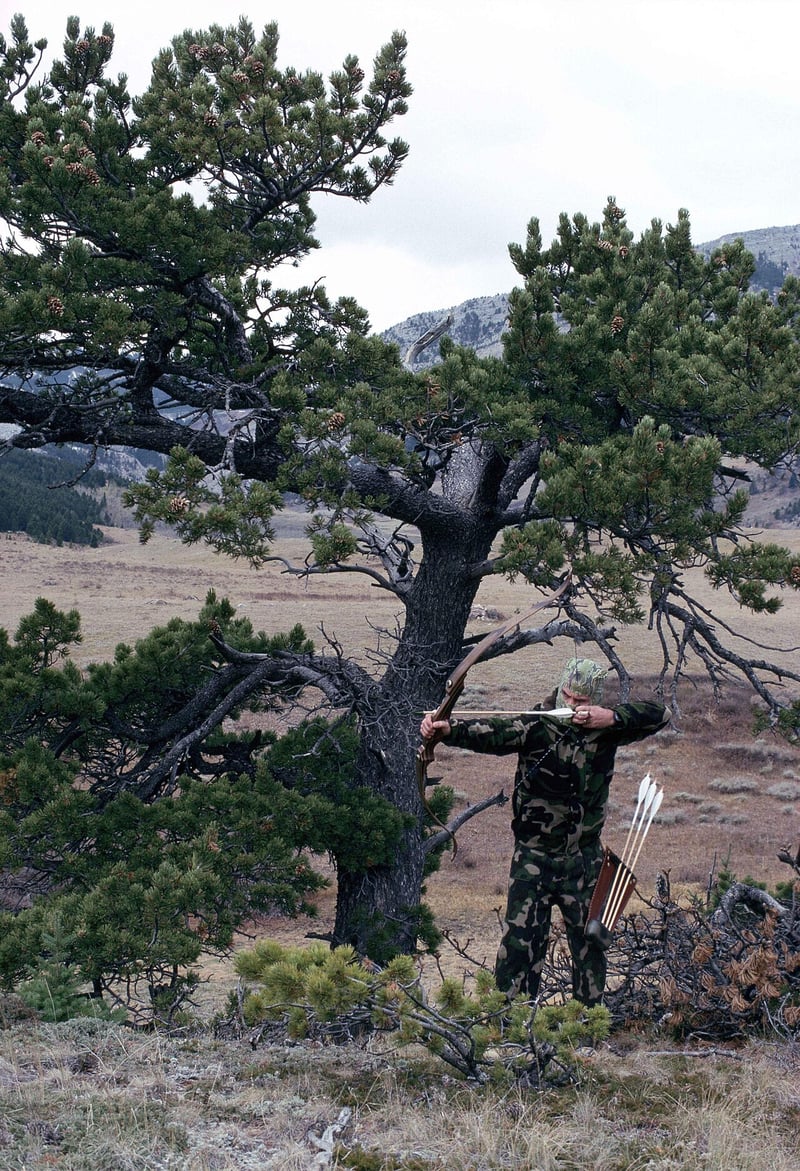
Bowhunter kneeling in sagebrush with a camouflaged compound bow

Hunting · Compound

Compound bow hunting: set it up right, then shoot it the same way every time

Let-off buys you time at full draw. Tuning buys you accuracy with a broadhead. Process buys you the shot when your hands are shaking.

A compound bow is the most capable archery tool ever made and the most unforgiving of neglect. A bow that is out of tune shoots field points beautifully and broadheads six inches left, and you will not discover that in the stand.

This guide covers setup dimensions, rest and sight choices, paper and broadhead tuning step by step, broadhead selection, and the shot process that holds together whether a buck steps out at eighteen yards in the timber or a mule deer feeds into range while you are kneeling in the sage.

Let-off
75-90% holding
Practical range
20-50 yd
Tuning
Paper + broadhead
Shot process
7 repeatable steps

01

Why the compound dominates archery season

The cam system does two things a stick bow cannot: it stores energy far more efficiently, producing arrow speeds of 280–340 fps, and it drops the holding weight by 75–90% at full draw. Together those give a hunter a flatter trajectory, a longer ethical range, and the ability to hold at anchor while an animal takes three more steps.

That holding advantage is why the compound owns western spot-and-stalk hunting as thoroughly as it owns the whitetail woods. The hunter in the photo above is doing the thing a compound does best: kneeling in sagebrush below the skyline, camouflaged bow already in hand, able to come to full draw and wait out the last thirty seconds of a stalk without shaking.

The tradeoff is complexity. A compound has a rest, a sight, a peep, a release aid, cams that must be in time, and a string that stretches. Everything on that list can go wrong at the worst possible moment, which is why a compound hunter checks equipment obsessively and shoots year-round rather than in August.

Bowhunter kneeling in sagebrush with a camouflaged compound bow
U.S. Air Force photo by Todd Cromar / Public domain · Wikimedia Commons

02

Setting up the bow

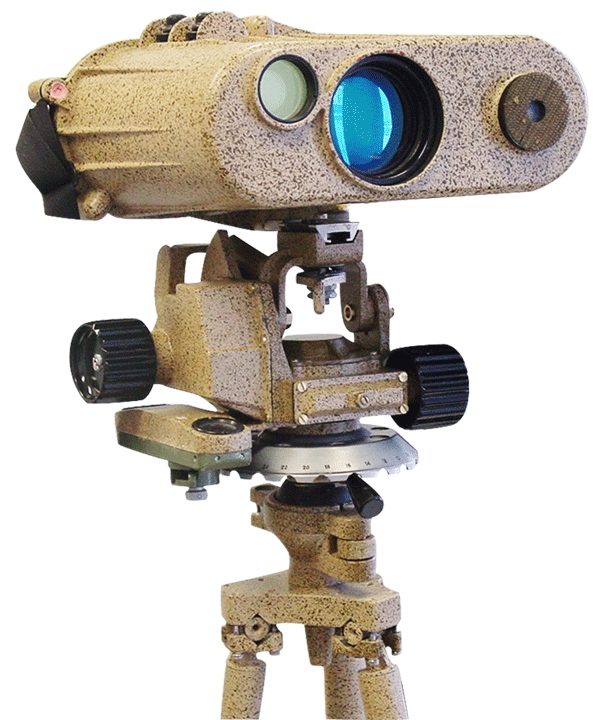
Laser rangefinder used to confirm distance
Anatol123 (talk) / Public domain · Wikimedia Commons

Draw length

Get this exact

Too long and you lock the bow arm, creep the anchor back past your face, and lose all consistency. Too short and you lose speed and crowd the string. A correct draw length puts the release hand against the jaw, the string at the nose tip, and a slight bend in the bow arm elbow.

Draw weight

55–70 lb

Set weight so you can draw straight back without pointing the bow at the sky — the sky-draw is a tell that you are overbowed and it will get you busted by every animal in the woods. Cold muscles at dawn in a stand are your real test, not the pro shop in August.

Rest

Drop-away or containment

A drop-away rest falls clear before the fletching passes, giving the cleanest arrow flight and the best broadhead accuracy. A full-containment rest holds the arrow through any movement — the pragmatic choice for treestand hunting where the arrow gets bumped.

Sight

Fixed pin or single-pin slider

Multi-pin fixed sights (20/30/40/50) are instant and idiot-proof under pressure and hard to beat in tight timber. Single-pin sliders give an uncluttered view and precise dialing for the 40–60 yard shots open sage country hands you, but require you to range and adjust before the shot — a real liability on a walking animal.

Peep and anchor

Repeatability

The peep must align naturally at full draw without craning your neck; if you have to hunt for it, the string needs rotating. Anchor with two contact points — knuckle to jaw and string to nose — so your eye lands in exactly the same place every shot.

Release aid

Index or hinge

Index-finger releases are fast and intuitive for hunting. Hinge and thumb-button releases produce a surprise break that eliminates target panic, and many serious hunters practice with a hinge and hunt with a thumb button.

Stabilizer

Balance, not weight

A short front bar with a modest weight steadies the pin float and absorbs vibration. Long target-length bars are unwieldy in a blind; 8–10 inches front with a small back bar is the hunting sweet spot.

Arrows

400–500 grains total

Match spine to draw weight and length, then build total arrow weight to at least 6 grains per pound of draw for deer and 7–8 for elk. Heavier arrows are quieter, penetrate better, and lose surprisingly little trajectory inside 40 yards.

03

Paper tune and broadhead tune

Field points lie. Do this before every season, and again any time you change arrows, rest, or string.

  1. 1Shoot through a paper frame at six feet with a field point. A clean round hole with three fletching slits means the arrow is leaving straight.
  2. 2A high or low tear means adjust nock height; a left or right tear means move the rest, or check cam lean and spine. Adjust in small increments and re-shoot.
  3. 3Once paper is clean, group field points at 20, 30, and 40 yards and set your sight pins.
  4. 4Now shoot a fixed-blade broadhead at the same 20-yard spot. Note where it lands relative to the field points.
  5. 5Move the rest in the direction you want the broadhead to go — chase the broadhead, not the field point — a hair at a time until they hit together.
  6. 6Confirm at 40 yards, then verify every individual broadhead-and-arrow pairing you plan to hunt with. Number them and mark the one that flies best as your first arrow.
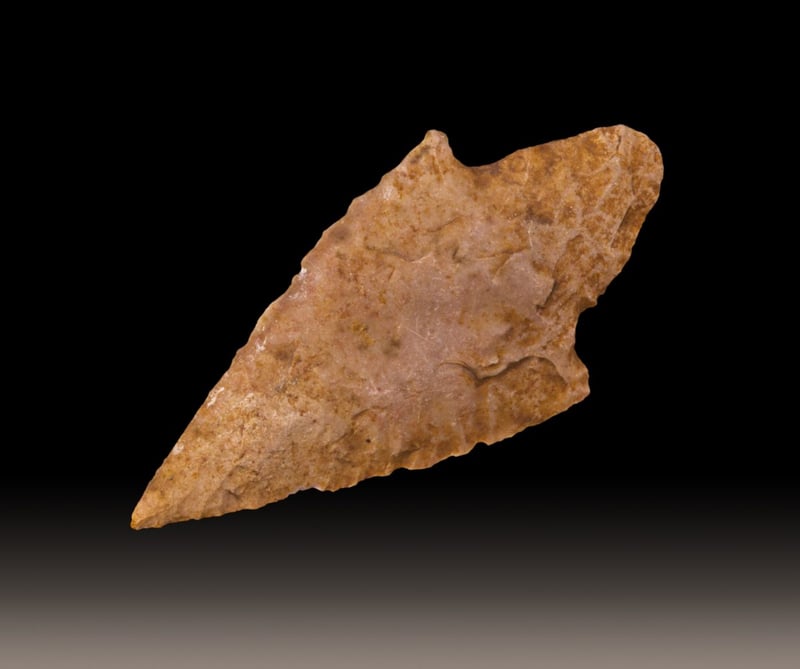
Hunting broadhead points showing cutting edges
Unknown photographer / Wikimedia Commons · Wikimedia Commons

04

Broadheads

Hunting broadhead points showing cutting edges
Unknown photographer / Wikimedia Commons · Wikimedia Commons

Fixed blade

Reliable penetration

Nothing to fail on impact and the best choice for heavy-boned animals like elk, or for lower draw weights. Requires a well-tuned bow because the blades steer the arrow in flight.

Mechanical

Field-point flight

Blades stay folded in flight and deploy on impact, so they fly exactly like field points and forgive a marginally tuned bow. They spend some energy opening — pair them with 60 lb and up and a solid arrow weight.

Hybrid

Both

A fixed main blade with deploying secondary blades. Larger wound channel than a fixed head with more reliability than a pure mechanical, and increasingly the default among whitetail hunters.

Cutting diameter

Bigger is not always better

A 2 inch mechanical opens a spectacular hole but stops on a shoulder. On elk and larger, choose penetration over diameter every time — a pass-through with two holes leaves a far better blood trail than a wide wound with no exit.

05

A repeatable shot process

The same sequence in the yard, in the stand, and on a knee in the sage. Under pressure you will do what you rehearsed — so rehearse it in the positions you actually hunt from.

  1. 1Range the landmarks around you before an animal ever appears — the trail, the stump, the field edge, the lone bush at the far side of the draw. Then you never have to range the animal.
  2. 2Pick your position early. In timber that means standing and turning in the stand; in open country it means settling onto a knee behind cover so your outline stays under the brush line.
  3. 3Draw only when the animal's vision is blocked, keeping the bow level rather than sky-drawing — kneeling or standing, the draw path is the same.
  4. 4Settle into anchor: hand to jaw, string to nose, peep aligned without searching. Bend at the waist, never the bow arm, to correct for angle or slope.
  5. 5Put the correct pin on the spot low behind the shoulder — and on an alert animal inside 30 yards, aim at the bottom third of the chest to allow for string jump.
  6. 6Let the pin float. Do not fight it. Squeeze or rotate the release through a surprise break rather than punching the trigger.
  7. 7Hold the bow up and your eyes on the spot through the shot. Watch and listen to where the animal goes, then mark the last place you saw it.
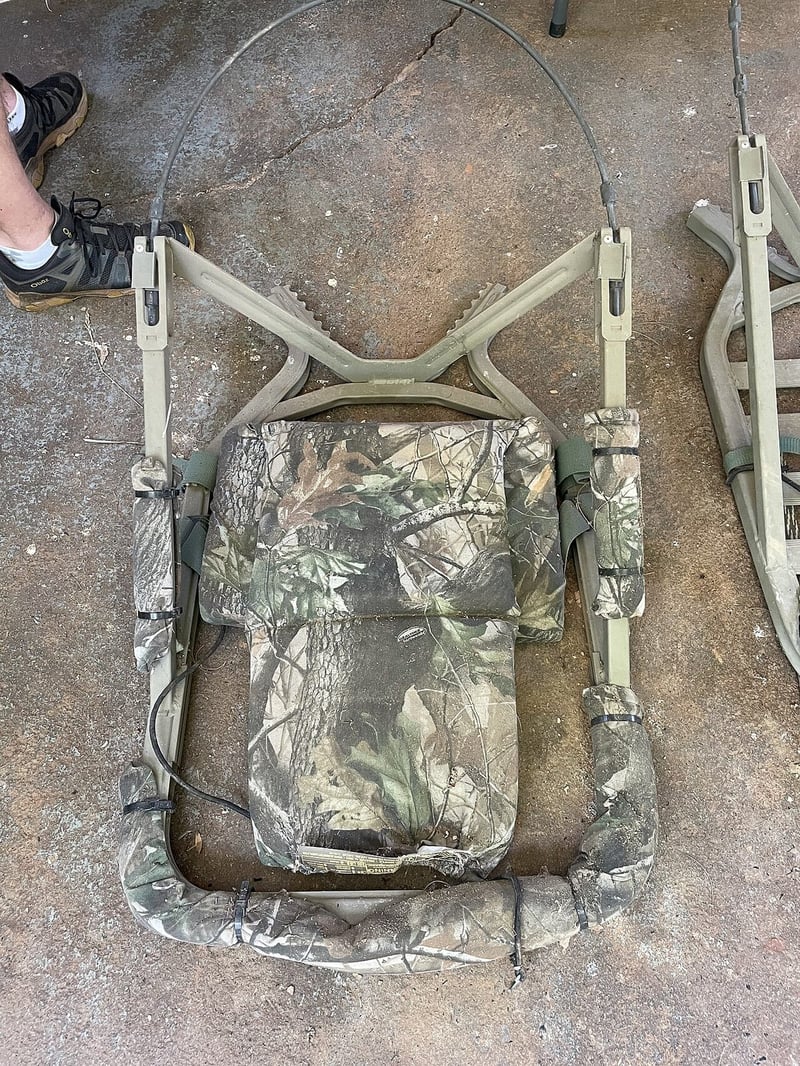
Camouflage tree stand set in hardwood timber
Jackmalott / CC BY-SA 4.0 · Wikimedia Commons

06

After the shot

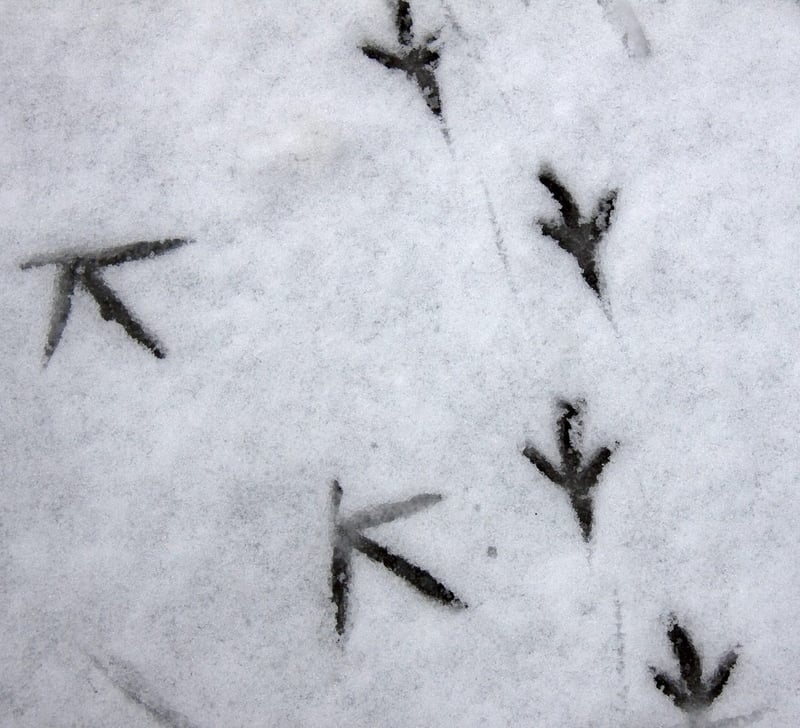
Note the arrow's location and inspect it. Bright red frothy blood with bubbles means lungs — follow within thirty minutes. Dark red means liver — wait two hours. Green material or a foul smell means gut — back out entirely and return in six to eight hours, or the next morning in cold weather.

Mark your first blood with tape and mark every subsequent sign. If you lose the trail, return to your last confirmed marker and search in an expanding arc rather than wandering forward. Grid the area with help before you accept a loss.

Recover, field dress, and cool the animal quickly. In warm early-season archery weather, meat spoilage is a real risk within hours — get the hide off, get air on the meat, and get ice on it.

Fresh deer tracks pressed into soft ground
Tony Hisgett from Birmingham, UK / CC BY 2.0 · Wikimedia Commons

Questions

Frequently asked

What draw weight do I need for a compound bow?
Sixty pounds handles every deer-sized animal in North America, and 65–70 lb is comfortable for elk. Modern efficient cams mean 55 lb with a heavy arrow out-penetrates a 70 lb setup from twenty years ago. Shoot the weight you can draw smoothly from a kneel in sagebrush or seated in a stand with cold muscles — not the weight you can muscle up standing in a warm pro shop.
How do I find my draw length?
Measure your wingspan in inches and divide by 2.5 for a close starting point. Then have a shop confirm it at full draw: your bow arm should be nearly straight without locking, your release hand anchored at the jaw, and your string touching the tip of your nose.
What is let-off and why does it matter?
Let-off is the percentage of peak draw weight the cams remove at full draw — typically 75–90%. A 70 lb bow at 85% let-off holds at about 10 lb, which is why a compound hunter can stay at full draw for thirty seconds while a stalked mule deer feeds behind a bush.
Do I need to tune my bow for broadheads?
Yes, always. Fixed-blade broadheads act like wings and expose any tuning flaw that field points hide. Shoot both at 20 yards; if the broadhead lands away from the field point, adjust the rest in the direction you want the broadhead to move until they group together.
What is a realistic maximum range with a compound?
Forty yards for most hunters, and 60 for people who genuinely practice at distance. The limit is not the bow — an arrow takes roughly half a second to reach 40 yards, which is enough time for an alert deer to drop several inches below your aim point.
How do I shoot a compound from a kneeling position?
Kneeling is the default in open sage and grass country, because it keeps your outline below the brush line. Kneel on the leg opposite your bow arm, sit back onto that heel for a stable base, and keep the same upper-body T — spine straight, shoulders level, head upright — that you use standing. Bend at the waist to change pin elevation, never by dropping the bow arm or collapsing the anchor.
Is a compound bow good for western spot-and-stalk hunting?
It is the dominant tool for it. High let-off lets you hold at anchor through the last seconds of a stalk, and the flat trajectory covers the 30–50 yard shots that open country produces. Set a single-pin slider or add 50 and 60 yard pins, carry a rangefinder on your bino harness, and practice on angled ground and from a knee.
How do I keep a compound quiet on a stalk?
Strip or tape anything that clicks: quiver hood against arrows, loose sight-light, hard-shell rangefinder case. Add limb dampeners and a string stop, keep a nocked arrow indexed in a full-containment rest, and carry the bow in your bow hand at your side rather than slung, so nothing has to move when you draw.


Also on The Wild10

Fishing Guides

Fish identification, the knots that hold, lure selection by conditions, and the habits that fill a stringer.

Open the fishing hub →
Fly angler casting on a clear northern river