Tracks
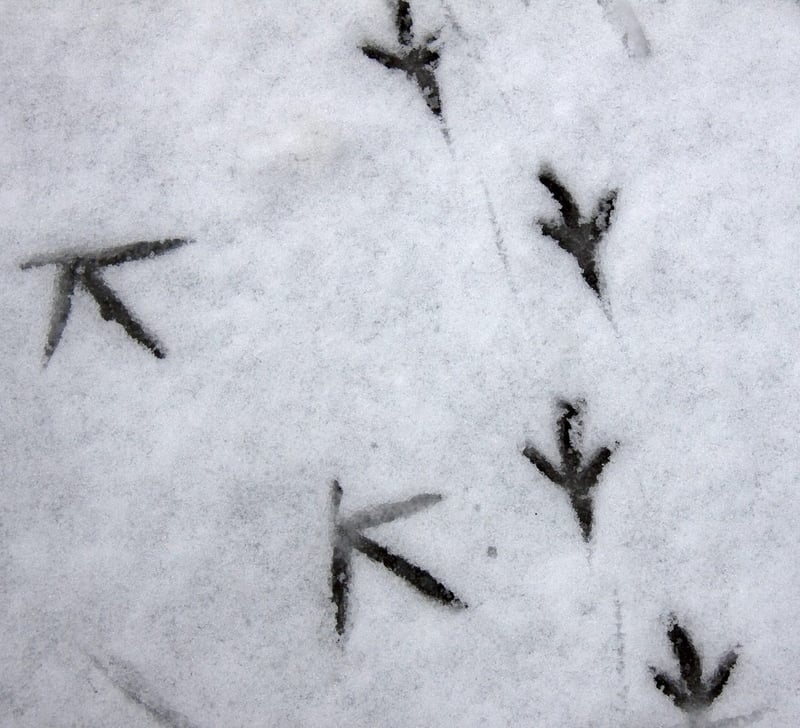
1 in.
Tiny three-toed prints in field dust, on dirt tank edges, and along gravel roads where birds pick grit.
Hunting · Small Game & Birds · Mourning Dove
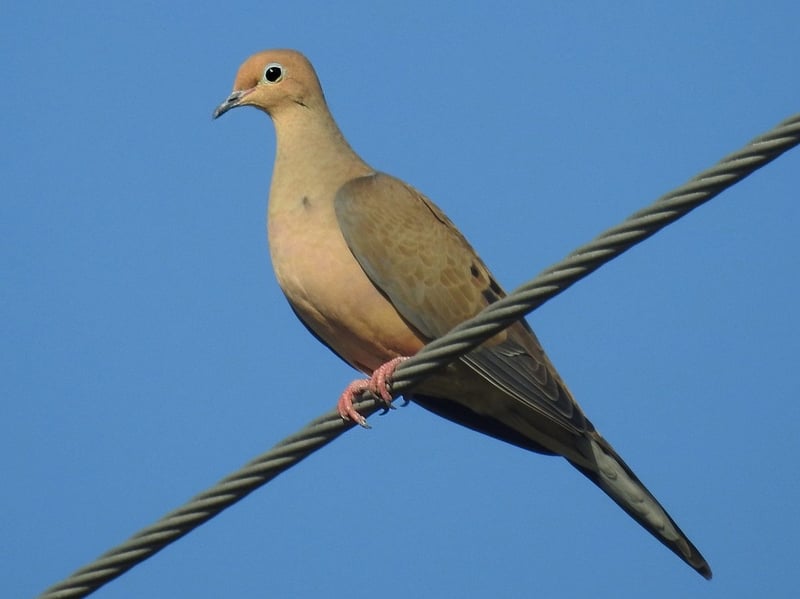
The most-hunted game bird in America — a fast, erratic flier over a harvested grain field that humbles even good wingshooters every September.
Mourning doves are the most harvested game bird in the United States by a wide margin, with tens of millions taken annually across a range that covers nearly every state, making the September 1 opener one of the biggest single-day hunting traditions in the country.
They're a migratory bird managed under federal frameworks alongside ducks and geese, which means every hunter needs a Harvest Information Program (HIP) certification in addition to a state license, even though the actual hunting logistics are as simple as sitting near a harvested grain field.
Dove hunting is famously social — groups of hunters set up around a sunflower or millet field's edges, and the shooting comes in waves as birds fly in to feed, offering fast, erratic, genuinely difficult wingshooting despite the bird's small size.
01
Dove hunting quality depends entirely on local field management — sunflower, millet, and wheat stubble fields planted or mowed specifically to attract doves are the key to a good hunt.
| Place | Why it's worth your time | How you get a tag |
|---|---|---|
| Texas | Enormous dove population and an early opener with widespread field access | Over-the-counter license plus federal HIP number |
| Georgia & the Southeast | Traditional opening-day dove shoots on managed sunflower fields | Over-the-counter license plus HIP; many hunts are invitation-based on private land |
| Kansas & Missouri | Strong Midwest dove numbers around harvested grain fields | Over-the-counter license plus HIP; check public wildlife area field plantings |
| Argentina (international option) | World's best dove volume hunting, wholly separate from U.S. seasons | Booked through licensed outfitters, no U.S. license needed |
| California | Good early-season opportunity near agricultural water sources | Over-the-counter license plus HIP |
02
Dove hunting is a field-position game: finding the right feeding field and setting up where birds naturally cross within range.
03
Dove sign is about food, water, grit, and perches, and it changes week to week as fields are cut.
1 in.
Tiny three-toed prints in field dust, on dirt tank edges, and along gravel roads where birds pick grit.
Wire and perch sign
Small white-capped splashes under power lines, dead snags, and fence wires — a heavily whitewashed wire means a daily flight line crosses there.
Cut fields
Birds working freshly cut sunflower, wheat, millet, and silage stubble, walking bare ground between rows. Doves will not feed in tall standing cover.
Evening
Muddy, bare-edged stock ponds and gravel roads at last light. Doves need open bare shorelines they can walk to.
Setup key
Consistent routes between roost trees and feed fields, usually along a treeline or over a gap. Sit under the line rather than in the middle of the field.
04
Dove hunting requires a state hunting license plus federal HIP certification since doves are a migratory game bird — a quick, cheap process compared to big-game tags.
05
Opening day dove hunting is one of the most social traditions in American hunting — groups of friends and family set up around a field's edges in lawn chairs, coolers nearby, well before legal shooting time.
The shooting comes in unpredictable bursts: quiet stretches followed by a handful of birds crossing fast and low, testing your swing and lead before disappearing over the treeline. Misses vastly outnumber hits even among good wingshooters.
It's often a kids' and beginners' introduction to wingshooting because of the social pace and abundance of birds, but the actual shooting — small, fast, erratic targets — is deceptively difficult and humbling even for veterans.
06
Not a shopping list — the handful of items that change whether you fill the tag and whether the meat gets home in good condition.
Fast, close targets
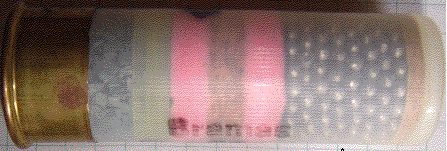
An open choke with 7.5 or 8 shot handles the typical close-range, fast-crossing dove shot without over-restricting pattern spread.
Long sits
Field edges offer little natural seating; a comfortable folding stool makes a multi-hour sit through slow stretches tolerable.
Avoid flaring birds
Doves have excellent eyesight; simple concealment and staying still matters more than full camouflage.
Pulls passing birds closer
A half-dozen clip-on decoys placed on fences or dead limbs near your position draws incoming doves within range.
Volume shooting
Dove hunting burns through shells fast given the miss rate; bring more than you think you'll need, plus ice for the birds.
07
Doves fall in stubble that swallows them. The mark is everything and the shells add up fast.
08
Doves are almost always breasted, and they are best cooked hot and fast to medium-rare.
09
Dove breast meat is small, dark, and rich, roughly 1 ounce per bird, meaning a limit of 15 birds yields a modest but flavorful meal.
The classic preparation is a bacon-wrapped breast half over a jalapeño slice, grilled quickly — the fast cooking suits the small, lean, dark meat well.
Breast the birds rather than plucking whole given their small size; most hunters skip the legs entirely as not worth the effort.
Seasons, bag limits, and shell restrictions change every year — especially for migratory birds. Confirm with these agencies before you hunt.
Federal frameworks, HIP certification info, and season-setting process for dove and other migratory birds.
One of the largest dove-hunting programs in the country with field-access resources.
Conservation program information relevant to dove-field habitat management.
Federal hunting resources and public land access information.
Questions
Where every hunting guide on The Wild10 starts.
Big game, small game, upland birds, and waterfowl — habitat and season.
Deer, elk, moose, bear, hog and sheep — where to hunt, tags, and what to expect.
All 50 states — seasons, tags, laws, public land and tactics.
Calling, shotguns, bows, camo, blinds, scouting, and spring vs fall.
Search every species and filter by tracks, droppings and sign, harvest, or skinning.
Cartridges, zero, field positions, wind, and shot placement.
Gauges, chokes, shot size, and lead for birds and slug country.
Instinctive shooting, draw weight, arrow spine, and close-range craft.
Eleven recurve and longbow guides: form, aiming, spine, tuning, and building tackle.
Draw length, sight and rest setup, broadhead tuning, and shot process.
Wind discipline, stand placement, blood trailing, and meat care.
Keep going
Search every game profile by tracks, sign, harvest, and skinning guides.
Read →Gauges, chokes, and shot size for birds and small game.
Read →Deer, elk, bear and more — tags, seasons, and tactics.
Read →Wind, scent, and getting game home in good condition.
Read →What to do with the birds and small game you bring home.
Read →Top 10 lists
Ranked picks with real product photos, specs, and editor notes — the buying side of everything covered in these guides.
Sitka and the rest: kickstands, call storage, all-day carry.
See the ranking →Upland and utility vests with shell and game carry.
See the ranking →Upland guns that swing fast on flushing roosters.
See the ranking →Bolt guns from budget workhorses to mountain rifles.
See the ranking →Over-unders and light autos built to carry all day.
See the ranking →3.5-inch guns that keep cycling through mud and ice.
See the ranking →Also on The Wild10
Fish identification, the knots that hold, lure selection by conditions, and the habits that fill a stringer.
Open the fishing hub →