Tracks
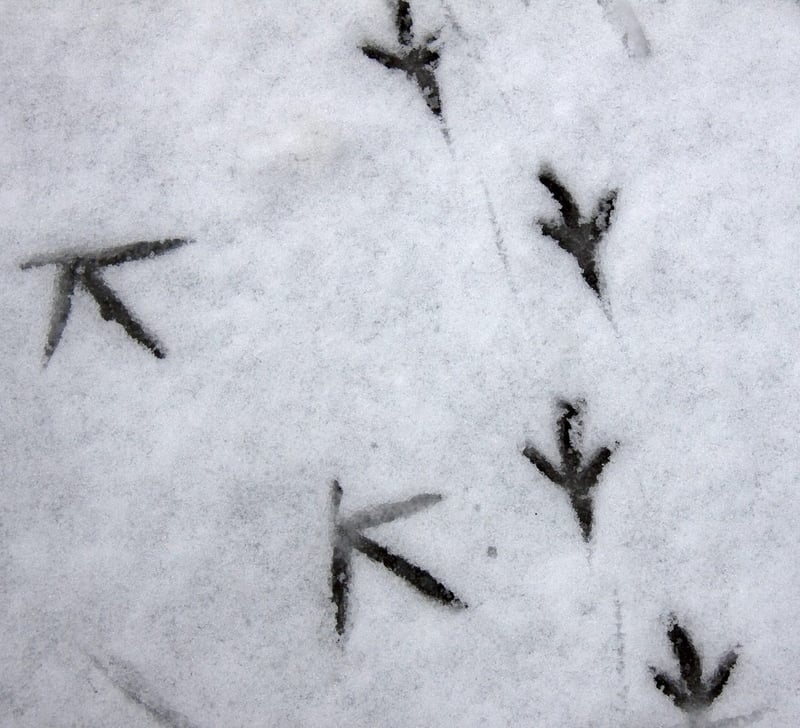
4+ in., three toes
Very large three-toed prints with no webbing and a long middle toe, walking in long deliberate lines through stubble and mud. Unmistakable once seen.
Hunting · Small Game & Birds · Sandhill Crane
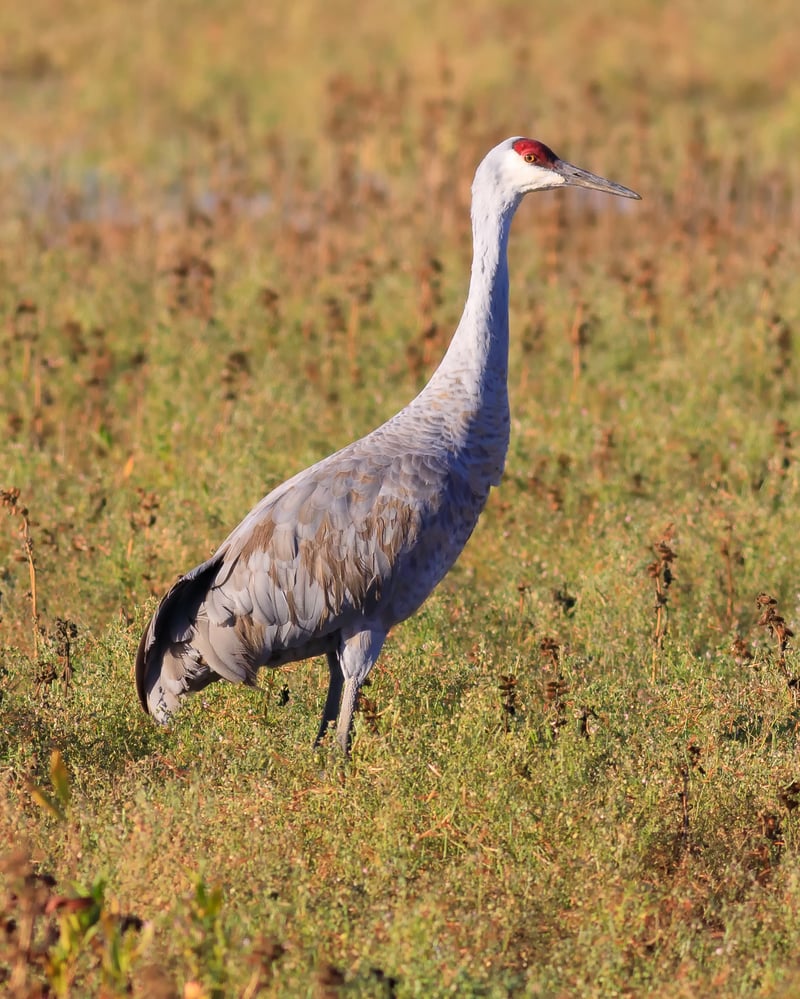
A large, prehistoric-looking migratory bird nicknamed the 'ribeye of the sky,' hunted over grain fields with a limited-permit system separate from ducks and geese.
Sandhill cranes are large, long-legged migratory birds that funnel through the Central Flyway in enormous numbers each fall, staging in river valleys like Nebraska's Platte before dispersing to wintering grounds across the southern Plains and parts of the Southwest.
Crane hunting is legal only in a limited number of states and is managed through a separate permit system from ducks and geese, often requiring a lottery draw or a specific application process due to the bird's population management sensitivities and visual similarity to the endangered whooping crane.
The hunt itself resembles field goose hunting — decoys set in harvested grain fields, hunters concealed in layout blinds — but cranes are exceptionally wary and vocal, adding a unique calling and identification challenge not found in other waterfowl hunting.
01
Legal crane hunting is concentrated in the Central Flyway states plus a handful of western states, and access is governed by permit availability more than habitat quality.
| Place | Why it's worth your time | How you get a tag |
|---|---|---|
| Texas | Large wintering population with generous permit availability in most zones | Over-the-counter or easy-draw permit depending on zone |
| Kansas | Strong Central Flyway migration corridor with a straightforward permit process | State-specific crane permit, typically easy to obtain |
| Nebraska | Home to the famous Platte River staging grounds, though hunting is more restricted near the core roosting area | Draw or permit system; check zone-specific rules carefully |
| Oklahoma | Good numbers along the Central Flyway migration path | State-specific crane permit |
| New Mexico | Western population wintering grounds with a dedicated permit season | Draw-based permit system |
02
Crane hunting closely resembles field goose hunting, but demands sharper species identification skills and often more conservative, patient calling.
03
Crane sign is oversized, obvious, and concentrated in grain fields and shallow river roosts. They are also the wariest birds most hunters ever pursue.
4+ in., three toes
Very large three-toed prints with no webbing and a long middle toe, walking in long deliberate lines through stubble and mud. Unmistakable once seen.
Large white-capped
Large loose droppings with heavy white urate content in feeding fields and on sandbars at roost.
Grain fields
Probed and grubbed soil in corn and small-grain stubble where cranes dig for waste grain, tubers, and invertebrates.
Shallow water
Wide shallow river sandbars and playa edges packed with tracks and droppings. Cranes roost standing in shallow water, never in cover.
Sound
The rolling, rattling bugle carries for miles and gives away flight lines long before the birds are visible.
04
Crane hunting requires a distinct permit process beyond standard waterfowl credentials, and hunters must pass an identification test in many states to avoid confusion with protected whooping cranes.
05
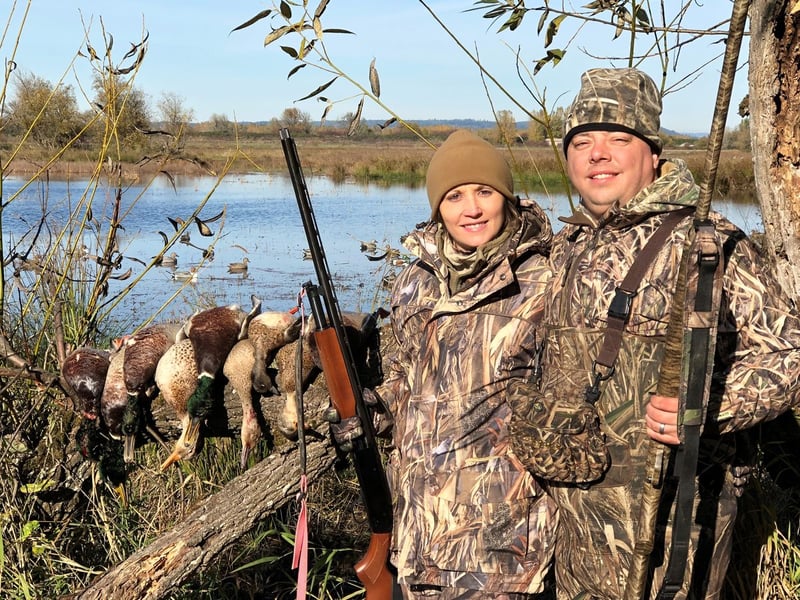
A crane hunt looks a lot like a goose hunt from a layout blind, but the soundscape is entirely different — a distant, rolling, prehistoric-sounding call carries for miles before you ever see the birds themselves.
Because of strict identification requirements, every approaching flock demands careful scrutiny before a shot is even considered, adding a genuine skills component beyond typical waterfowl shooting.
Cranes are large and tough, and a solid hit followed by the retrieve of a 10+ pound bird is a different physical experience than handling ducks or even geese.
06
Not a shopping list — the handful of items that change whether you fill the tag and whether the meat gets home in good condition.
Large, tough bird
Cranes require heavier non-toxic shot than ducks or standard geese given their size and dense feathering.
Field concealment
Same setup as field goose hunting — a low-profile blind hidden within the decoy spread on open grain-field terrain.
Species-specific spread
Full-body or silhouette crane decoys are distinct from goose decoys and improve realism for this specific, wary species.
Required knowledge
A clear reference for distinguishing sandhill cranes from the protected whooping crane is essential, and often legally required training.
Species-specific calling
A dedicated crane call produces the rolling, guttural sound distinct from any duck or goose call, used sparingly to draw attention.
07
Cranes are large, heavy-boned, and require real hides and full concealment. Cripples are dangerous — the bill is a spear.
08
Sandhill crane is called 'ribeye of the sky' for a reason, and it earns it if you cook the breast rare.
09
Sandhill crane is famously excellent table fare, often called the 'ribeye of the sky' for its dense, dark, richly flavored breast meat.
Best treated like a prime steak — seared hot and served medium-rare, since the lean, dense meat toughens quickly if overcooked.
A single crane yields substantially more meat than a duck or goose, often over a pound of breast meat per bird.
Seasons, bag limits, and shell restrictions change every year — especially for migratory birds. Confirm with these agencies before you hunt.
Federal frameworks and species identification resources for sandhill crane hunting.
State-specific crane permit and zone information.
Crane permit process and season dates.
Species identification and conservation background on sandhill and whooping cranes.
Questions
Where every hunting guide on The Wild10 starts.
Big game, small game, upland birds, and waterfowl — habitat and season.
Deer, elk, moose, bear, hog and sheep — where to hunt, tags, and what to expect.
All 50 states — seasons, tags, laws, public land and tactics.
Calling, shotguns, bows, camo, blinds, scouting, and spring vs fall.
Search every species and filter by tracks, droppings and sign, harvest, or skinning.
Cartridges, zero, field positions, wind, and shot placement.
Gauges, chokes, shot size, and lead for birds and slug country.
Instinctive shooting, draw weight, arrow spine, and close-range craft.
Eleven recurve and longbow guides: form, aiming, spine, tuning, and building tackle.
Draw length, sight and rest setup, broadhead tuning, and shot process.
Wind discipline, stand placement, blood trailing, and meat care.
Keep going
Search every game profile by tracks, sign, harvest, and skinning guides.
Read →Gauges, chokes, and shot size for birds and small game.
Read →Deer, elk, bear and more — tags, seasons, and tactics.
Read →Wind, scent, and getting game home in good condition.
Read →What to do with the birds and small game you bring home.
Read →Top 10 lists
Ranked picks with real product photos, specs, and editor notes — the buying side of everything covered in these guides.
Sitka and the rest: kickstands, call storage, all-day carry.
See the ranking →Upland and utility vests with shell and game carry.
See the ranking →Upland guns that swing fast on flushing roosters.
See the ranking →Bolt guns from budget workhorses to mountain rifles.
See the ranking →Over-unders and light autos built to carry all day.
See the ranking →3.5-inch guns that keep cycling through mud and ice.
See the ranking →Also on The Wild10
Fish identification, the knots that hold, lure selection by conditions, and the habits that fill a stringer.
Open the fishing hub →