
Tracks
Huge hind feet
Enormous, splayed hind prints — 5 inches or more long and nearly as wide — landing ahead of small front prints in the same bounding Y as a cottontail, but at twice the scale. The furred feet leave a soft, fuzzy-edged print.
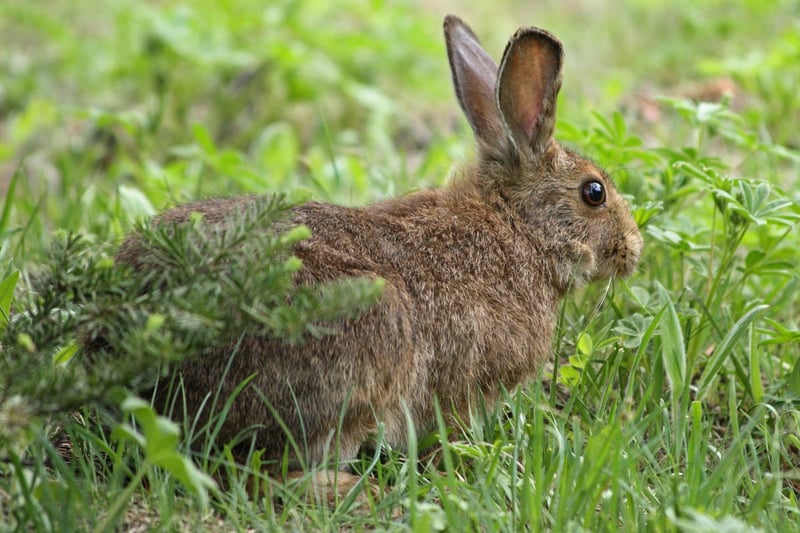
Hunting · Small Game & Birds · Snowshoe Hare
A winter-white hare that lives in dense conifer thickets, hunted in deep snow with beagles built for the cold.
Snowshoe hares live in dense conifer swamps, alder thickets, and regenerating boreal forest across the northern U.S. and Canada, and are named for their oversized hind feet that let them travel on top of deep snow that would bog down most predators.
Unlike cottontails, snowshoes turn white in winter, making them exceptionally well camouflaged against snow, and their preferred habitat — thick young conifer and alder cover — is genuinely difficult terrain to hunt through even for experienced beagle handlers.
It's a cold-weather, deep-snow pursuit that demands proper winter clothing and often snowshoes for the hunters themselves, following dogs bred and conditioned specifically to work in harsh northern winter conditions.
01
Snowshoe hare hunting quality follows dense boreal and northern conifer habitat, with the best populations found in the north woods of the Great Lakes states and much of Canada.
| Place | Why it's worth your time | How you get a tag |
|---|---|---|
| Maine north woods | Extensive dense conifer habitat with a strong hare-hunting tradition | Over-the-counter small-game license |
| Northern Minnesota & Wisconsin | Large public forest tracts with good hare populations, cycling with the ten-year hare/lynx rhythm | Over-the-counter small-game license |
| Michigan Upper Peninsula | Dense conifer swamps and alder thickets with solid hare numbers | Over-the-counter small-game license |
| New Hampshire & Vermont | Classic New England hare hunting in mixed conifer-hardwood forest | Over-the-counter small-game license |
| Ontario & Quebec | Vast boreal forest with abundant hare populations | Nonresident license required, check provincial regulations |
02
Snowshoe hare hunting follows the same beagle-and-circle principle as cottontail hunting, adapted for deep snow and dense conifer cover.
03
Hare sign is written in snow in the spruce and alder swamps, and it is the entire basis of hunting them behind beagles.
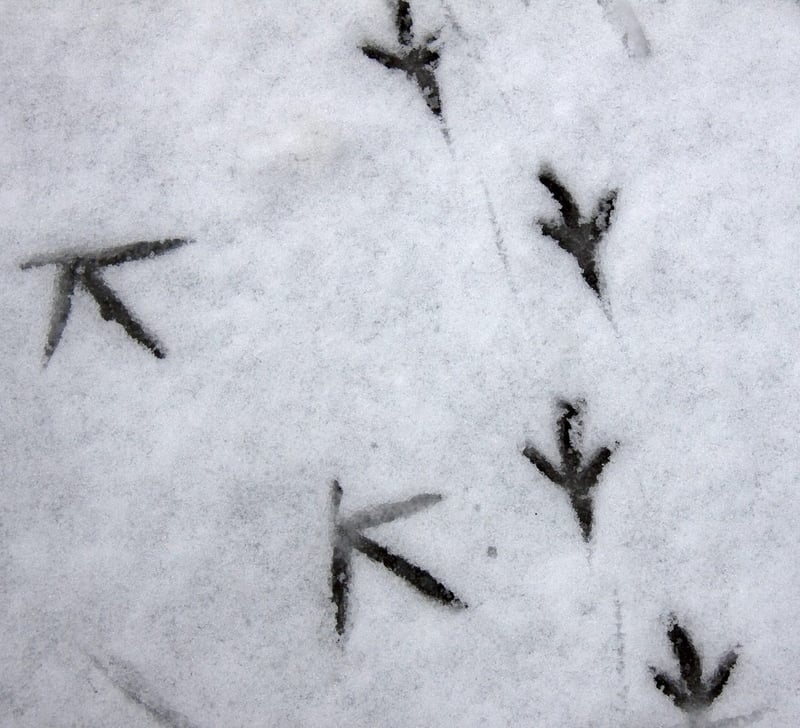
Huge hind feet
Enormous, splayed hind prints — 5 inches or more long and nearly as wide — landing ahead of small front prints in the same bounding Y as a cottontail, but at twice the scale. The furred feet leave a soft, fuzzy-edged print.
Large pellets
Round fibrous pellets noticeably larger than a cottontail's, scattered heavily along runways in conifer swamps.
Packed highways
Hard-packed trails in deep snow through alder, spruce, and cedar, worn down by repeated use. Hares run these runways in circles when pushed, which is why beagles work.
Winter feeding
Clean 45-degree clipped conifer and alder twigs and gnawed bark at snow height, sometimes several feet up on top of deep snowpack.
Under cover
Melted-out hollows under low spruce boughs and blowdowns, often with hair and droppings.
04
Snowshoe hare tags require only a basic small-game license — the challenge is access to dense northern conifer habitat and cold-weather preparedness rather than any licensing complexity.
05
A snowshoe hare hunt is a genuine winter wilderness experience — deep snow, bitter cold, and dense conifer cover that makes every step a workout even before the dogs strike a trail.
The visual challenge is unique: a hare in full winter white against fresh snow can be nearly invisible until it moves, testing a hunter's eye as much as any calling or scent-based skill in other small-game hunting.
It rewards hunters who genuinely enjoy hard winter conditions — the payoff is a quiet, snow-covered forest, the distant bay of hounds working difficult cover, and a hunt that few others are willing to brave.
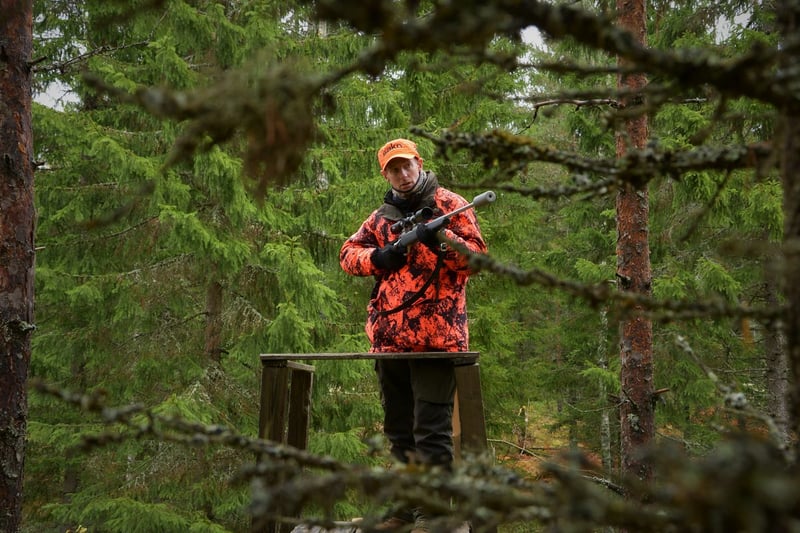
06
Not a shopping list — the handful of items that change whether you fill the tag and whether the meat gets home in good condition.
Close, quick shots
Similar to cottontail hunting, an open choke with 6 shot handles the typical close-range shot through dense cover.
Deep snow work
Dogs bred and conditioned for northern winter conditions handle deep snow and bitter cold far better than standard beagle lines.
Deep-snow mobility
Essential for keeping pace with dogs and moving efficiently through conifer swamps with two feet or more of snow.
Genuine winter conditions
This hunt happens in real winter cold; insulated boots, base layers, and a windproof outer shell are not optional.
Safety and concealment
Balancing visibility to hunting partners with concealment from wary hares against snow is a real consideration in this hunt.
07
Hares run a big circle and come back. The shot comes when you stand still and let the dogs work.
08
Hare is darker and stronger than cottontail and it wants a long, wet cook.
09
Snowshoe hare yields lean, dark meat, slightly gamier than cottontail, typically around 1-1.5 pounds per animal.
Best slow-braised given the firmer texture compared to cottontail, often in a hearty winter stew with root vegetables.
As with all wild rabbits and hares, cook thoroughly given the tularemia risk, and handle carcasses with gloves during field dressing.
Seasons, bag limits, and shell restrictions change every year — especially for migratory birds. Confirm with these agencies before you hunt.
Hare population data and northern forest hunting access information.
Cold-weather beagle training and hare-hunting tradition information.
Locate national forest land with dense conifer habitat open to public hunting.
Federal hunting resources and public land access information.
Questions
Where every hunting guide on The Wild10 starts.
Big game, small game, upland birds, and waterfowl — habitat and season.
Deer, elk, moose, bear, hog and sheep — where to hunt, tags, and what to expect.
All 50 states — seasons, tags, laws, public land and tactics.
Calling, shotguns, bows, camo, blinds, scouting, and spring vs fall.
Search every species and filter by tracks, droppings and sign, harvest, or skinning.
Cartridges, zero, field positions, wind, and shot placement.
Gauges, chokes, shot size, and lead for birds and slug country.
Instinctive shooting, draw weight, arrow spine, and close-range craft.
Eleven recurve and longbow guides: form, aiming, spine, tuning, and building tackle.
Draw length, sight and rest setup, broadhead tuning, and shot process.
Wind discipline, stand placement, blood trailing, and meat care.
Keep going
Search every game profile by tracks, sign, harvest, and skinning guides.
Read →Gauges, chokes, and shot size for birds and small game.
Read →Deer, elk, bear and more — tags, seasons, and tactics.
Read →Wind, scent, and getting game home in good condition.
Read →What to do with the birds and small game you bring home.
Read →Top 10 lists
Ranked picks with real product photos, specs, and editor notes — the buying side of everything covered in these guides.
Sitka and the rest: kickstands, call storage, all-day carry.
See the ranking →Upland and utility vests with shell and game carry.
See the ranking →Upland guns that swing fast on flushing roosters.
See the ranking →Bolt guns from budget workhorses to mountain rifles.
See the ranking →Over-unders and light autos built to carry all day.
See the ranking →3.5-inch guns that keep cycling through mud and ice.
See the ranking →Also on The Wild10
Fish identification, the knots that hold, lure selection by conditions, and the habits that fill a stringer.
Open the fishing hub →