Tracks
2 in., prairie
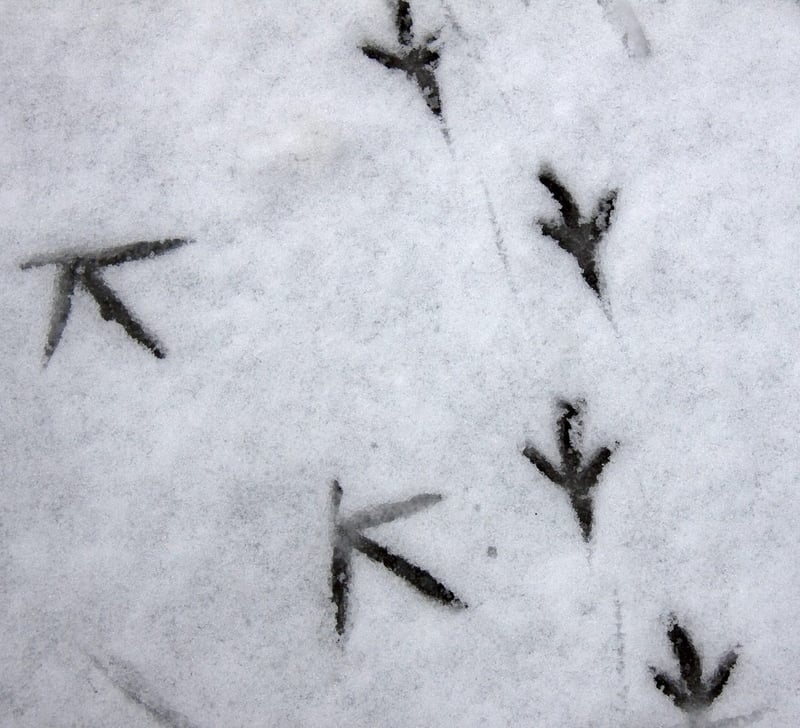
Three-toed prints in dust and snow, usually in loose groups because sharptails move in coveys. Winter foot feathering widens the print.
Hunting · Small Game & Birds · Sharp-Tailed Grouse
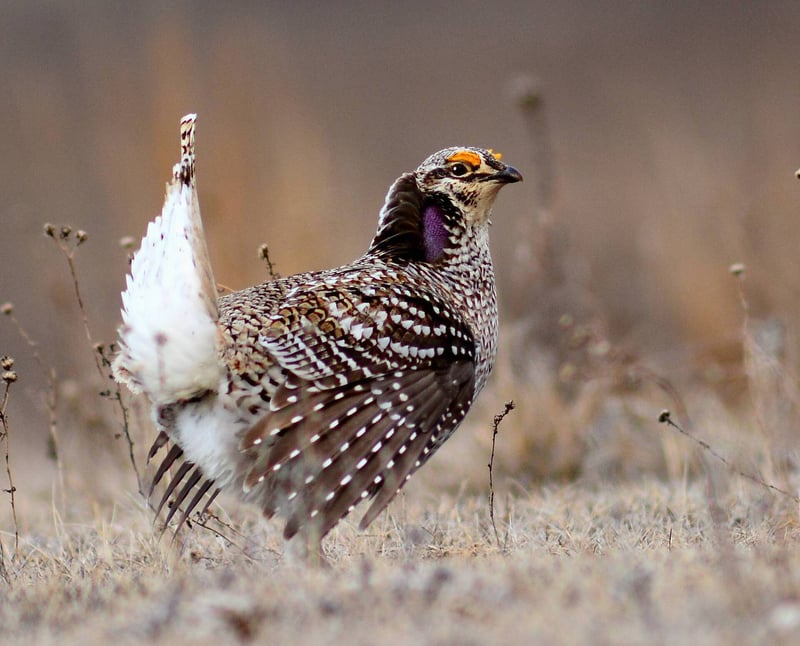
A prairie grouse that flushes in loose coveys from mixed grass and rolling hills, made for a long walk and an open-choke shotgun.
Sharp-tailed grouse are birds of open mixed-grass prairie, brushy coulees, and grain-field edges across the Dakotas, Montana, and prairie Canada, gathering in loose coveys of 5–15 birds outside of the spring lek-dancing season.
They're a walking hunter's bird — no blinds, no calling, just miles of rolling native prairie covered on foot with a dog ranging ahead, flushing coveys that scatter into singles you can work again.
Sharptails often share range with pheasants and Hungarian partridge, so a single fall walk through prairie CRP and grain-field edges can produce a genuine mixed bag.
01
The best sharptail hunting sits in the transition zone between native mixed-grass prairie and grain agriculture across the northern Plains.
| Place | Why it's worth your time | How you get a tag |
|---|---|---|
| South Dakota | Strong native prairie populations in the west-river region | Over-the-counter small-game or combination license |
| North Dakota | Excellent PLOTS public access through native prairie and CRP | Over-the-counter license, PLOTS guide published each fall |
| Montana | Huge expanses of native prairie with light hunting pressure | Over-the-counter upland bird license |
| Nebraska (Sandhills) | Unique dune-prairie habitat with good sharptail density | Over-the-counter licenses; Open Fields and Waters access |
| Saskatchewan & Alberta | Massive native prairie tracts with strong bird numbers | Nonresident license and often a licensed outfitter required |
02
Sharptail hunting means long walks across open prairie, working coveys that flush at a distance and often re-flush as workable singles.
03
Sharptail sign concentrates on prairie leks and in the transition between native grass and brushy draws.
2 in., prairie
Three-toed prints in dust and snow, usually in loose groups because sharptails move in coveys. Winter foot feathering widens the print.
Fibrous coils
Dry fibrous coils with white caps in roosting grass. Concentrations in a single grass pocket mean a covey roost.
Spring
Bare, cropped, trampled hilltop openings with heavy droppings and feathers where males dance in April. Coveys stay near lek complexes all year.
Fall & winter
Stripped buffaloberry, chokecherry, and rosehip thickets in draws, and clipped birch and aspen buds in trees during hard winter.
Draws
Flattened grass and feathers on the leeward side of a draw or a snowberry patch, usually on the sunny side in cold weather.
04
Sharptail tags require only a basic upland bird or small-game license — the effort is in finding native prairie access, not securing permission from a draw system.
05
A sharptail hunt feels like a pheasant hunt turned up in scale — miles of open, rolling prairie instead of grassy draws, with a dog working hundreds of yards ahead across visible terrain rather than hidden cover.
The covey flush is loud and sudden even at distance — a dozen birds cackling up together and scattering across a hillside, several within range and several not. It rewards a hunter who can pick a single bird out of a rising group.
The follow-up work on scattered singles is often the best shooting of the day, since individual birds hold tighter after a covey break and offer closer, more deliberate flushes.
06
Not a shopping list — the handful of items that change whether you fill the tag and whether the meat gets home in good condition.
Longer shots
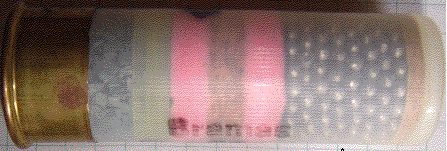
Sharptail flushes are often farther than pheasant or grouse; a tighter choke than typical upland guns helps reach out.
Balance pattern and reach
Slightly larger shot than grouse loads helps retain energy at the longer distances typical of prairie flushes.
Spot coveys at distance
Glassing a hillside before walking in can locate feeding coveys and save miles of unproductive walking.
Miles of open ground
Prairie terrain is uneven with badger holes and cactus in some areas — ankle support and tough soles matter.
Wide-ranging dogs
Dogs cover huge ground on open prairie; a GPS collar keeps you oriented to where your dog is working relative to you.
07
Sharptails flush wild and far, and they land in country where everything looks the same. Marking matters more than shooting.
08
Sharptail is darker and stronger than pheasant. Handle it well and it is excellent; handle it badly and it earns its reputation.
09
Sharptail grouse yields lean, mild breast meat similar to ruffed grouse, typically 6–8 ounces per bird.
Best cooked quickly and kept rare to medium in the breast; older birds taken late season benefit from braising.
Combine several birds for a full meal, and save legs for stock given their toughness from a life of walking prairie terrain.
Seasons, bag limits, and shell restrictions change every year — especially for migratory birds. Confirm with these agencies before you hunt.
PLOTS public access guide and upland season information.
Licensing and public land access for prairie grouse.
Prairie habitat programs that also benefit sharptail grouse.
Federal hunting resources and public land access information.
Questions
Where every hunting guide on The Wild10 starts.
Big game, small game, upland birds, and waterfowl — habitat and season.
Deer, elk, moose, bear, hog and sheep — where to hunt, tags, and what to expect.
All 50 states — seasons, tags, laws, public land and tactics.
Calling, shotguns, bows, camo, blinds, scouting, and spring vs fall.
Search every species and filter by tracks, droppings and sign, harvest, or skinning.
Cartridges, zero, field positions, wind, and shot placement.
Gauges, chokes, shot size, and lead for birds and slug country.
Instinctive shooting, draw weight, arrow spine, and close-range craft.
Eleven recurve and longbow guides: form, aiming, spine, tuning, and building tackle.
Draw length, sight and rest setup, broadhead tuning, and shot process.
Wind discipline, stand placement, blood trailing, and meat care.
Keep going
Search every game profile by tracks, sign, harvest, and skinning guides.
Read →Gauges, chokes, and shot size for birds and small game.
Read →Deer, elk, bear and more — tags, seasons, and tactics.
Read →Wind, scent, and getting game home in good condition.
Read →What to do with the birds and small game you bring home.
Read →Top 10 lists
Ranked picks with real product photos, specs, and editor notes — the buying side of everything covered in these guides.
Sitka and the rest: kickstands, call storage, all-day carry.
See the ranking →Upland and utility vests with shell and game carry.
See the ranking →Upland guns that swing fast on flushing roosters.
See the ranking →Bolt guns from budget workhorses to mountain rifles.
See the ranking →Over-unders and light autos built to carry all day.
See the ranking →3.5-inch guns that keep cycling through mud and ice.
See the ranking →Also on The Wild10
Fish identification, the knots that hold, lure selection by conditions, and the habits that fill a stringer.
Open the fishing hub →