Skip to content
Wild10
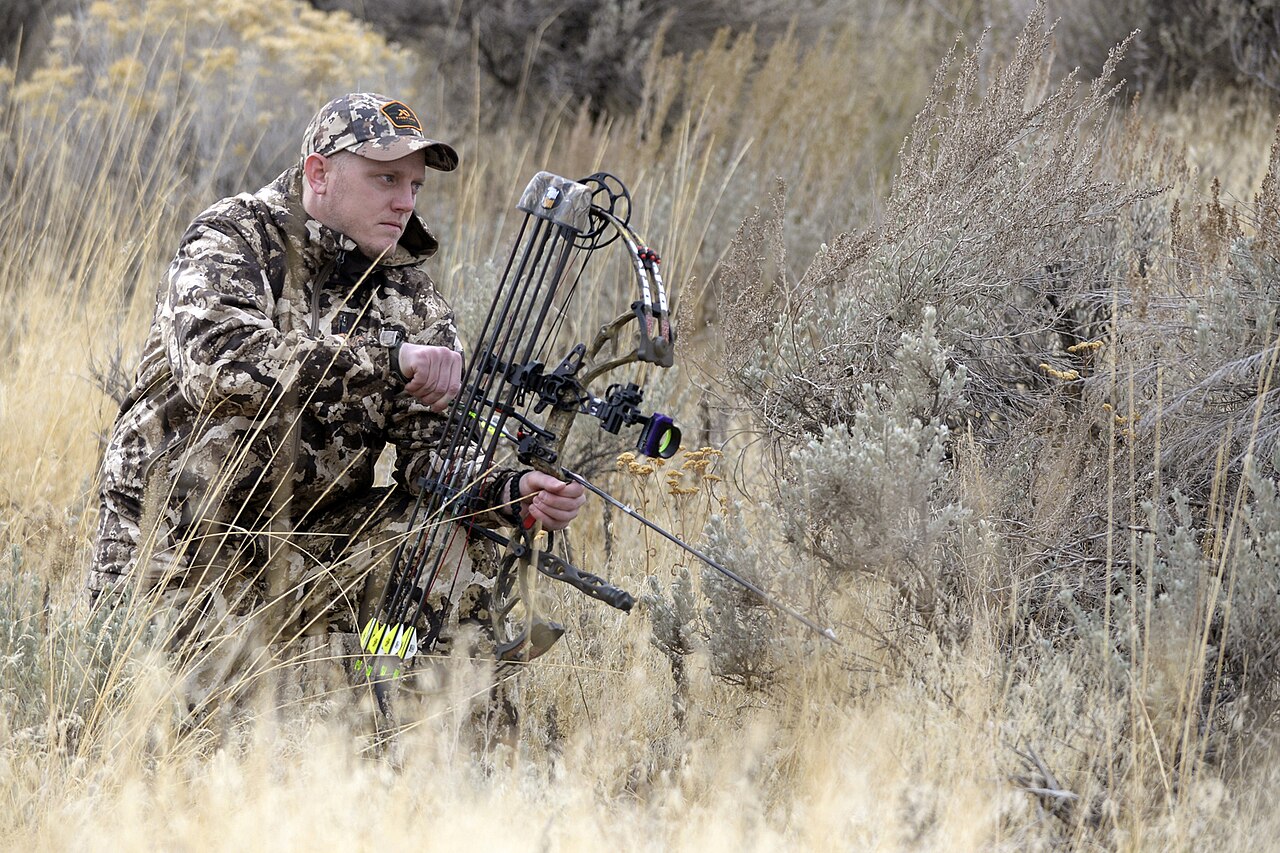
Bowhunter kneeling in sagebrush with a camouflaged compound bow

Hunting · Turkey · Bow

Turkey Bowhunting

Drawing a bow on the sharpest eyes in the woods requires a blind, a decoy, and a shot placement chart that looks nothing like a deer's.

A wild turkey's eyesight is the reason turkey bowhunting is hard. He can see color, he sees motion at the edge of his vision better than you see it in the center of yours, and drawing 60 pounds inside 20 yards of him without cover is nearly impossible.

The answer is almost always a ground blind. Turkeys — unlike deer — ignore a blind that appeared yesterday, which means you can move a pop-up into a strut zone in the dark and hunt it that morning.

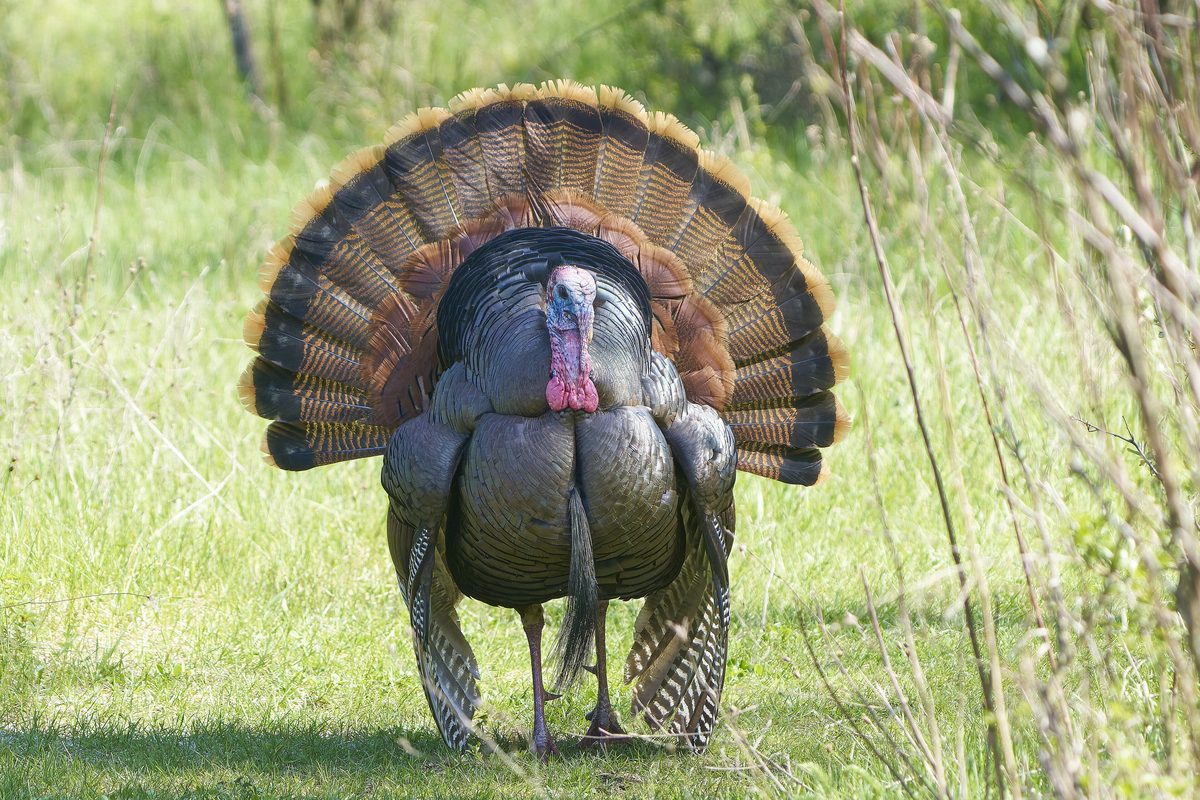
Turkey shot placement is its own subject. A deer hunter's broadside lung shot on a turkey is a marginal hit; the vitals sit high and forward, and a strutting bird hides them behind an enormous ball of feathers.

Blind acclimation
None needed
Typical shot
12–20 yards
Broadhead
Wide mechanical or guillotine
Draw timing
Behind the fan

01

Where to aim — turkey shot placement

The vitals are roughly the size of a grapefruit, sit high in the body, and shift dramatically with the bird's posture.

Broadside, standing

Best shot

Aim where the leg joins the body, then come up about a third of the body height. This puts the arrow through the lungs and often the spine. Do not aim center-body; you will hit only breast meat and the bird will run.

  • Follow the leg up into the body
  • High and tight to the wing butt
Strutting, facing away

The classic

Aim at the base of the fan, dead center — the anus, bluntly. That line runs straight through the vitals and anchors birds fast. It is the highest-percentage bow shot on a turkey.

  • Center of the fan base
  • Very high recovery rate

Strutting, facing you

Take it

Aim at the base of the beard where it meets the breast. The arrow travels through the crop into the lungs and spine. Wait until the head is up rather than tucked.

  • Beard base
  • Wait for head up

Quartering away

Adjust forward

Push the aim point forward toward the off-side wing butt. The vitals are farther forward than a deer hunter's instinct suggests, and a rear hit is a lost bird.

  • Aim toward the far wing butt
  • Never behind the midline

Head and neck

Specialty heads only

Guillotine-style decapitating broadheads make the head a valid target inside 15 yards, and a miss is usually a clean miss rather than a wound. It demands precision and a rock-steady rest.

  • Inside 15 yards
  • Miss usually means clean miss

02

Setting up a bow hunt in a blind

  1. 1Set the blind in a known strut zone, field corner, or between roost and feed — turkeys will not detour to investigate a blind, so it must be where they already go.
  2. 2Brush the blind lightly at the base only. Turkeys tolerate the shape; they do not tolerate a silhouette moving inside it.
  3. 3Close every window except the two you will shoot through. A backlit shooter inside a blind is visible from 80 yards.
  4. 4Wear black, sit on a low chair, and keep the bow on a hook — not in your lap — so drawing does not require a big body movement.
  5. 5Set decoys at 8 to 12 yards, quartering away from the shooting window, so an incoming gobbler stops with his fan toward you.
  6. 6Draw when the fan blocks his eyes, or when a jake decoy has his full attention. Then wait for him to break strut and stretch his neck.
  7. 7After the shot, do not leave the blind if other birds are still present and your tag allows another; a downed bird often does not scatter the flock.

03

Broadheads for turkeys

Wide mechanical (2 in+)

Most popular

A big cutting diameter compensates for the small vital area and anchors birds within sight. Requires enough kinetic energy to open reliably — check your setup against the manufacturer's minimum.

  • Largest wound channel
  • Confirm minimum draw weight

Guillotine / decapitator

Head shots

Multi-blade heads designed to sever the head and neck. Devastatingly effective at close range and forgiving of a clean miss, but they fly differently than field points and must be practiced.

  • Practice at hunting distance
  • Very short effective range

Fixed blade with a stopper

Prevents pass-through

A standard fixed head with a spring or disc behind it that stops the arrow from passing through, keeping the shaft in the bird as a drag anchor.

  • Stops pass-through flight
  • Reliable flight characteristics

Small-diameter fixed

Not recommended

A narrow deer head can pass through a turkey without hitting anything that stops him. If it is all you have, place the arrow precisely and expect to follow up.

  • Highest wound risk
  • Use only with perfect placement

Questions

Frequently asked

Do I need a ground blind to bowhunt turkeys?
Practically, yes. Turkeys detect the draw motion in open cover almost every time. A pop-up blind, or a natural blind built deep enough to hide your draw, is the single biggest factor in bow success.
What draw weight do I need for turkeys?
Anything you can draw and hold steadily in a chair. Forty pounds with a sharp, wide head kills turkeys cleanly at 15 yards; holding steady matters far more than speed.
Should I use a decoy when bowhunting?
Yes — a jake decoy paired with a hen gives the gobbler a target to focus on and stops him at a known distance, which is exactly what a bowhunter needs. Skip decoys on crowded public land for safety.

Also on The Wild10

Fishing Guides

Fish identification, the knots that hold, lure selection by conditions, and the habits that fill a stringer.

Open the fishing hub →
Fly angler casting on a clear northern river