Skip to content
Wild10
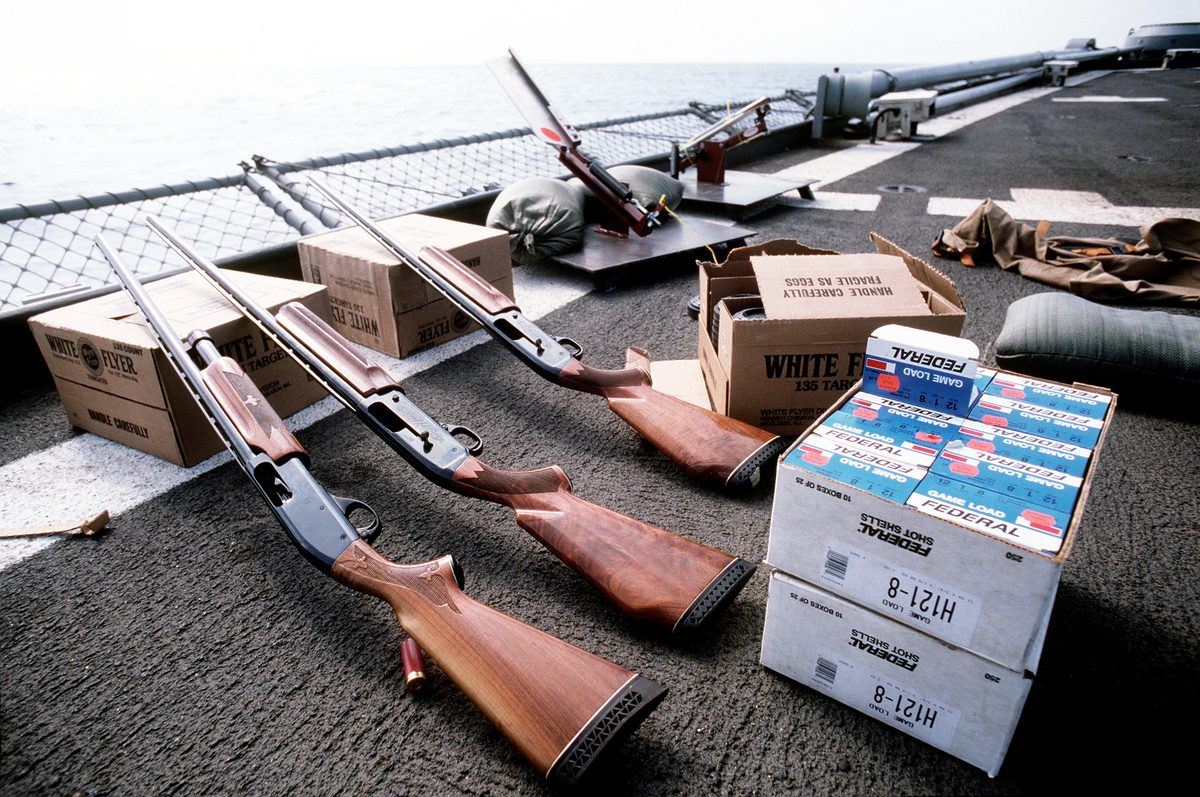
Break-action shotgun laid out for inspection

Hunting · Turkey · Shotgun

Turkey Shotgun Hunting

A turkey gun is a rifle that shoots pellets. Pattern it like one, and know the range where your pattern actually kills.

A turkey shotgun is aimed, not pointed. You are trying to put a dense cluster of pellets into a target roughly the size of a fist — the head and upper neck — while the body absorbs nothing useful.

That makes the turkey gun the one shotgun in your safe that deserves rifle-style treatment: a tight choke, one specific load, an optic or fiber-optic sights, and a documented pattern at known distances.

The load and choke combination matters more than the gun. A patterned 20 gauge with a good turkey choke outperforms an unpatterned 12 gauge every single time.

Target zone
Head and upper neck
Pattern standard
100+ hits in 10 in at 40 yd
Common choke
.660–.670 turkey
Ethical limit
Where your pattern proves it

01

Gauge, choke, and load combinations

Confirm every combination on paper. These are starting points, not guarantees.

GaugeChoke constrictionLoadRealistic max range
12 ga.665 turkey3 in #5 lead40 yd
12 ga.670 turkey3 in #9 TSS50+ yd
20 ga.565 turkey3 in #6 lead35 yd
20 ga.570 turkey3 in #9 TSS45 yd
28 ga.550 turkey#9 TSS40 yd
.410.395 turkey3 in #9 TSS35 yd

02

How to pattern a turkey gun properly

This takes one range session and one box of shells, and it is the difference between a clean kill and a wounded bird.

  1. 1Print or draw a turkey head-and-neck target with a 10-inch circle centered on the neck vertebrae.
  2. 2Shoot one shot from a solid rest at 25 yards to confirm the gun hits point of aim. Many shotguns shoot high; a turkey gun must not.
  3. 3Move to 40 yards and shoot one shot per load you are testing. Count pellet strikes inside the 10-inch circle.
  4. 4Accept nothing under 100 strikes in that circle at 40 yards. Under that number, pellet gaps large enough to miss the spine become likely.
  5. 5Repeat the winner at 50 yards to find where your pattern falls apart. That distance minus five yards is your maximum ethical range.
  6. 6Write the load, choke, and maximum range on tape inside your gun case, and re-pattern any time you change ammunition lots.

03

Shot placement and the moment of truth

Aim where the neck meets the head, not at the body and not at the beard. A turkey's vitals for shotgun purposes are the brain and the upper spine; body hits with shot cripple birds that are never recovered.

Wait for the head up and still. A strutting gobbler has his head tucked into his fan — cluck once and he will periscope up, which is the shot. If he is walking, let him take one more step and stop.

Keep your cheek welded to the stock. The overwhelmingly common miss on turkeys is shooting over the bird because the shooter lifted his head to look, which is exactly what happens with a rifle.

After the shot, get on the bird immediately. A pellet-stunned turkey can recover and fly, and putting a boot on the head and neck ends the hunt cleanly.


04

Sights, optics, and small upgrades that matter

Red dot sight

Biggest upgrade

A small reflex sight removes bead-alignment error entirely and works in the low light of first gobble. Zero it at 25 yards with your chosen load and confirm the pattern center matches the dot.

  • Zero at 25 yards
  • Verify pattern center to dot

Fiber-optic sights

Cheap improvement

A front and rear fiber-optic set gives a repeatable two-point aim, which a single bead never does. The least expensive accuracy fix available for a turkey gun.

  • Two-point alignment
  • Under the cost of a box of TSS

Sling and swivels

Run and gun

A padded sling keeps both hands free for calls and climbing. Choose one with silent hardware; a swivel that clicks against the barrel costs birds.

  • Silence the hardware
  • Essential for covering ground

Shooting sticks

Stability

A set of tripod sticks lets you hold the gun on a strut zone for long minutes without arm shake, which is the main reason hunters move at the wrong moment.

  • Reduces movement at the shot
  • Especially useful in blinds

Questions

Frequently asked

Is TSS worth the money?
For range and pattern density, yes — tungsten super shot is far denser than lead, so tiny #9 pellets carry lethal energy well past 40 yards. It also costs several dollars per shell, which is defensible for a handful of shots per season.
Can I hunt turkeys with a 20 gauge?
Absolutely, and with TSS a patterned 20 gauge matches what a 12 gauge did with lead a generation ago. It is a better choice for young or recoil-sensitive hunters and for all-day carrying.
How far is too far for a turkey shot?
Whatever distance your patterning session cannot support. For most lead setups that is 40 yards; for TSS it may be 50. Range estimation error is the real danger, so use a rangefinder to mark trees at your limit before the birds arrive.

Also on The Wild10

Fishing Guides

Fish identification, the knots that hold, lure selection by conditions, and the habits that fill a stringer.

Open the fishing hub →
Fly angler casting on a clear northern river