Skip to content
Wild10
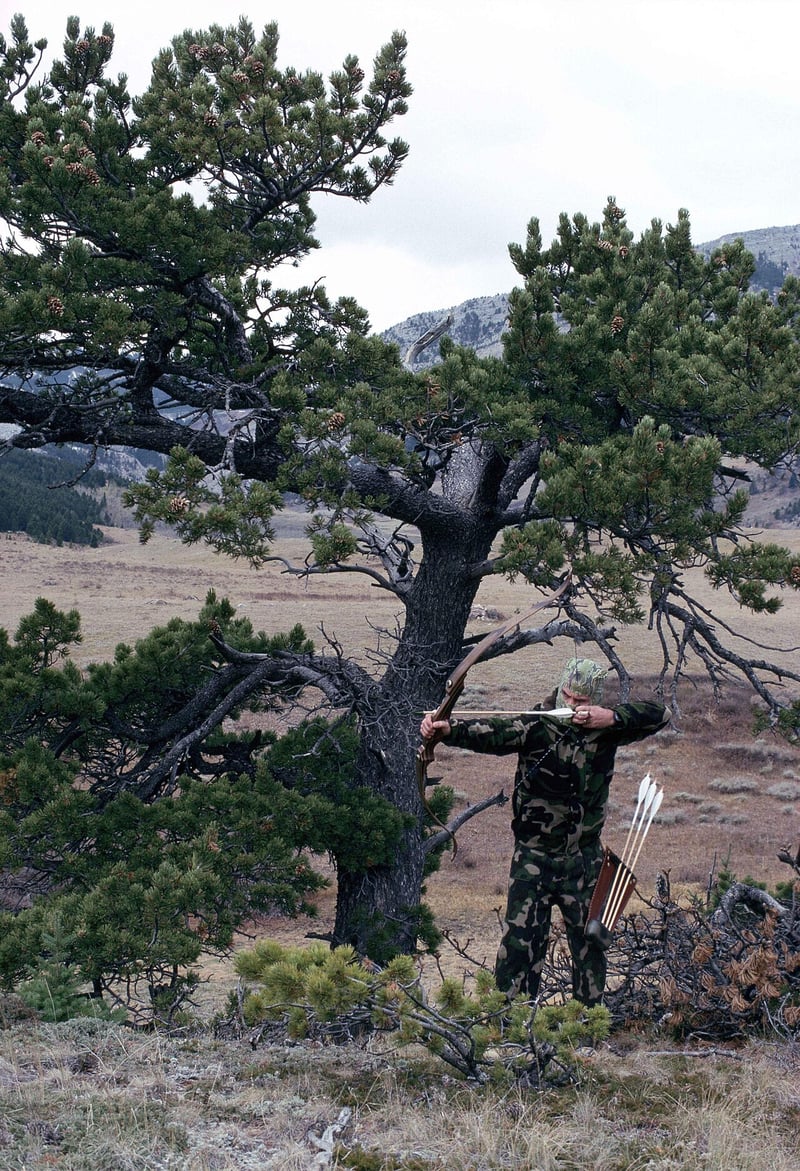
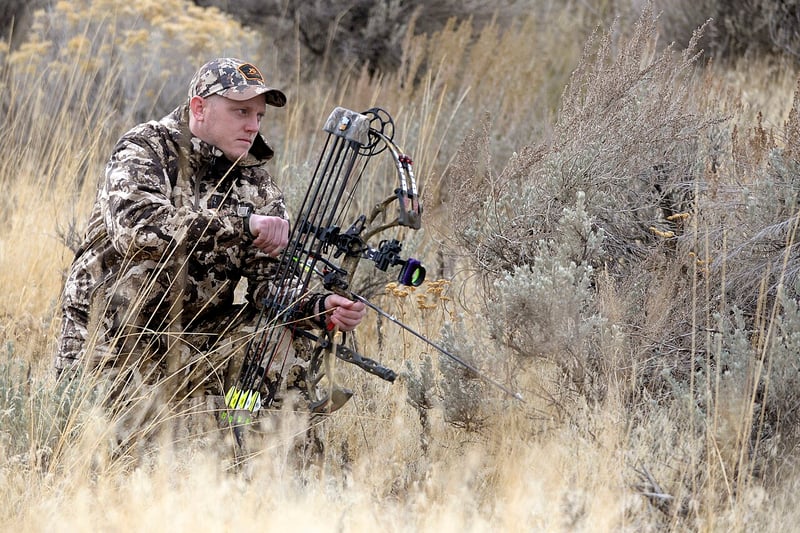
Camouflaged hunter at full draw with a traditional recurve bow in high country pine

Traditional archery · Skill

Choosing an aiming method for a bow with no sights

Four proven systems, one decision. Pick one and commit — mixing them is why most shooters plateau.

Every traditional archer aims. The disagreement is only about whether the reference is conscious. Instinctive shooters let trained subconscious calibration place the bow; gap shooters use the arrow point against the target; string walkers change the hook to move point-on distance.

None of them is more traditional than the others, and none is inherently more accurate. What separates them is how much you must shoot to stay sharp and how fast the method deploys on a hunting shot that opens for two seconds.

Methods
4 mainstream
Hunting favourite
Instinctive / split vision
Most repeatable
Gap shooting
Rule
Commit to one

01

The four methods

White-tailed deer buck standing at a field edge
USDA photo by Scott Bauer / Public domain · Wikimedia Commons

Instinctive

Subconscious calibration

Stare at the smallest spot you can see and let repetition place the bow, the same way you throw a ball at a target. Fastest to deploy, superb at unknown and awkward distances, and the least consistent after a layoff. Requires near-daily volume.

  • Fastest shot cycle
  • Best on moving or angled shots
  • Decays within two weeks off

Gap shooting

Arrow point reference

Hold the arrow point a known distance below (or on) the target for each range. You must know your point-on distance and memorise gaps at 10, 15, 20 and 25 yards. Slower, more conscious, and dramatically more repeatable under pressure.

  • Learn point-on first
  • Needs known distances
  • Recovers fast after time off

Split vision

Hybrid

Focus hard on the spot while allowing the arrow point into peripheral awareness as a rough sanity check. Most experienced hunters end up here whether they call it that or not — instinctive speed with a gap shooter's error catch.

String walking / face walking

Target-derived

Move the hook down the string (or the anchor up the face) to change point-on distance so you can always aim directly at the target. Extremely precise on known-distance target courses; too slow and too tackle-dependent for most hunting.

02

Find your point-on distance

Every method benefits from knowing this number — the range at which your arrow point sits exactly on the spot you want to hit.

  1. 1Set a target at 20 yards and shoot with the point held directly on the aiming spot.
  2. 2If the group lands high, move the target back; if low, move it closer.
  3. 3Repeat in five-yard steps until the group centres on the point. That distance is your point-on.
  4. 4From there, write down the gap you need at 10, 15 and 25 yards on a card and tape it inside your quiver.
  5. 5Re-check point-on any time you change point weight, arrow length or draw weight.

Questions

Frequently asked

Is instinctive shooting more accurate than gap shooting?
No. Gap shooting is generally more accurate for the same practice volume because it uses a conscious reference you can repeat under stress. Instinctive shooting is faster and better on odd angles and unknown ranges, which is why hunters favour it — but it demands far more arrows to hold the same standard.
How long does it take to learn instinctive shooting?
Expect three to six months of near-daily shooting at short range before groups tighten, and a full season before you trust it on game. The calibration is physical memory, not knowledge, so twenty deliberate arrows every day beats two hundred once a week.
Can I switch between aiming methods?
You can learn a second method deliberately, but you cannot switch mid-shot. Alternating within a session teaches your subconscious two conflicting solutions and is the most common reason experienced shooters stall. Pick one, shoot it for a season, and evaluate afterwards.
What is string walking?
Placing your string hook lower on the string below the nock to change the arrow's launch angle, so your point-on distance shifts and you can aim directly at the target at set ranges. It is precise and popular in barebow target archery, but it changes tune and is slow to set up on a hunting shot.


Also on The Wild10

Fishing Guides

Fish identification, the knots that hold, lure selection by conditions, and the habits that fill a stringer.

Open the fishing hub →
Fly angler casting on a clear northern river