A recurve or longbow shot off the shelf makes the arrow bend around the riser on release — the archer's paradox. If the shaft is too stiff it will not flex clear and prints left for a right-handed shooter; too weak and it slaps the riser and prints right. Neither can be tuned out with the bow.
This calculator gives you a starting static spine from the four variables that matter most: actual draw weight at your draw length, arrow length, point weight, and whether you shoot off a shelf or a cut-past-center rest. Treat the output as the shaft to buy, then confirm it with a bare shaft at 15 yards.
- Inputs
- 4 numbers
- Output
- Static spine + range
- Confirm with
- Bare-shaft at 15 yd
- Cost
- Free, no signup
01
How the calculation works
Manufacturers rate a bow's draw weight at 28 inches. Your bow pulls roughly 2.5 lb less for every inch under that and 2.5 lb more for every inch over, so the first job is converting the sticker weight into the weight you actually pull. Everything downstream is driven by that number, not the label on the limb.
From there the calculator adds dynamic effects. A longer arrow behaves weaker because there is more shaft to flex; a heavier point behaves weaker still because the mass out front amplifies the bend. Cutting the riser past center lets a stiffer shaft clear cleanly, so a cut-past-center bow wants more spine than a bow shot straight off the shelf.
The result is a static spine number in the .400 / .500 / .600 convention used by carbon shaft makers, along with the neighbouring options either side. Buy a test kit or a half-dozen of the recommended spine before committing to a full dozen — every bow is a little different, and your release is the biggest variable of all.
02
Confirm the number before you buy a dozen
The calculator narrows the field to one or two shafts. Bare-shaft tuning is what proves it on your bow, with your fingers, at your anchor.
- 1Build one fletched arrow and one bare shaft of the recommended spine, at the same length and point weight.
- 2Shoot both at 15 yards into the same aiming point, with a relaxed, repeatable release.
- 3Read the bare shaft's angle in the target. Nock left of the fletched group (right-handed) means the shaft is too stiff; nock right means too weak.
- 4Adjust in this order — point weight first (25 grain steps), then arrow length, then brace height, then spine.
- 5Repeat until the bare shaft strikes with the fletched group and buries straight, then order the dozen.
Arrow spine calculator
Enter your real numbers. The result is the shaft to buy for testing — confirm it with a bare shaft at 15 yards before ordering a dozen.
Weight at your draw
45.0 lb
Recommended spine
.700
Also test
.800 / .600
Wood shafts are sold in pound-test ranges rather than deflection numbers — match roughly 43–53 lb spine for this setup. Estimates only: bow design, string material and release all shift the result, which is why bare-shaft tuning is the final word.
Questions
Frequently asked
- What spine do I need for a 45 lb recurve?
- For a 45 lb recurve at a 28 inch draw with a 29 inch arrow and a 125 grain point, most shooters land on a .500 spine carbon shaft. Push the point weight to 200 grains for hunting and you will usually move to .400. Use the calculator above with your real numbers rather than a rule of thumb — draw length alone can shift the answer a full spine group.
- Is spine more important on a recurve than a compound?
- Much more. A compound with a cut-past-center rest launches the arrow nearly in line with the string, so spine errors show up as small tuning problems. A recurve shot off the shelf forces the arrow to bend around the riser, so an incorrectly spined shaft cannot fly straight no matter how well you shoot.
- Does point weight change spine?
- Yes. Adding weight to the front makes a shaft behave weaker without changing its static rating, which is why point weight is the easiest tuning lever. Traditional hunters exploit this deliberately: a heavy 200–250 grain head weakens a stiff shaft into tune while raising FOC and penetration at the same time.
- Do wood arrows use the same spine numbers?
- No. Wood shafts are sold in pound-test ranges such as 45–50 lb rather than deflection numbers like .500. Convert by matching the range to your calculated draw weight at your draw length, then add roughly 5 lb of spine for every inch your arrow runs past 28 inches and for every 25 grains of point weight above 125.
Every hunting guide
Hunting Hub
Where every hunting guide on The Wild10 starts.
Types of Game
Big game, small game, upland birds, and waterfowl — habitat and season.
Big Game
Deer, elk, moose, bear, hog and sheep — where to hunt, tags, and what to expect.
Small Game & Birds
Turkey, pheasant, grouse, quail, ducks, geese, rabbits, squirrels and predators.
Hunting by State
All 50 states — what to hunt, license costs, laws and public land.
Deer Hunting by State
All 50 states — seasons, tags, laws, public land and tactics.
Turkey Hunting
Calling, shotguns, bows, camo, blinds, scouting, and spring vs fall.
Species Finder
Search every species and filter by tracks, droppings and sign, harvest, or skinning.
Rifle Hunting
Cartridges, zero, field positions, wind, and shot placement.
Shotgun Hunting
Gauges, chokes, shot size, and lead for birds and slug country.
Recurve & Traditional Bow
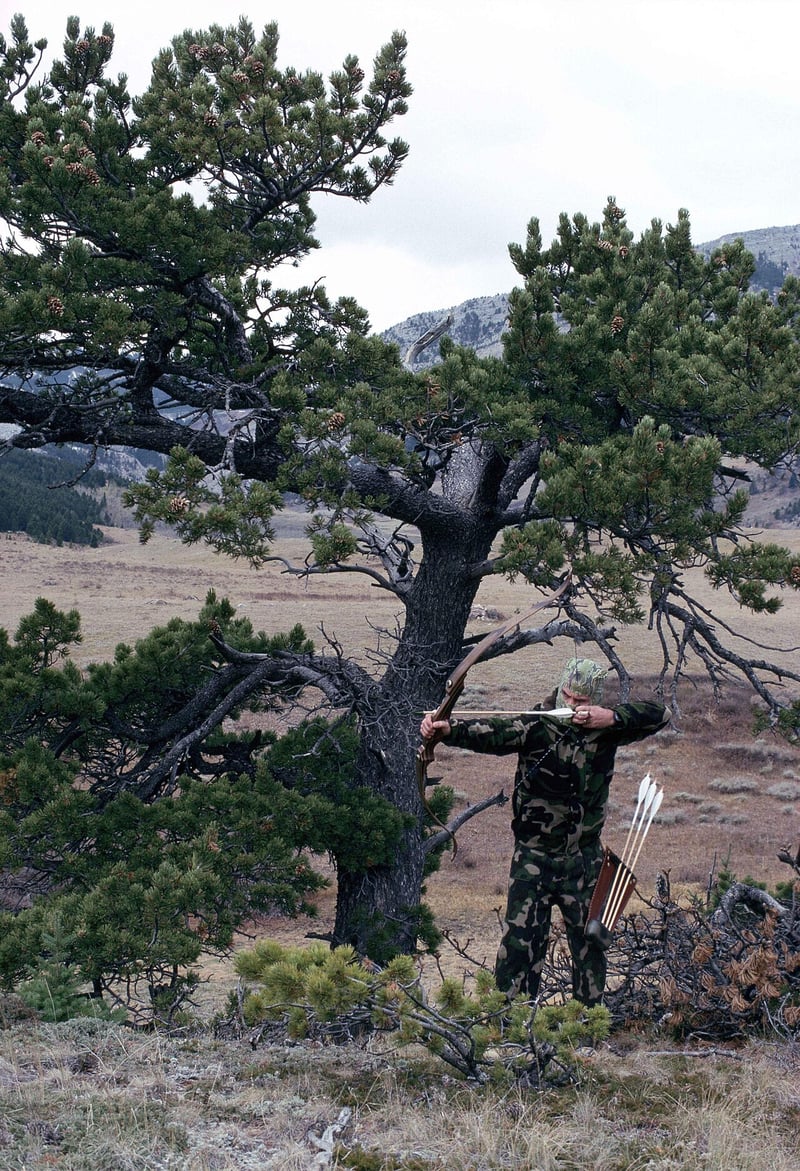
Instinctive shooting, draw weight, arrow spine, and close-range craft.
Traditional Archery Hub
Eleven recurve and longbow guides: form, aiming, spine, tuning, and building tackle.
Compound Bow Hunting
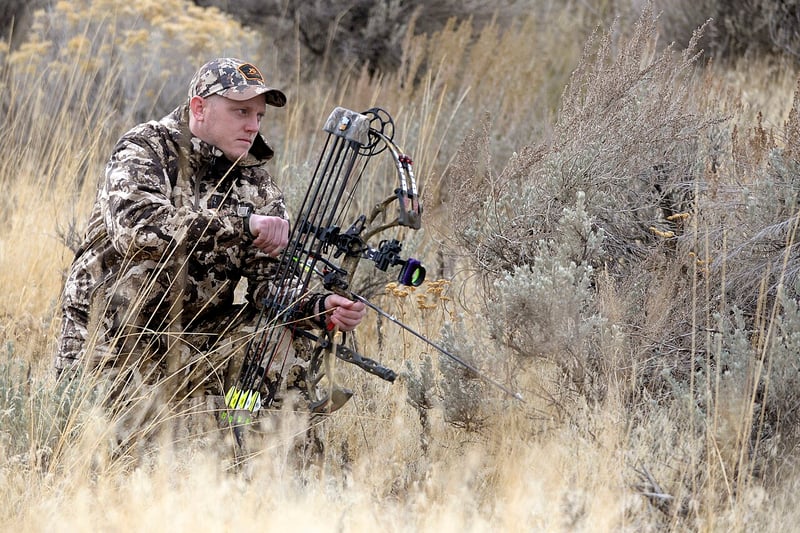
Draw length, sight and rest setup, broadhead tuning, and shot process.
Hunting Tips
Wind discipline, stand placement, blood trailing, and meat care.
Keep going
Related reading
Traditional Archery Hub
Every recurve and longbow guide on The Wild10 in one place.
Read →Draw Weight & Draw Length
Measure your true draw length, convert marked bow weight to what you actually pull, and pick a poundage you can shoot cold in November.
Read →Arrow Anatomy & FOC
Shafts, points, inserts, nocks and fletching — what every component does, and how FOC actually changes arrow flight and penetration.
Read →Aiming Methods
Instinctive, gap, split-vision and string walking — how each method works, what it costs in practice time, and how to choose.
Read →Top 10 lists
Best in category: hunting gear
Ranked picks with real product photos, specs, and editor notes — the buying side of everything covered in these guides.
Best Hunting Rifles
Bolt guns from budget workhorses to mountain rifles.
See the ranking →Best Upland Shotguns
Over-unders and light autos built to carry all day.
See the ranking →Best Waterfowl Shotguns
3.5-inch guns that keep cycling through mud and ice.
See the ranking →Best Deer Hunting Shotguns
Rifled slug guns for shotgun-only whitetail country.
See the ranking →Best Compound Bows
Forgiving, quiet compounds that tune without a fight.
See the ranking →Best Recurve Bows
Hunting recurves that shoot quiet and hold up outside.
See the ranking →Also on The Wild10
Fishing Guides
Fish identification, the knots that hold, lure selection by conditions, and the habits that fill a stringer.
Open the fishing hub →