Skip to content
Wild10
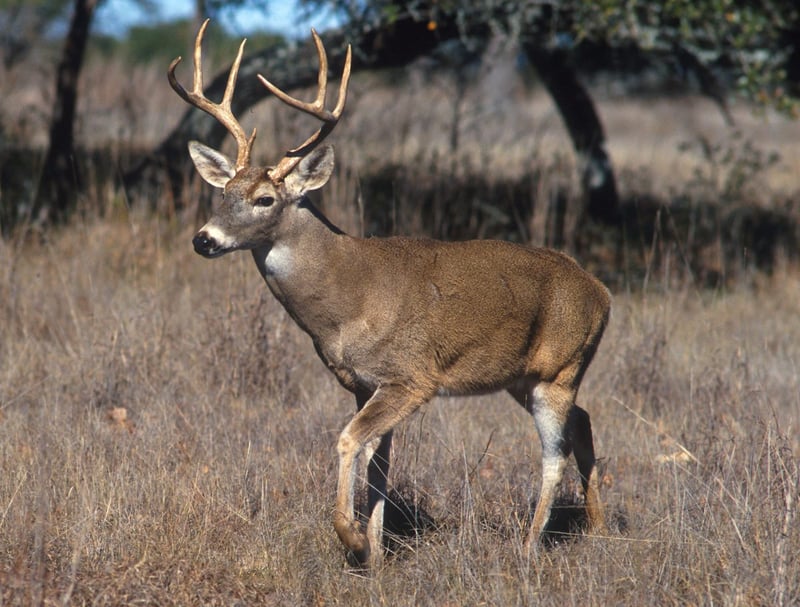
White-tailed deer buck standing at a field edge

Traditional archery · Skill

Getting inside twenty yards

The recurve does not make the hunt hard — it makes the approach the hunt.

Traditional bowhunters are woodsmen who shoot, in that order. A 20-yard weapon means the entire outcome is decided before you touch the string, by wind, pace, cover and patience.

Everything here applies whether you are still-hunting hardwoods for whitetails or working a bugling bull through September timber.

Range
Inside 20 yd
Pace
Yards per minute
First rule
Wind decides
Draw
Behind cover, on movement

01

The approach

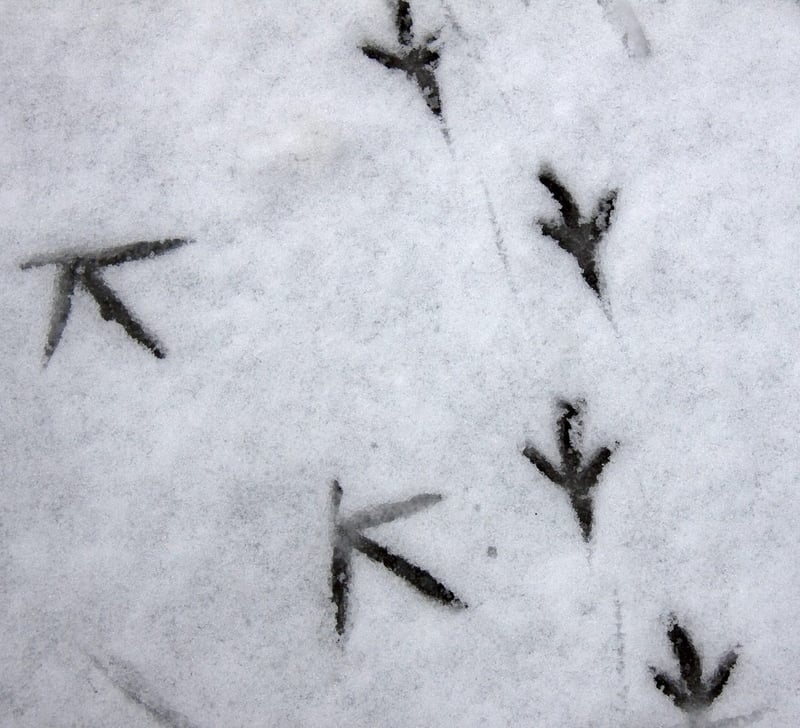
Fresh deer tracks pressed into soft ground
Tony Hisgett from Birmingham, UK / CC BY 2.0 · Wikimedia Commons

Wind and thermals

Non-negotiable

Carry a puffer bottle and check every few steps. Thermals rise with morning warming and sink as evening cools, so a canyon that plays right at 9 a.m. will betray you at 5 p.m. Abandon any stalk the wind will not allow rather than trying to beat it.

Pace

Three steps, stop, look

A still-hunter covering more than a couple of hundred yards an hour is walking, not hunting. Move when the animal's head is down or hidden, stop when it lifts, and spend most of your time standing still and glassing at close range.

Sound and footing

Wet ground and wind

Hunt after rain, during wind gusts, or on damp mornings when leaf litter is silent. Feel each step down with the outside of the foot before committing weight, and use wool or soft-shell layers that do not rasp on brush.

Cover and terrain

Use the ground first

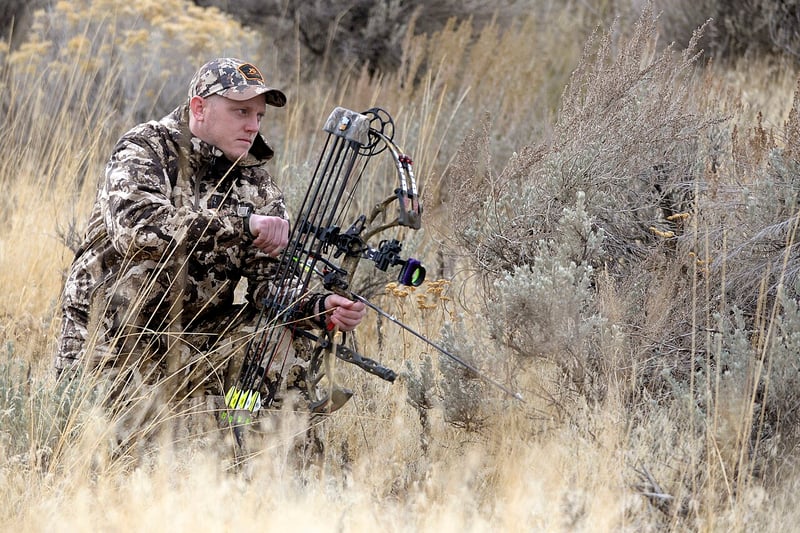
Approach behind trunks, deadfall, hillcrests and creek cuts rather than relying on camouflage. Keep something between you and the animal's eyes at all times, and step out only to shoot.

Timing the draw

The moment you get caught

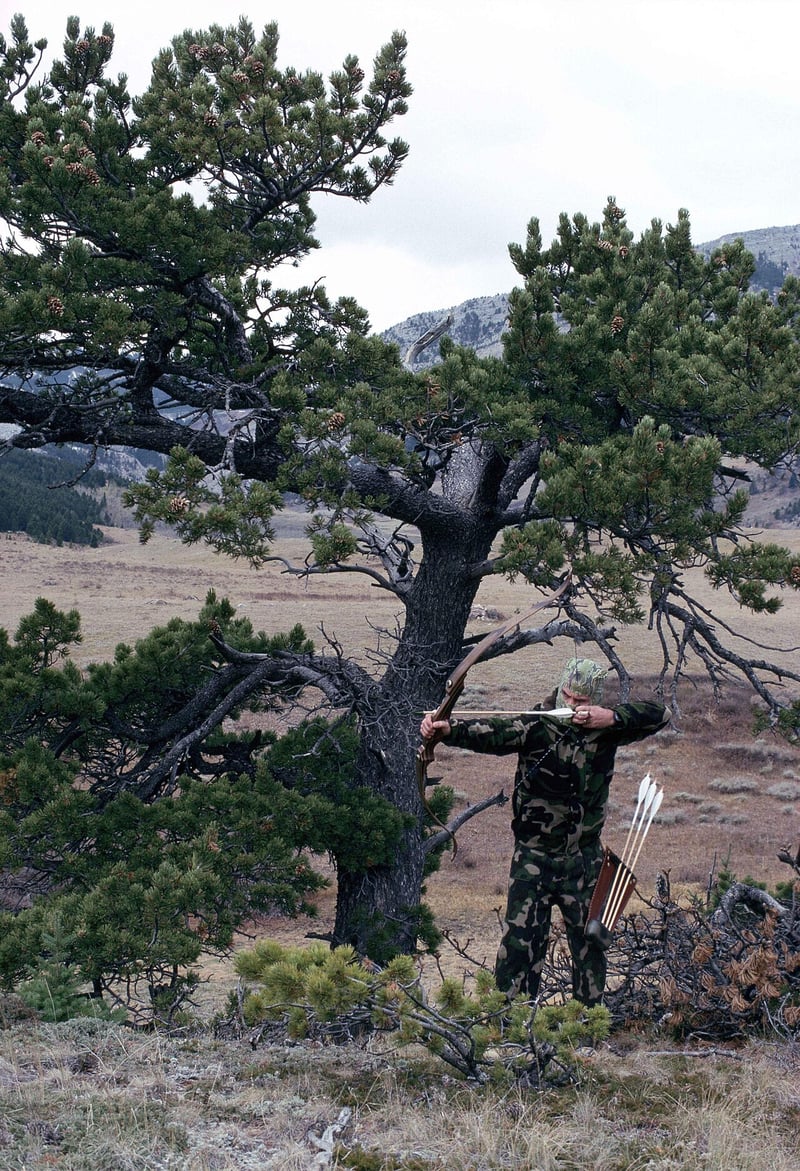
The draw is the biggest movement you make. Draw fully behind cover or when the animal's head goes behind a trunk or drops to feed, and be at anchor before it can see you. If it looks up mid-draw, freeze — do not let down.

Ground versus stand

Traditional favours ground

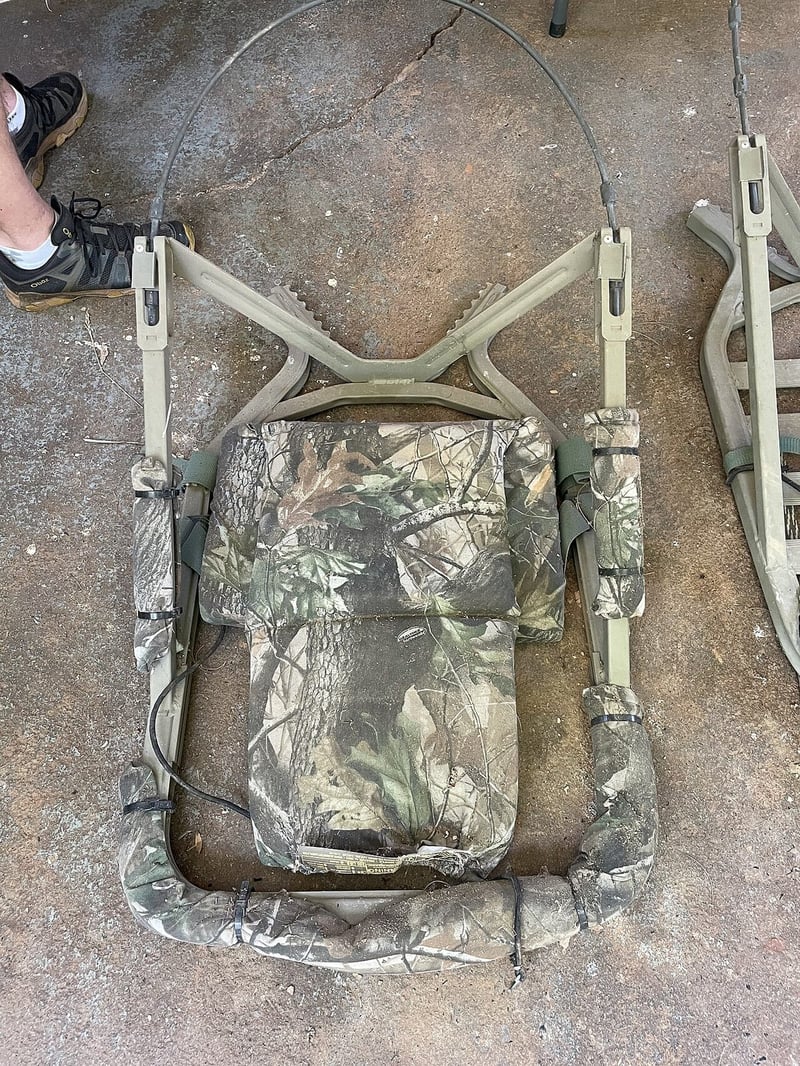
Traditional bows shoot well kneeling, seated or leaning, and the ground gives you cover to hide the draw. From a stand, practise bending at the waist for the steep angle — dropping the bow arm instead is the classic traditional miss.

02

Shot discipline at close range

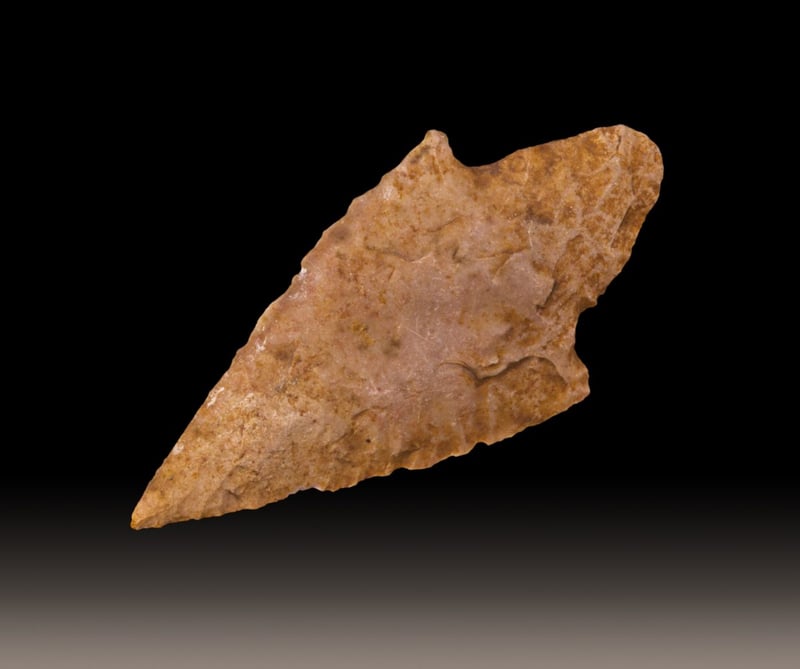
Take broadside and quartering-away angles only. A heavy, high-FOC arrow with a sharp two-blade head passes through both lungs on those angles from a modest bow, and a pass-through is what gives you a blood trail on the ground where you can follow it.

Because arrow flight is slow, an alert animal can drop below the shot. Shoot at relaxed, unaware animals and aim slightly lower than your instinct says on anything that already knows something is wrong. If it is looking at you, wait or let it go.

Pick a single hair, not the animal. Then hold the bow arm on target through the release and watch the arrow the whole way in — the entry point and the sound tell you almost everything about how to plan the recovery.

After the shot, wait. Thirty minutes on a good double-lung, several hours on anything ambiguous, and mark your position and the animal's exit line before you move a step.


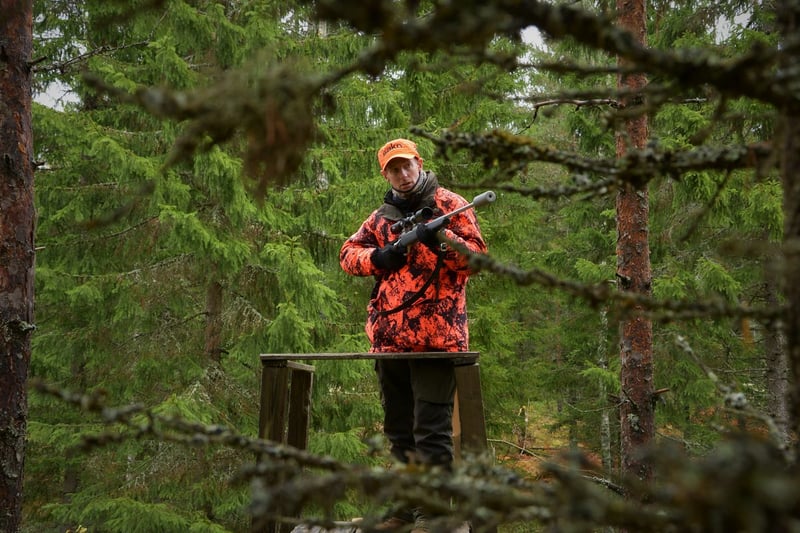
Hunter in blaze orange working a timbered ridge
Unknown photographer / Wikimedia Commons · Wikimedia Commons

Questions

Frequently asked

How close do you need to be with a recurve?
Twenty yards is the honest ceiling for most traditional hunters and many cap themselves at fifteen. That range is set by group size under hunting conditions, not by what is possible on a range in July — practise at your maximum and hunt at two-thirds of it.
When should you draw on an animal with a traditional bow?
Behind cover, or the instant the animal's head drops to feed or passes behind a trunk. There is no let-off, so you cannot hold and wait — the draw and the shot are one continuous motion, and it should finish before the animal can look back up.
Is stand hunting or ground hunting better for traditional bows?
The ground plays to a traditional bow's strengths: you can shoot from kneeling, seated and leaning positions, and terrain hides your draw. Stands still work, but you must practise bending at the waist to keep form on steep downward angles.
What shot angles are ethical with a recurve?
Broadside and quartering-away only. Traditional setups rely on momentum rather than speed, and frontal or steeply quartering-to angles put heavy bone in the way. Pass on anything that does not present the ribs cleanly, and pass on alert animals.

Also on The Wild10

Fishing Guides

Fish identification, the knots that hold, lure selection by conditions, and the habits that fill a stringer.

Open the fishing hub →
Fly angler casting on a clear northern river