Skip to content
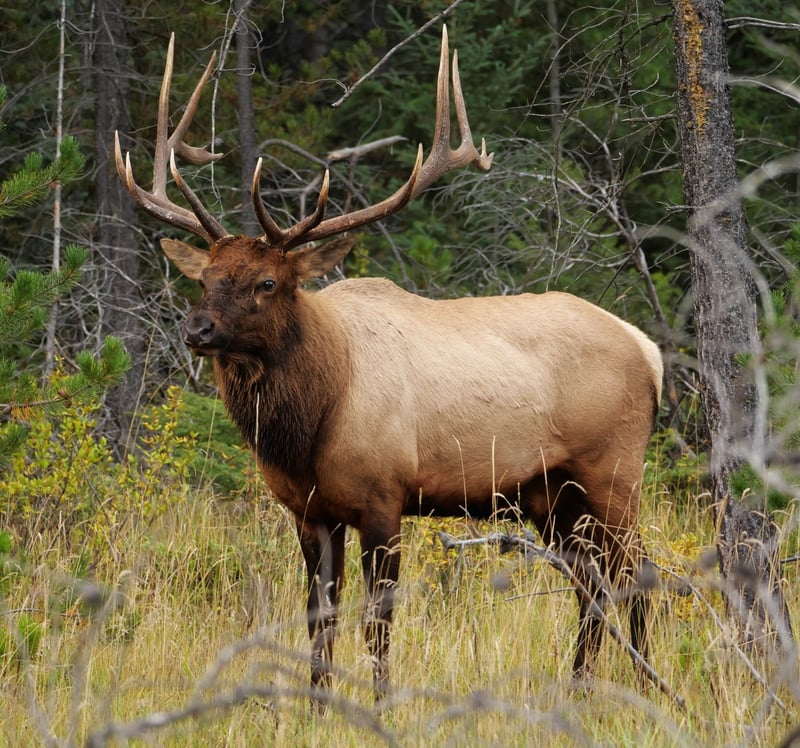
Bull elk with full antlers in a mountain meadow

Hunting · Big Game · Elk

Elk Hunting

The benchmark North American hunt: a 700-pound animal that screams at you in the dark timber and lives where the walking is hardest.

Elk hunting is the hunt most people build a decade around. A mature bull weighs as much as a horse, lives in steep dark timber and high alpine parks, and during the September rut he will answer a bugle and come looking for a fight.

It is also brutally hard. Roughly one in five elk hunters kills an elk in a given year, and the ones who do usually cover 8–12 miles a day at 8,000–10,000 feet and then carry the animal out in four to six loads.

The good news for a newcomer: Colorado and Idaho still sell over-the-counter bull tags, and millions of acres of national forest are open to anyone with a license and the legs to get away from the road.

Range
Rockies, Southwest & Pacific NW
Peak season
Sept rut (archery)
Tag access
OTC in CO, ID; draw elsewhere
Live weight
500–800 lb bulls

01

Where to hunt elk

Elk states divide into over-the-counter opportunity (high hunter density, real chances), general-draw states, and limited-entry trophy units where the wait is measured in decades.

PlaceWhy it's worth your timeHow you get a tag
ColoradoLargest elk herd on earth (~280,000); OTC archery and 2nd/3rd rifle bull tagsOver-the-counter for bulls in most units; cows and premium units by draw
IdahoVast wilderness, general-season tags, and genuine backcountry solitudeOTC general tags by zone, capped and sold first-come starting in December
MontanaBig public country and a general elk tag inside the combination licenseNonresident combination license by random draw, April 1 deadline
WyomingHigh success rates and excellent bull quality; wilderness areas require a guide for nonresidentsPreference-point draw; general tags around 3–5 points
Arizona & New MexicoThe biggest bulls in North America on limited-entry unitsPure draw; premium Arizona units take 10–20 bonus points, New Mexico is a random lottery
Oregon, Washington & UtahRoosevelt elk in coastal rainforest and strong Rocky Mountain herdsGeneral and limited tags depending on unit and weapon

02

How to hunt elk: the repeatable method

September elk hunting is won or lost on wind and calling discipline in the dark; October and November rifle season rewards the hunter who finds pressure-free timber.

  1. 1Scout wallows, fresh rubs, and tracks in the weeks before season, and locate dark timber benches and parks well off roads and trailheads.
  2. 2In the pre-dawn dark during the September rut, move toward bugling bulls, staying downwind or crosswind and stopping often to relocate the herd by sound.
  3. 3Use soft cow calls to draw a satellite bull and save aggressive bugling for a herd bull that's already fired up — over-calling educates bulls fast.
  4. 4Time your final approach to the morning or evening thermal cycle; thermals sink at night and rise once the sun hits the slope, so plan your route around that shift.
  5. 5For rifle season, glass basins and timber edges at first and last light, and post up on escape routes and saddles between pressured drainages during the day.
  6. 6Take broadside or quartering-away shots into the vitals at a range you've verified on paper; a bull can absorb a marginal hit and travel a long way.
  7. 7After the shot, back out and wait before pushing a bull that isn't down, then use the gutless method to quarter the animal where it lies and start packing meat immediately.

03

Tags, licenses, and the application game

There are two viable paths: buy an over-the-counter tag and hunt this year, or apply in the point states and hunt a better unit in five to fifteen years. Serious elk hunters do both simultaneously.

  1. 1Decide OTC or draw. If you want to hunt elk this fall, that means Colorado over-the-counter archery or 2nd/3rd rifle, or an Idaho general zone tag.
  2. 2Buy the qualifying license first. Most states require a hunting license before you can buy or apply for a tag.
  3. 3For Idaho, mark the December on-sale date — popular capped zones sell out in hours.
  4. 4For draw states, apply every single year even when you will not draw. A skipped year is a lost point that you cannot buy back.
  5. 5Expect $700–$1,000 for a nonresident elk license and tag in most western states, plus $50–$150 per point.
  6. 6Check wilderness rules: Wyoming requires nonresidents to hunt designated wilderness with a licensed guide or resident companion.
  7. 7Read the unit's harvest statistics. Every western agency publishes hunter numbers, harvest, and success rate by unit and weapon — that data beats any hunting forum.

04

What the hunt is actually like

September archery elk is the loudest hunt in North America. Bulls bugle before dawn, and you move toward the sound in the dark, trying to get inside 60 yards of a herd bull with a harem before the thermals swing and give you away.

It is a calling game and a wind game at the same time. Cow calls pull satellite bulls; an aggressive bugle can turn a herd bull. Mountain thermals sink at night and rise after the sun hits the slope, so the same approach that works at 6 a.m. is fatal at 10 a.m.

Rifle season in October and November is a different hunt: quieter animals, higher country or lower depending on snow, and far more glassing. You hunt escape cover and the timbered pockets between pressured drainages.

The physical reality is the part nobody prepares for. A boned-out bull is 200–250 pounds of meat that must come out on your back or with stock, typically over several miles and thousands of feet of elevation, and the work starts at the moment of highest exhaustion.

Expect to hunt six to ten hard days for one opportunity. The hunters who succeed year after year are the ones still walking on day eight.

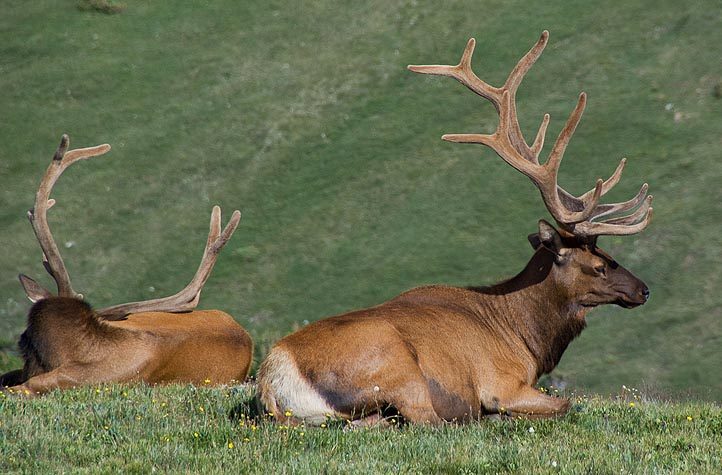
Rocky Mountain elk herd in a high meadow
Ramesh Thadani / Public domain · Wikimedia Commons

05

Gear that decides the outcome

Not a shopping list — the six or so items that change whether you fill the tag and whether the meat gets home in good condition.

Rifle or bow you have truly mastered

Setup

For rifle: .30-06, .300 Win Mag, 7mm Rem Mag, or 6.5 PRC with a bonded or monolithic bullet. For archery: 60+ lb draw, a fixed or robust mechanical broadhead, and confidence to 50 yards.

Calls

Archery September

A diaphragm and external reed cow call plus a bugle tube. Learn the cadence from real recordings; over-calling educates more bulls than it kills.

Meat-hauling pack

5,000+ ci frame

The pack is the tool that turns a dead bull into food. Practice carrying 80 pounds up a hill before the season, not after the shot.

Game bags & a sharp knife system

Meat care

Six large synthetic game bags, a replaceable-blade knife with spare blades, and a bone saw or the gutless method to break the animal down where it fell.

Boots, rain gear, and layers

Mountain weather

September can be 75°F at noon and snowing that night. Waterproof boots, real rain gear, and a puffy in the day pack every single day.

Satellite communicator

Safety

There is no cell service in elk country. An inReach or similar device is a genuine life-safety item when you are alone at 10,000 feet.

06

Meat care and what you take home

A mature bull yields 200–250 pounds of boneless meat — more food than any other common North American big game and the single best argument for hunting elk.

Use the gutless method: quarter the animal on the ground, bag it immediately, and hang the bags in shade. Meat spoils from the inside of a thick quarter outward, so get air on it and cool it fast.

Elk is mild, lean, and beef-like. Backstraps as steaks, hindquarters as roasts and steaks, everything forward of the ribs into grind and braise cuts.

Official sources and further reading

Seasons, fees, and draw rules change every year. These are the agencies and organizations that publish the current numbers — always confirm with them before you apply or hunt.

Questions

Frequently asked

Can a beginner kill an elk on public land?
Yes, and people do it every year. Buy a Colorado over-the-counter tag, pick a unit with a decent success rate, scout it with mapping software, camp three or more miles from a trailhead, and plan on a hard week. Expect to learn more than you kill on the first trip.
Archery or rifle for my first elk hunt?
Archery in September puts you in the rut, when bulls are vocal and mistakes are forgiven — but you need to be lethal at 40 yards and comfortable inside 60. Rifle in October is a better fit if your shooting is stronger than your woodsmanship.
How fit do I need to be?
Fit enough to hike 8 miles with 30 pounds and repeat it the next day, and to carry 70+ pounds downhill without wrecking your knees. Start training six months out with loaded pack hikes and stair work. Altitude is the second problem — arrive two or three days early if you live at sea level.
How much does a DIY elk hunt cost?
Roughly $1,500–$2,500 for a nonresident DIY trip: about $800 in license and tag, plus fuel, food, and gear. A fully guided hunt on private land runs $6,000–$12,000, and premium trophy-unit hunts go far higher.
What is the biggest mistake new elk hunters make?
Hunting where the elk are not. Elk abandon pressured roadside drainages within 48 hours of opening day. Use harvest statistics and topographic maps to find benches, north-slope timber, and wallows well away from motorized access, then hunt those.


Also on The Wild10

Fishing Guides

Fish identification, the knots that hold, lure selection by conditions, and the habits that fill a stringer.

Open the fishing hub →
Fly angler casting on a clear northern river