Skip to content
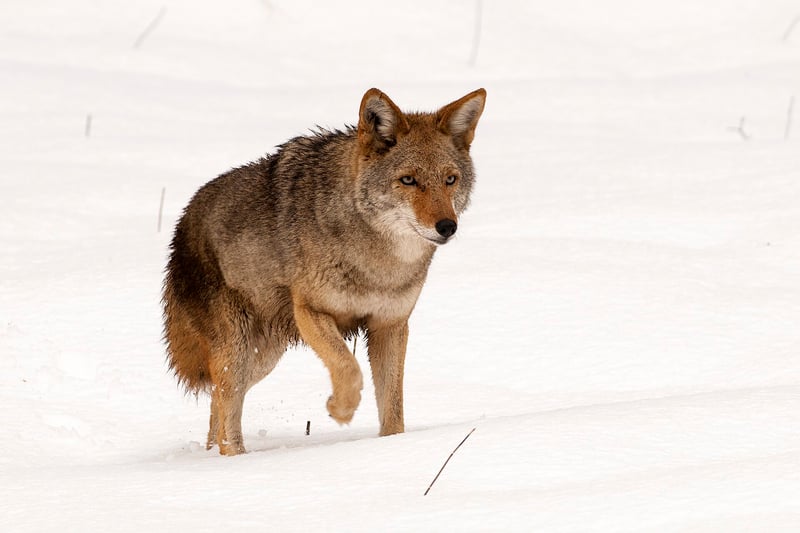
Coyote crossing open ground

Hunting · Small Game & Birds · Coyote

Coyote Hunting

A wary, intelligent predator hunted almost entirely by calling — mimicking a wounded rabbit or a fighting pack to pull a coyote into rifle range.

Coyotes are found in every U.S. state except Hawaii, thriving in habitats ranging from western prairie to eastern forest to suburban fringe, and most states classify them as a predator or non-game species with year-round hunting seasons and minimal licensing requirements.

Coyote hunting is fundamentally a calling game — using electronic callers or mouth calls to mimic a distressed rabbit, a fawn, or fighting coyotes to trigger a hungry or territorial animal's instinct to investigate, since actively still-hunting or tracking coyotes rarely produces a shot.

It's a highly technical hunt built around wind, concealment, and patience against an animal with excellent hearing, sharp eyesight, and a fast-learning wariness toward calls and setups that get used too often in the same area.

Range
Continent-wide
Peak season
Year-round in most states; winter fur prime
Tag access
Over-the-counter
Live weight
20–45 lb

01

Where to hunt coyote

Coyote hunting is available almost everywhere, but open country with good visibility for calling setups — western prairie, agricultural edges, and cutover forest — tends to produce the most consistent action.

PlaceWhy it's worth your timeHow you get a tag
Kansas & NebraskaOpen agricultural country with excellent visibility for calling setupsOver-the-counter license, minimal restrictions
TexasHuge coyote population and largely unrestricted year-round hunting on private landOver-the-counter license; no closed season in most areas
Wyoming & MontanaVast open prairie ideal for long-range calling and spottingOver-the-counter license
New York & PennsylvaniaStrong eastern coyote population in forested and farmland mixOver-the-counter license; check night-hunting specific rules
Midwest farm beltDense coyote populations near agricultural edges and woodlotsOver-the-counter license

02

How to hunt coyote: the repeatable method

Coyote hunting revolves around setting up in good wind and concealment, then calling to trigger a predator response from an animal you often never see approach.

  1. 1Choose a setup location with good visibility, the wind in your favor, and natural concealment like brush or a slight rise in terrain.
  2. 2Position with the wind blowing from the calling area toward you, since coyotes will often circle downwind to scent-check a call before committing.
  3. 3Begin with quieter, closer-range sounds and build to louder distress calls, mimicking a wounded rabbit or fawn in distress.
  4. 4Stay still and alert for the first ten minutes especially, since coyotes often approach silently and quickly if they're already close when the calling starts.
  5. 5Watch downwind and to the sides as much as straight ahead, since a cautious coyote frequently circles to approach from an unexpected angle.
  6. 6Call for 15-20 minutes per setup before moving to a new location if nothing responds, then relocate at least a half-mile to avoid re-calling an educated animal.
  7. 7Use decoys or a subtle movement device paired with calling to give an approaching coyote a visual focal point away from your position.
  8. 8Hunt at dawn, dusk, or at night with legal lighting or thermal optics where permitted, since coyotes are most active during low-light hours.

03

Tags, licenses, and seasons

Coyote hunting requires only a basic hunting license in most states, with minimal restrictions given their classification as a predator or non-game species in many areas.

  1. 1Buy a general hunting license online from the state wildlife agency — coyotes are often covered under a basic small-game or predator designation.
  2. 2Confirm whether your state has any closed season for coyotes; many have none, allowing hunting year-round.
  3. 3Check night-hunting regulations specifically, since many states restrict or require special permits for hunting coyotes after dark with lights or thermal optics.
  4. 4Verify electronic caller legality, which is allowed in most but not all states for predator hunting.
  5. 5Secure landowner permission on private agricultural land, since much of the best calling terrain is privately owned farmland.

04

What the hunt is actually like

A coyote hunt is a game of stillness and anticipation — you set up in good cover, start calling, and then simply wait, scanning the terrain in every direction for a shape that might appear silently from any angle.

Success often comes fast when it comes at all — a coyote that's already within earshot can close 300 yards in under a minute, meaning a hunter has to be ready to shoot within seconds of starting a call.

It's a hunt of many blank setups rewarded by occasional intense action, and serious predator hunters treat every unsuccessful stand as data — refining wind reading, sound selection, and setup choice for the next try.

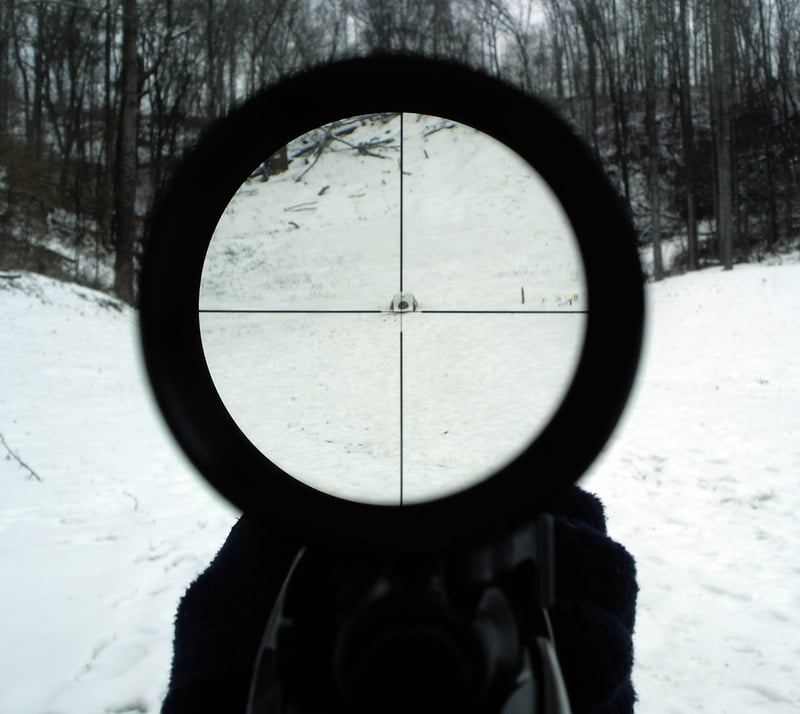
Riflescope mounted on a hunting rifle
Jellocube27 at English Wikipedia / Public domain · Wikimedia Commons

05

Gear that decides the outcome

Not a shopping list — the handful of items that change whether you fill the tag and whether the meat gets home in good condition.

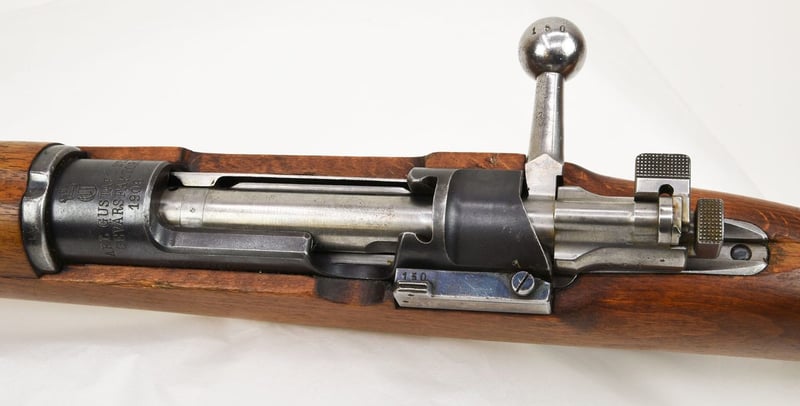
Flat-shooting rifle (.223 to .243)

Common predator calibers

A fast, flat-shooting rifle with a good scope handles the typical 50-300 yard predator-calling shot with minimal pelt damage for fur hunters.

Electronic predator call

Realistic distress sounds

A remote electronic caller with a variety of distress and coyote vocalization sounds lets hunters place the sound source away from their own position.

Camouflage matched to terrain

Concealment is critical

Coyotes have sharp eyesight; full camouflage matched to the season and habitat, including face coverage, meaningfully improves success.

Decoy (motion or static)

Focuses attention away from the shooter

A small decoy near the call speaker gives an approaching coyote something to focus on, buying the shooter time to get into position.

Thermal or night-vision optics (where legal)

Night hunting

In states permitting night predator hunting, thermal optics dramatically improve the ability to spot approaching coyotes in low light.

06

Meat care and what you take home

Coyotes are not typically hunted for meat; most hunters pursue them for predator management, fur value, or the calling and marksmanship challenge itself.

Fur is prime in the coldest winter months, and pelts can have real value depending on the regional fur market and coat quality.

Where population management is the goal, many hunters and landowners view coyote hunting as a tool to reduce predation on livestock, poultry, and game bird nests rather than a food-focused pursuit.

Official sources and further reading

Seasons, bag limits, and shell restrictions change every year — especially for migratory birds. Confirm with these agencies before you hunt.

Questions

Frequently asked

Is coyote hunting legal year-round?
In most states, yes — coyotes are classified as a predator or non-game species without a closed season, though some states have specific restrictions, especially around night hunting. Confirm current state rules before heading out.
Do I need an electronic caller?
No, mouth calls and hand calls work well and are how most predator hunters started, but electronic callers offer more realistic and varied sounds and let hunters place the sound source away from their position.
What's the best time of day to call coyotes?
Dawn and dusk generally produce the most action, since coyotes are most active during low-light hours, though calling can work at any time, especially in areas with less hunting pressure.
How close will a coyote come to a call?
It varies enormously — some rush in aggressively to within 20 yards, while wary or previously called coyotes may hang up at 200+ yards and never fully commit, requiring a longer-range shot.
Is night hunting for coyotes legal?
It depends heavily on the state — some allow night hunting with lights or thermal optics for coyotes specifically, while others restrict or prohibit it. Check current state-specific regulations carefully.
Why do landowners want coyotes managed?
Coyotes can prey on livestock, poultry, and ground-nesting game birds, so many farmers and wildlife managers view targeted coyote hunting as a useful population and predation management tool.


Also on The Wild10

Fishing Guides

Fish identification, the knots that hold, lure selection by conditions, and the habits that fill a stringer.

Open the fishing hub →
Fly angler casting on a clear northern river