A bird that gobbles at half a mile, sees color better than you do, and still walks into range if you play the calling game right.
Wild turkeys were nearly wiped out by 1900 and are now back in every state but Alaska thanks to one of conservation's great comeback stories. That recovery means most states sell turkey tags over the counter for under $30, making spring gobbler season the most accessible spring hunt in the country.
Spring turkey hunting is a calling game built around the breeding season: hens are on nests by mid-morning, toms are alone and looking for company, and a hunter who can produce a convincing hen yelp can pull a gobbler across a field at a dead run.
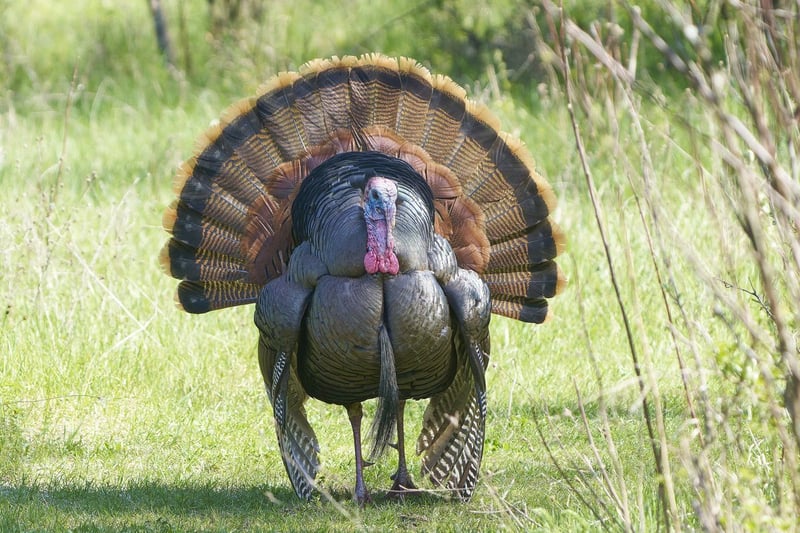
It is also a run of failures punctuated by adrenaline. Toms hang up out of range, henned-up birds walk the other way, and a gobbler that answered forty times can go silent the moment he sees you move. When one finally struts into 20 yards gobbling, it is the loudest, closest wild-animal encounter in hunting.
Range
Every state but Alaska
Peak season
April – May spring gobbler
Tag access
Mostly over-the-counter
Live weight
16–24 lb toms
01
Where to hunt wild turkey
Turkey hunting quality tracks bird density and public access more than trophy potential — nearly every state has a huntable population now.
Place
Why it's worth your time
How you get a tag
Missouri & Kansas
Dense Eastern subspecies population with generous public land
Over-the-counter resident and nonresident tags
Alabama & Georgia
Long spring seasons and heavy Eastern bird numbers
Over-the-counter; some WMAs require a separate quota permit
Texas Hill Country & South Texas
Rio Grande subspecies in huge numbers on ranch country
Over-the-counter; most access is leased private land
Nebraska & South Dakota
Merriam's and hybrid turkeys in river-bottom cottonwoods
Over-the-counter nonresident tags, sold by unit
Florida (Osceola)
Only place on earth to hunt the Osceola subspecies
Over-the-counter; needed for a U.S. turkey 'grand slam'
02
How to hunt wild turkey: the repeatable method
Spring turkey hunting follows a repeatable rhythm: locate a roosted bird, set up before dawn, and call him into range using his own instincts against him.
1Scout the evening before and 'roost' a gobbler by listening for him to fly up and gobble at last light near his roost tree.
2Arrive well before first light and set up 100–150 yards from the roost, using natural cover or a ground blind, facing the direction you expect him to approach.
3Make one or two soft tree yelps just before fly-down to let him know a hen is nearby without over-calling.
4Set a hen decoy, and often a jake decoy, 15–20 yards from your position in open view to give the tom a target to walk to.
5Call in cadence with his gobbles — soft yelps and clucks work better than aggressive calling once he's on the ground and moving your way.
6If he hangs up out of range, go quiet; an impatient gobbler often closes the last distance on his own once calling stops.
7Stay motionless once he's in sight — turkeys have exceptional color vision and pick up any movement instantly.
8Take the shot at the base of the neck when he's in range and the head is up, and be ready for a follow-up if he flops toward cover.
03
Wild Turkey tracks, droppings, and sign
Turkeys leave more readable sign than any other bird in North America, and in the spring the sign tells you exactly where a flock roosts, struts, and dusts.
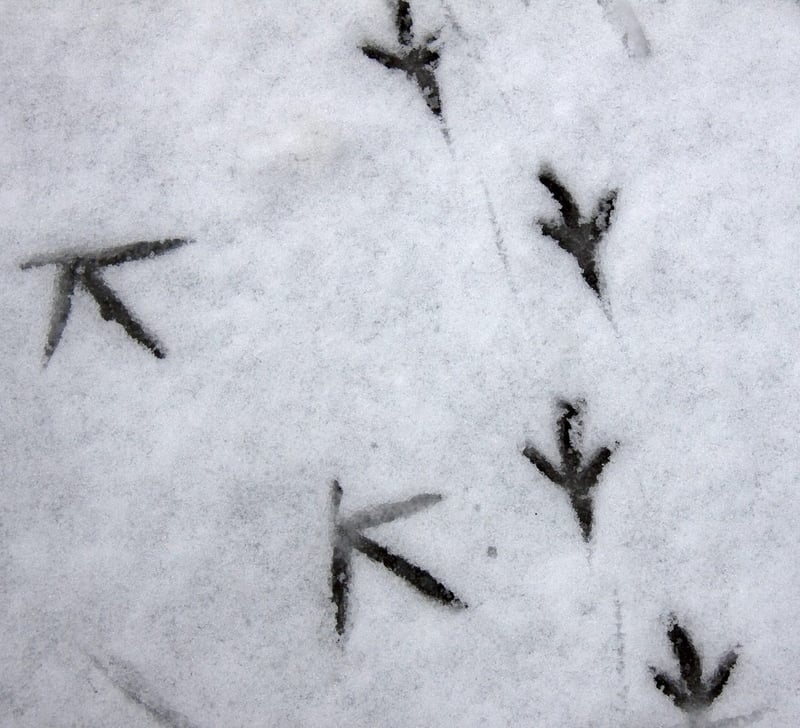
Tracks
4–5 in. (gobbler)
Three forward toes with a small hind toe that may or may not register. A gobbler's middle toe runs over 2.5 inches and the track is 4+ inches overall; a hen's is under 4 inches with a more delicate middle toe. Gobbler tracks also show a slightly inward-turned drag.
Droppings
The sex tell
A gobbler drops a J-shaped or hooked cylinder; a hen drops a looser popcorn-shaped spiral clump. Both are capped with a white urate tip. Fresh droppings are moist and dark green-brown; old ones are chalky and grey.
Scratchings
Feeding sign
Fan-shaped patches of leaf litter raked back to bare dirt, usually a foot or two across, always with the leaves thrown backward — so the open, bare end points in the direction the flock was moving. Dark, damp exposed soil means today.
Strut marks & dusting bowls
Spring
Parallel lines drawn in dirt by dragging wingtips, usually in a logging road or a field edge. Dusting bowls are shallow scooped depressions full of body feathers and fine dust.
Roost sign
Under the limbs
Piles of droppings and shed feathers under big-limbed trees near water — usually mature hardwoods on a bench or in a creek bottom. Find the roost and the hunt sets itself.
04
Tags, licenses, and seasons
Turkey tags are simple compared to big game — the real planning is picking a state whose season overlaps with your travel window and the local gobbling peak.
1Buy a hunting license and turkey permit online from the state wildlife agency; most states sell nonresident spring tags without a draw.
2Check the season structure — many states split into youth weekend, then a statewide opener, sometimes with a one-bird-per-week limit.
3Confirm bag limits and legal methods; most states allow only bearded birds in spring and cap the season at one to three toms.
4If chasing a 'grand slam' (Eastern, Osceola, Rio Grande, Merriam's), book Florida and the western subspecies states separately — seasons don't overlap well.
5Scout or hire a local guide for the first hunt in unfamiliar country; roosting a bird the evening before doubles your odds.
6Read the current-year regs for shot-size, electronic call, and decoy restrictions, which vary more than most hunters expect.
05
What the hunt is actually like
A turkey hunt starts in pitch dark, walking in quietly enough not to bump a bird off the roost. You sit against a tree, get comfortable, and wait for the woods to wake up — owls hoot, then crows call, then, if you're lucky, a gobble rips through the timber.
The middle of the hunt is a negotiation. You call, he answers, you adjust position, he gobbles closer or drifts away with hens. Some mornings end with a bird in hand by 7 a.m.; most end with a gobbler that never closes the last 80 yards.
It is one of the few hunts where the quarry does the talking. A tom in full strut, fanned out and drumming twenty yards away, is as intense a moment as anything in hunting, and it can happen in near-total silence right up until the shot.
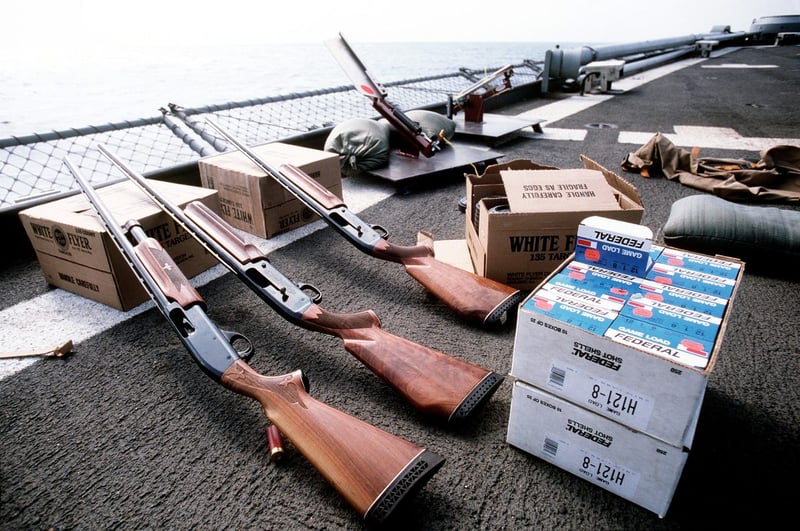
DoD photo by: PHAN MILNE/PHAN DILLON / Public domain · Wikimedia Commons
06
Gear that decides the outcome
Not a shopping list — the handful of items that change whether you fill the tag and whether the meat gets home in good condition.
12- or 20-gauge shotgun with turkey choke
Tight patterns
A dedicated turkey choke and TSS or heavy shot lets you ethically reach 40 yards with a dense pattern to the head and neck.
Diaphragm and pot calls
Learn both
A mouth diaphragm keeps your hands free for the gun; a slate or box call is easier to learn and louder for locating birds at distance.
Full camo including face and hands
Non-negotiable
Turkeys see color and detail exceptionally well — any exposed skin or movement ends the hunt instantly.
Hen and jake decoys
Pulls birds the last stretch
A single hen decoy is often enough; adding a jake can trigger dominance behavior that pulls a mature tom into range.
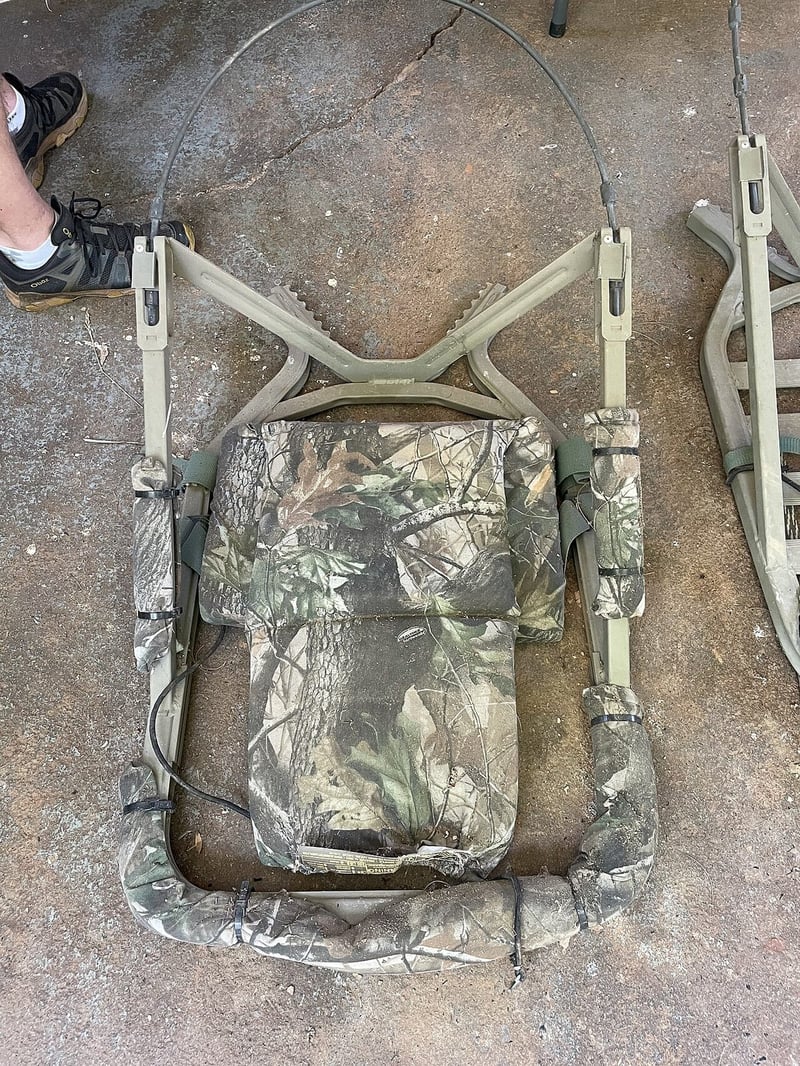
Comfortable ground seat or cushion
You'll sit for hours
A lightweight seat with back support and pockets for calls makes the long, motionless setups tolerable.
07
How to harvest and field dress wild turkey
A turkey's vitals are the head and neck. Everything about the shot and the recovery follows from that.
1Take the shot only when the head and neck are clear and the bird is inside your patterned range — for most turkey loads that is 40 yards or less.
2Aim where the neck meets the head, not at the body. A body shot on a turkey wastes the breast and frequently lets the bird escape wounded.
3Get on the bird immediately after the shot. Turkeys flop violently and a wing-tipped gobbler will run and be gone in seconds.
4Pin the bird with a foot on the neck and one on the legs until it stops flopping — this prevents broken wing bones and bruised breast meat.
5Tag the bird immediately in the field where required, and photograph beard and spur length before anything gets moved.
6Field dress within the hour in warm spring weather: open the vent, pull the entrails, and pull the crop out at the base of the neck.
7Get the bird into shade with airflow. Do not hang a spring gobbler in the sun on the tailgate for the drive home.
08
How to skin and process wild turkey
A whole plucked wild turkey roasts beautifully; a breasted one is faster. Choose before the feathers come off.
1Save the beard, the spurs, and the fan first — cut the fan free with a wide margin of skin, scrape it clean, salt or borax it, and pin it open flat to dry.
2To pluck whole: work while the bird is warm, pull small pinches with the grain, and scald at 150°F for 60 seconds if the feathers resist. Wild turkey skin is thin and tears easily.
3To breast out: tear the breast skin open at the keel, run the knife tight down each side of the breastbone, and lift both fillets clear.
4Take the legs and thighs. Wild gobbler legs are full of tendons and need 4–6 hours of braising, but they are the best meat on the bird.
5Save the heart, liver, and gizzard; peel the gizzard's yellow lining out after splitting it.
6Wild turkey is far leaner than store-bought. Brine the breast 8–12 hours in salt water before cooking or it will be dry no matter what you do.
7Vacuum-seal and freeze; breast meat holds a year, legs about six months.
09
Meat care and what you take home
A wild tom yields roughly 4–6 pounds of breast meat plus leg meat, far leaner and more flavorful than a store-bought turkey.
Breasts are excellent brined and grilled or smoked whole; legs and thighs are tough from a life of walking and are best slow-braised or turned into stock and confit.
Skin the bird rather than plucking unless you plan to roast it whole — skinning is faster and wild turkey skin holds little fat worth rendering.
Wild Turkey photo gallery(6 photos · tap to zoom)
Official sources and further reading
Seasons, bag limits, and shell restrictions change every year — especially for migratory birds. Confirm with these agencies before you hunt.
The first two hours after fly-down are most productive, when toms are actively looking for hens. Activity often picks up again mid-morning once hens leave to nest and lonely gobblers start moving again.
Do I need a turkey call to be successful?
No, but it dramatically improves your odds. Many hunters kill their first bird by simply sitting near known travel routes without calling at all, letting the bird come to a decoy or natural pattern.
Can I hunt turkeys with a bow?
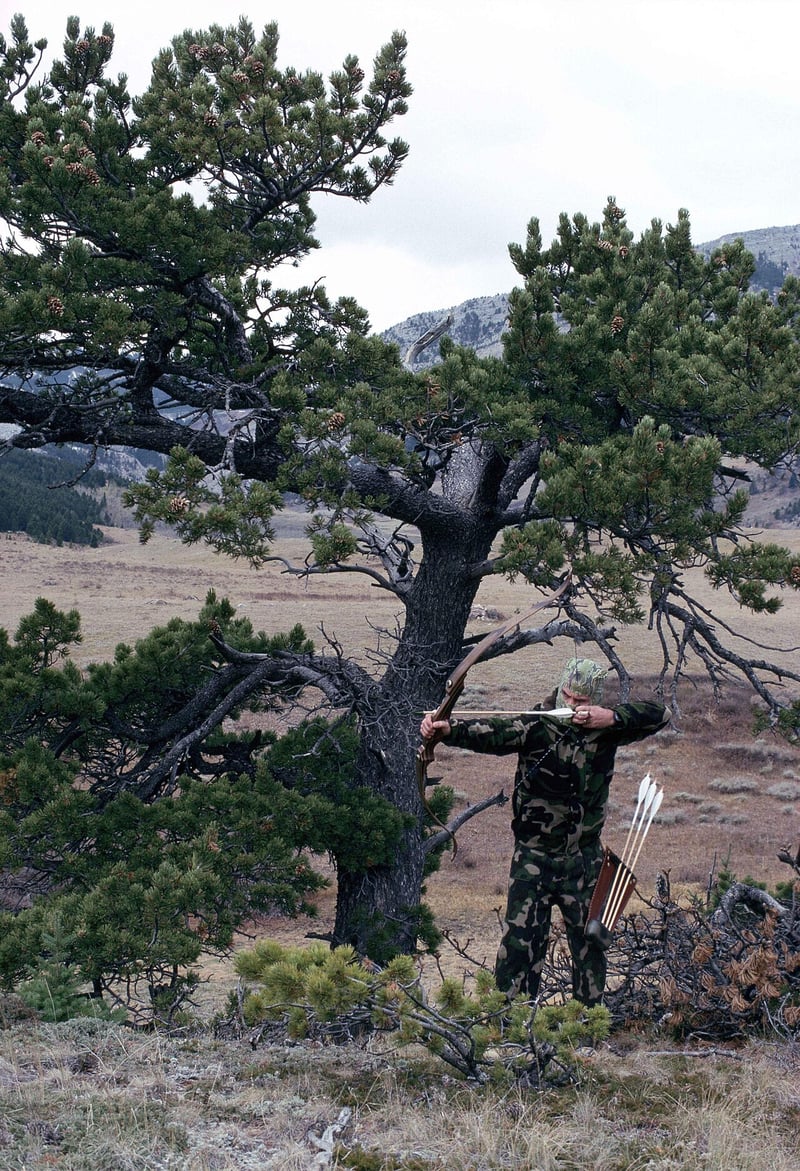
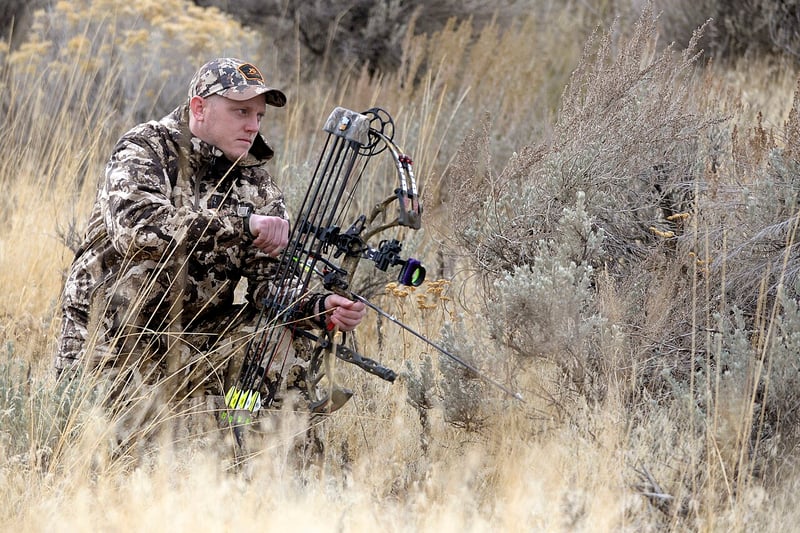
Yes, archery turkey hunting is legal in most states and popular from a ground blind, which conceals the draw. It is a much harder shot given the small vital area.
What's a jake versus a tom?
A jake is a young male, usually under a year old, with a short beard and stubby tail fan. A tom is a mature adult male with a longer beard and full fan — most hunters target toms but jakes are often legal.
Is fall turkey hunting different?
Yes — fall seasons in many states allow either-sex harvest and rely on breaking up a flock and calling scattered birds back together rather than breeding-season calling.
How far can a shotgun ethically kill a turkey?
With modern TSS loads and a tight choke, 40–50 yards is realistic, but pattern your specific gun and load at the range first — patterns vary enormously between guns.