Hunting · Deer by State · Ranked #50 of 50
Hawaii Deer Hunting
No whitetails here — Hawaii's game is invasive axis deer on Maui, Molokai, and Lanai, plus a hidden pocket of black-tailed deer on Kauai.
Hawaii is the outlier on any deer hunting list because there are no native or established whitetail, mule deer, or elk populations anywhere in the islands. Instead, hunters chase two introduced species managed by DOFAW: axis deer (chital), which thrive on Maui, Molokai, and Lanai after 19th-century introductions, and a small, lesser-known population of Columbian black-tailed deer on Kauai that trace back to animals released near Kokee in the 1960s.
Axis deer have no closed season limits like mainland whitetail seasons — they're treated as a damaging invasive that overgrazes ranchland and native forest, so DOFAW runs extended archery, muzzleloader, and public-hunt seasons, plus special control hunts, especially on Lanai and Molokai where deer densities are high.
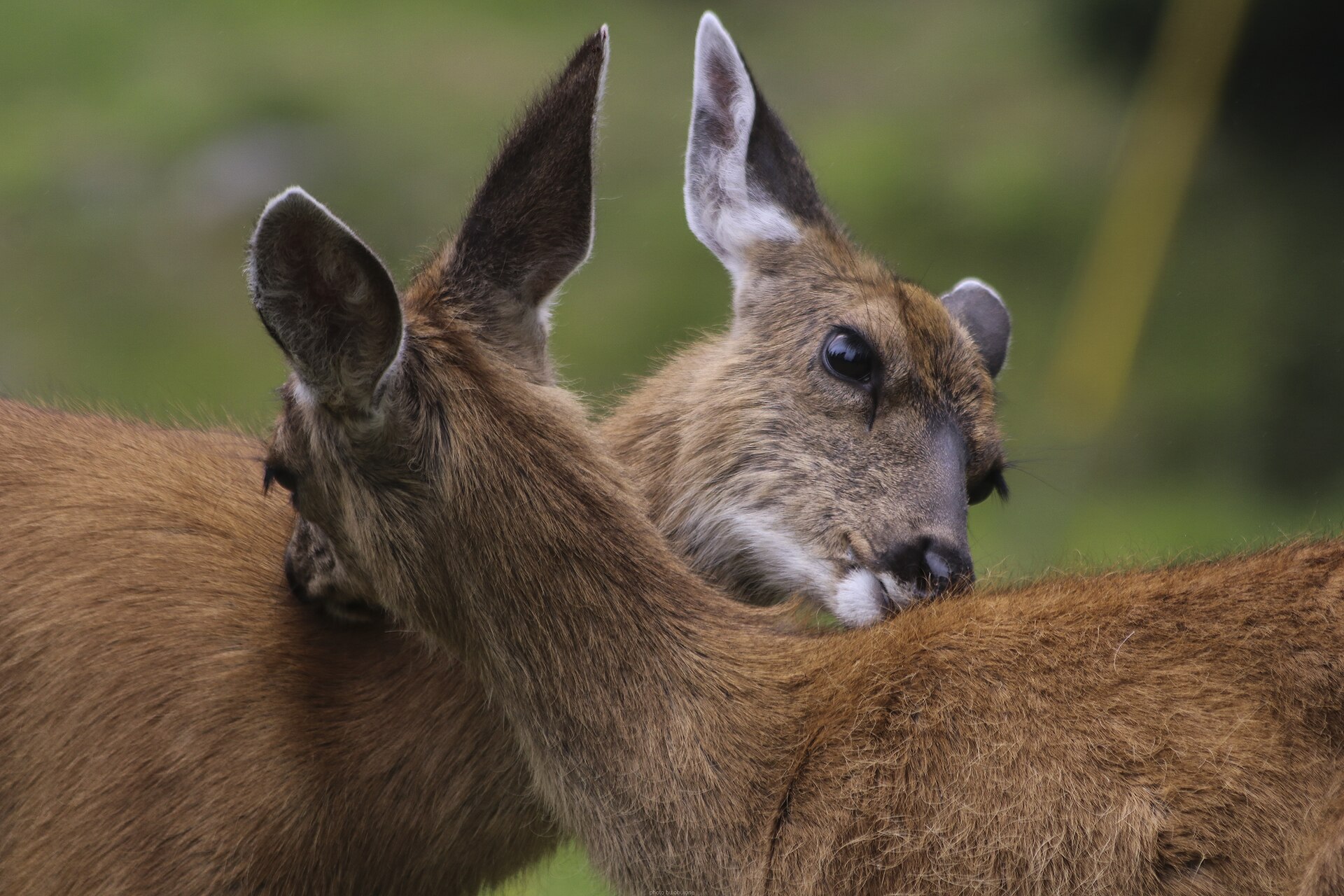
Kauai's black-tailed deer are a genuine curiosity: a huntable but limited population confined mostly to the Kokee/Waimea Canyon area, managed with far more conservative bag limits and shorter seasons than axis deer get on the other islands.
- Wild10 rank
- #50 · Limited
- Primary species
- Axis deer (Maui, Molokai, Lanai)
- Secondary species
- Columbian black-tailed deer (Kauai, Kokee area only)
- Season style
- Extended archery, muzzleloader, and public hunts; axis deer hunted much of the year on some islands
- Nonresident license
- Hawaii hunting license required, approx. $105 nonresident annual
- Access
- Mostly by inter-island air travel plus public hunting areas, State Forest Reserves, and some guided private-land hunts
- Management goal
- Population control — axis deer are treated as a damaging invasive species on most islands
01
Hawaii deer hunting by the numbers
Where Hawaii sits nationally, and the figures behind our rank of #50 of 50.
| Statistic | Value |
|---|---|
| Axis deer range | Established, huntable populations on Maui, Molokai, and Lanai; none on Oahu or the Big Island as free-ranging huntable herds |
| Kauai black-tailed deer origin | Descended from Columbian black-tailed deer transplanted from Washington State near Kokee in the 1960s |
| Season structure | Public hunting areas run archery, muzzleloader, and rifle/shotgun seasons on staggered schedules by island and unit |
| Management approach | Axis deer overpopulation on Lanai and Molokai has prompted extended and emergency hunts to reduce agricultural and native ecosystem damage |
02
Hawaii deer seasons (2025-26)
Hawaii's deer seasons are set annually by island and hunting unit and can include emergency or extended axis deer control hunts; always check DOFAW's current game mammal hunting schedule for the exact unit and island you plan to hunt.
| Season | Weapon | Typical window | Notes |
|---|---|---|---|
| Archery (axis deer) | Bow | Extended seasons on Maui, Molokai, and Lanai; dates vary by public hunting unit | |
| Muzzleloader (axis deer) | Muzzleloader | Set periods on select units, mainly Molokai and Lanai | |
| Rifle/shotgun public hunts (axis deer) | Rifle / shotgun | Scheduled weekend hunts on designated public hunting areas, especially Lanai | |
| Kauai black-tailed deer season | Bow / muzzleloader / rifle depending on unit | Short, conservative season centered on the Kokee/Waimea Canyon public hunting area |
03
Hawaii deer tags & licenses
All deer hunting in Hawaii requires a state hunting license; some public hunting areas additionally require a free or low-cost hunter check-in/permit and mandatory harvest reporting.
Axis deer hunting on Lanai is largely accessed through Pulama Lanai's managed hunting program on private land, which operates alongside DOFAW-regulated public hunting areas elsewhere on the island.
Kauai's black-tailed deer hunts are far more limited in area and quota than axis deer hunts and are managed conservatively given the population's small size.
Nonresidents can hunt axis deer and Kauai black-tailed deer on the same statewide hunting license as residents (higher nonresident fee); no special deer draw tag exists, though some public hunts require advance sign-up or check-in.
Most axis deer hunting is open access within posted seasons on public hunting areas; a few high-demand or safety-limited hunts (and most Lanai private-land access) use sign-up, lottery, or guided-access systems rather than a statewide draw.
04
What Hawaii deer licenses cost
| License / tag | Price |
|---|---|
| Resident annual hunting license | approx. $16 |
| Nonresident annual hunting license | approx. $105 |
| Public hunting area permits | Often free or nominal cost; check-in required at trailheads/check stations for many hunts |
05
Hawaii deer hunting laws you must know
The rules that catch hunters out most often. Not a substitute for the regulations book.
| Topic | Rule |
|---|---|
| Sunday hunting | Public hunting areas are typically open specific days of the week (often Saturday/Sunday and state holidays) rather than every day — check the unit's posted schedule. |
| Blaze orange | Not universally mandated statewide, but many public hunting areas post their own safety and clothing requirements — check unit-specific rules before hunting. |
| Weapon restrictions | Legal weapons (bow, muzzleloader, shotgun, rifle) are assigned by unit and season phase; centerfire rifles are commonly restricted to designated rifle hunts on larger islands like Molokai and Lanai. |
| Access permits | Many public hunting areas require hunters to sign in/out at a check station or register online before entering, both for safety and harvest tracking. |
| Interisland transport | Meat and antlers can generally be transported between islands, but hunters should confirm current agricultural inspection rules for interisland travel with harvested game. |
| Hunter education | A hunter education course is required for first-time license buyers, with limited exemptions for those who can show prior license history. |
06
What to expect hunting deer in Hawaii
Axis deer hunting in Hawaii looks nothing like mainland whitetail hunting: think open grasslands, dry kiawe scrub, and volcanic ridgelines on Lanai and Molokai, with warm, sunny weather nearly year-round and no true 'rut season' cold front to plan around — axis deer breed opportunistically throughout the year, so bucks in hard antler can be found in almost any month.
Lanai in particular has an outsized axis deer population relative to its size, and the island's private-land hunting program (alongside public areas) makes it the most consistent bet for hunters who want a real shot at a mature buck.
Kauai's black-tailed deer hunt is a completely different, much more limited experience — steep, wet, forested terrain around Kokee State Park and Waimea Canyon, small numbers of animals, and a season built around conservative harvest rather than population control.
Logistics are the biggest variable: hunters typically fly into Honolulu and connect to Kahului (Maui), Molokai, or Lanai, and gear transport (bows, muzzleloaders, firearms) requires following both airline and interisland shipping rules for weapons.
07
Hawaii deer hunting tips
Field-tested advice specific to this state's deer, terrain and pressure.
- 1Book interisland flights and any Lanai hunting-program access well in advance — logistics, not deer scarcity, are the main planning bottleneck in Hawaii.
- 2Because axis deer breed year-round, scout for fresh sign and hard-antlered bucks rather than relying on a mainland-style rut calendar.
- 3Pack for heat and sun on Lanai/Molokai/Maui hunts (open, dry terrain) but for cool, wet conditions if hunting Kauai's Kokee unit.
- 4Contact DOFAW or the relevant island hunting program directly before booking travel — public hunt schedules, quotas, and Lanai program access can change from year to year.
- 5Confirm ammunition/firearm and archery-equipment shipping rules with your airline and any interisland carrier before you fly — Hawaii's inter-island logistics catch first-timers off guard.
Why Hawaii ranks #50 for deer hunting
Hawaii isn't a whitetail state at all — it's the only place in the country to hunt introduced axis deer on Maui, Molokai, and Lanai, plus a small, little-known population of Columbian black-tailed deer on Kauai descended from a 1960s Washington-state transplant. DOFAW actively encourages axis deer harvest through public hunts and archery/muzzleloader areas because the population is considered a damaging invasive on private and conservation land, which keeps opportunity high even though tag logistics and inter-island travel push most nonresidents toward guided or outfitted hunts.
Tier: Limited · Species: Axis deer, Kauai black-tailed deer (Columbian black-tailed subspecies)
Where to hunt deer in Hawaii
Hawaii's deer hunting is organized around a handful of DOFAW public hunting areas plus Lanai's managed private-land program, spread across three main islands for axis deer and one limited unit on Kauai.
Lanai (Pulama Lanai hunting program + DOFAW public areas)
Mixed private/public · Lanai
The best-known axis deer destination in the state, with high deer density, managed private-land access, and public hunting areas covering much of the island's dry forest and grassland.
Official pageMolokai public hunting areas
State public hunting area · Molokai
Axis deer roam much of Molokai's central and western lowlands; DOFAW runs archery, muzzleloader, and rifle seasons across several public units.
Official pageMaui public hunting areas (Kahikinui, Kanaio)
State public hunting area · Southeast Maui
Dry leeward-side units on Maui's southern flank hold huntable axis deer populations alongside feral goats and pigs.
Official pageKokee/Waimea Canyon area
State forest reserve / public hunting area · Kauai
The only place in Hawaii to hunt Columbian black-tailed deer, in cool, misty, forested terrain around Kokee State Park and Waimea Canyon.
Official page
Gear for Hawaii deer season
Hawaii's axis deer hunting rewards lightweight, heat-ready gear for open dry-land terrain, while a Kauai black-tailed deer hunt calls for rain-ready layers more like a Pacific Northwest hunt.
- Best Compound Bows
Forgiving, quiet compounds that tune without a fight.
- Best Hunting Boots
Early-season to mountain boots ranked on fit and support.
- Best Rain Jackets & Pants
Hard shells that keep a hunt going through real weather.
- Best Fixed-Blade Knives
Blades that field dress, cape, and quarter without failing.
- Best Cellular Trail Cameras
Scouting cameras that send pictures instead of burning boots.
Watch: deer hunting in Hawaii
Real hunts and how-tos filmed in Hawaii, embedded from the creators' own channels with our notes on what to take from each.
Why watch: A good overview of what axis deer hunting looks like on the Hawaiian islands.
Official Hawaii deer hunting resources
- Hawaii Department of Land and Natural Resources, Division of Forestry and Wildlife (DOFAW) (home)
- Current deer regulations
- Buy licenses & tags
- DOFAW hunting home page
- DOFAW public hunting areas by island
Last reviewed 2026-09. Found something out of date? Tell us in the community.
More state deer hunting guides
#48 of 50 · Limited
#1 of 50 · Elite
#2 of 50 · Elite
#3 of 50 · Elite
50 states covered. See the full ranking →
Questions
Frequently asked
- Does Hawaii have whitetail deer?
- No. Hawaii has no native or established whitetail, mule deer, or elk populations. Its huntable deer are introduced axis deer (Maui, Molokai, Lanai) and a small population of Columbian black-tailed deer on Kauai.
- Where is the best axis deer hunting in Hawaii?
- Lanai is generally considered the top destination thanks to high deer density and a combination of managed private-land access and public hunting areas; Molokai and parts of Maui also hold good populations.
- Can nonresidents hunt deer in Hawaii?
- Yes. Nonresidents can buy a Hawaii hunting license (approx. $105 annually) and hunt axis deer or Kauai black-tailed deer on the same terms as residents, though some access, like Lanai's private-land program, may require separate arrangements.
- Is there a deer rut in Hawaii?
- Not in the mainland sense. Axis deer breed opportunistically year-round in Hawaii's tropical climate, so hard-antlered bucks can be found in nearly any month rather than during a single fall rut.
- Why does Hawaii encourage axis deer hunting?
- Axis deer are an introduced species that can overpopulate and damage ranchland, agriculture, and native forest ecosystems, so DOFAW manages them with liberal seasons and public hunts aimed at population control.
- What is the Kauai black-tailed deer?
- It's a small population of Columbian black-tailed deer descended from animals transplanted from Washington State to the Kokee area of Kauai in the 1960s, hunted under a much more limited season than axis deer elsewhere in the state.
Every hunting guide
Hunting Hub
Where every hunting guide on The Wild10 starts.
Types of Game
Big game, small game, upland birds, and waterfowl — habitat and season.
Big Game
Deer, elk, moose, bear, hog and sheep — where to hunt, tags, and what to expect.
Small Game & Birds
Turkey, pheasant, grouse, quail, ducks, geese, rabbits, squirrels and predators.
Turkey Hunting
Calling, shotguns, bows, camo, blinds, scouting, and spring vs fall.
Species Finder
Search every species and filter by tracks, droppings and sign, harvest, or skinning.
Rifle Hunting
Cartridges, zero, field positions, wind, and shot placement.
Shotgun Hunting
Gauges, chokes, shot size, and lead for birds and slug country.
Recurve & Traditional Bow
Instinctive shooting, draw weight, arrow spine, and close-range craft.
Traditional Archery Hub
Eleven recurve and longbow guides: form, aiming, spine, tuning, and building tackle.
Compound Bow Hunting
Draw length, sight and rest setup, broadhead tuning, and shot process.
Hunting Tips
Wind discipline, stand placement, blood trailing, and meat care.
Keep going
Related reading
Deer Hunting by State
All 50 states ranked, with seasons, tags and laws.
Read →Deer Season Calendar
Every state's season dates, tag costs and public land, side by side.
Read →Big Game Hunting
Whitetail, mule deer, elk, moose and bear profiles.
Read →Rifle Hunting
Cartridges, zero, positions and shot placement.
Read →Bowhunting
Setups, arrows, broadheads and treestand craft.
Read →Venison Recipes
Camp and home recipes for the deer you bring back.
Read →Top 10 lists
Best in category: hunting gear
Ranked picks with real product photos, specs, and editor notes — the buying side of everything covered in these guides.
Best Hunting Rifles
Bolt guns from budget workhorses to mountain rifles.
See the ranking →Best Upland Shotguns
Over-unders and light autos built to carry all day.
See the ranking →Best Waterfowl Shotguns
3.5-inch guns that keep cycling through mud and ice.
See the ranking →Best Deer Hunting Shotguns
Rifled slug guns for shotgun-only whitetail country.
See the ranking →Best Compound Bows
Forgiving, quiet compounds that tune without a fight.
See the ranking →Best Recurve Bows
Hunting recurves that shoot quiet and hold up outside.
See the ranking →Also on The Wild10
Fishing Guides
Fish identification, the knots that hold, lure selection by conditions, and the habits that fill a stringer.
Open the fishing hub →