


Summer
- Days
- 72–92°F
- Nights
- 50–65°F
Warm water, long evenings, forgiving swims — the season most paddlers plan around.
- Afternoon wind on lakes and bays
- Thunderstorms with nowhere to shelter
- Low, bony flows on rain-fed rivers
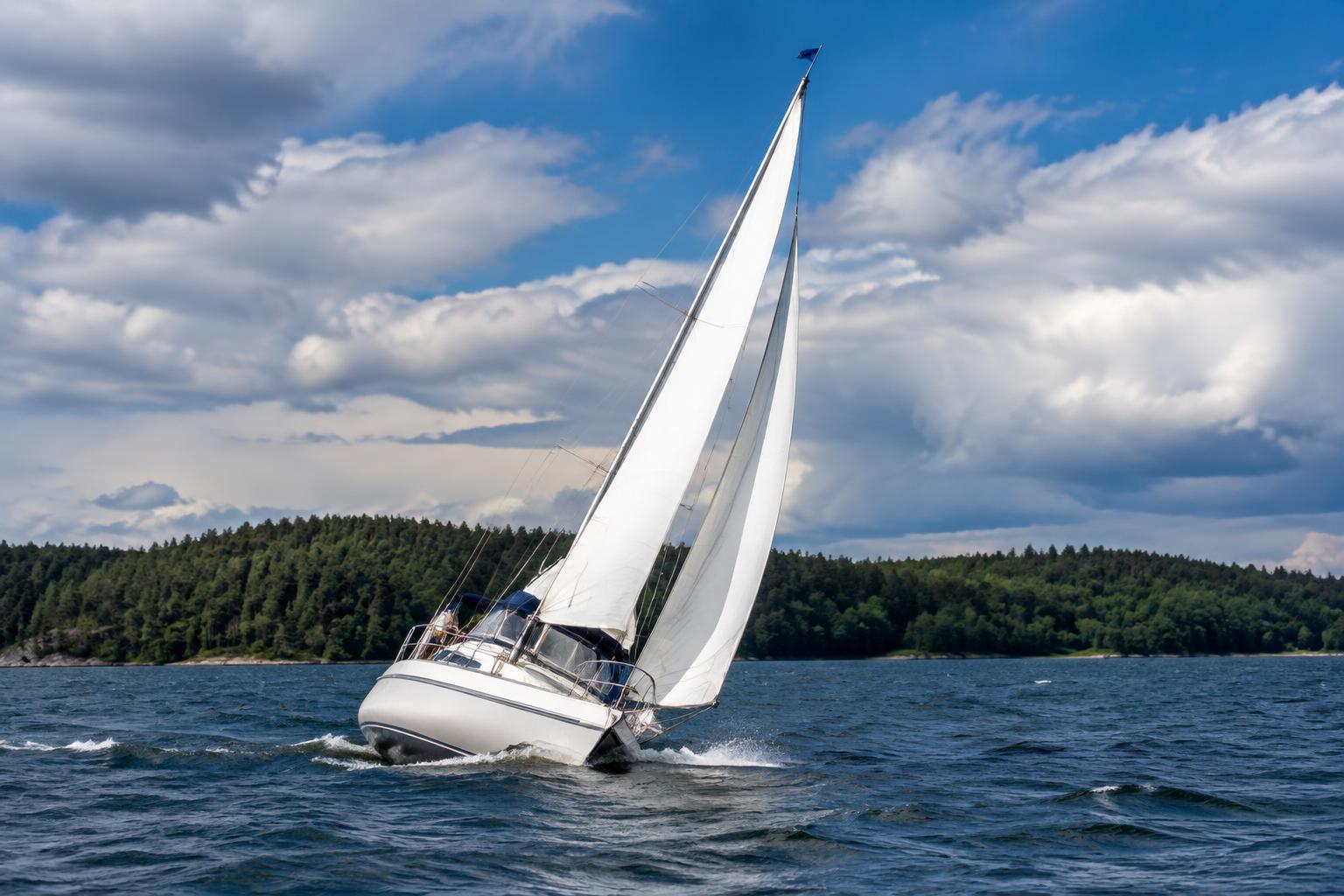
Sailing rewards patience and reading conditions. Whether it's a dinghy on a lake or a coastal cruiser overnighting in a cove, the fundamentals are the same: trim, balance, and a weather plan.
Season: Season depends on latitude; wind is best in the shoulder months.
Sailing is weather literacy on water. Learn the boat in light air, then build up to reefing, docking and navigation before longer passages.
A certified course and plenty of crewing on other people's boats is the fastest way to competence.
Dinghy or keelboat lessons, points of sail, man-overboard drills.
Day sails as skipper, reefing, coastal navigation.
Overnight passages, bareboat charters, offshore training.
Learn close-hauled, beam reach, broad reach and run, and trim the sails for each.
Call commands clearly and control the boom on every gybe; an uncontrolled gybe can injure people.
Learn the Navigation Rules: port tack gives way to starboard, windward gives way to leeward, and the overtaking boat keeps clear.
Reef early — the time to shorten sail is when you first wonder whether you should.
Summer brings lighter, steadier winds for learning; spring and fall are breezier, with colder water.
Sources: U.S. Coast Guard — 2024 Recreational Boating Statistics · US Sailing — Learn to sail · NOAA — Marine forecasts
Our Top 10 lists for the kit this pursuit leans on, each with real product photos.

We evaluated expert reviews and field benchmarks to rank the top 10 running sunglasses for optical clarity, bounce-free stability, and long-term durability.

We analyzed expert testing data and outdoor durability benchmarks to rank the 10 best sunglasses for running, cycling, paddling, and trail use.

From minimalist camp lights to serious night-navigation and rescue-grade beams.

Life jackets you'll actually wear all day — fitted, vented, and matched to how you paddle.

Hardshells and traditional cottons that actually keep you working in sustained rain.
We haven't verified any sailing destinations yet, so we won't guess. Browse every destination or build a trip around your own spot.
Late spring through early fall, with steady thermals and warm-enough water for a recovery.
Warm water, long evenings, forgiving swims — the season most paddlers plan around.
Big water and empty rivers — the strongest flows and the coldest swims of the year.
Quiet water and superb light, with water temperatures dropping faster than the air.
Drysuit-only territory with ice on gear, ramps, and hands.
See live conditions and seasonal averages the same way destination pages show them.
Browse the destinations mapPlanning ranges are typical temperate-latitude values — always verify the forecast, flow, avalanche, and fire advisories for your specific area and elevation before you commit.
Every link below opens a planner already set to sailing — the right trip type, temperature band, checklist and builder, so your kit starts from the skills and hazards this pursuit actually demands.
Dinghies teach faster because mistakes are immediate and cheap. Keelboats are more forgiving for family day sailing.
The moment you first think about it. Reefing early costs a little speed; reefing late costs control.