


Summer
- Days
- 70–90°F
- Nights
- 48–62°F
Peak daylight and stable overnight temps; heat and afternoon storms set the schedule.
- Afternoon thunderstorms on ridges and passes
- Heat and dehydration on exposed miles
- Fire closures and smoke drift
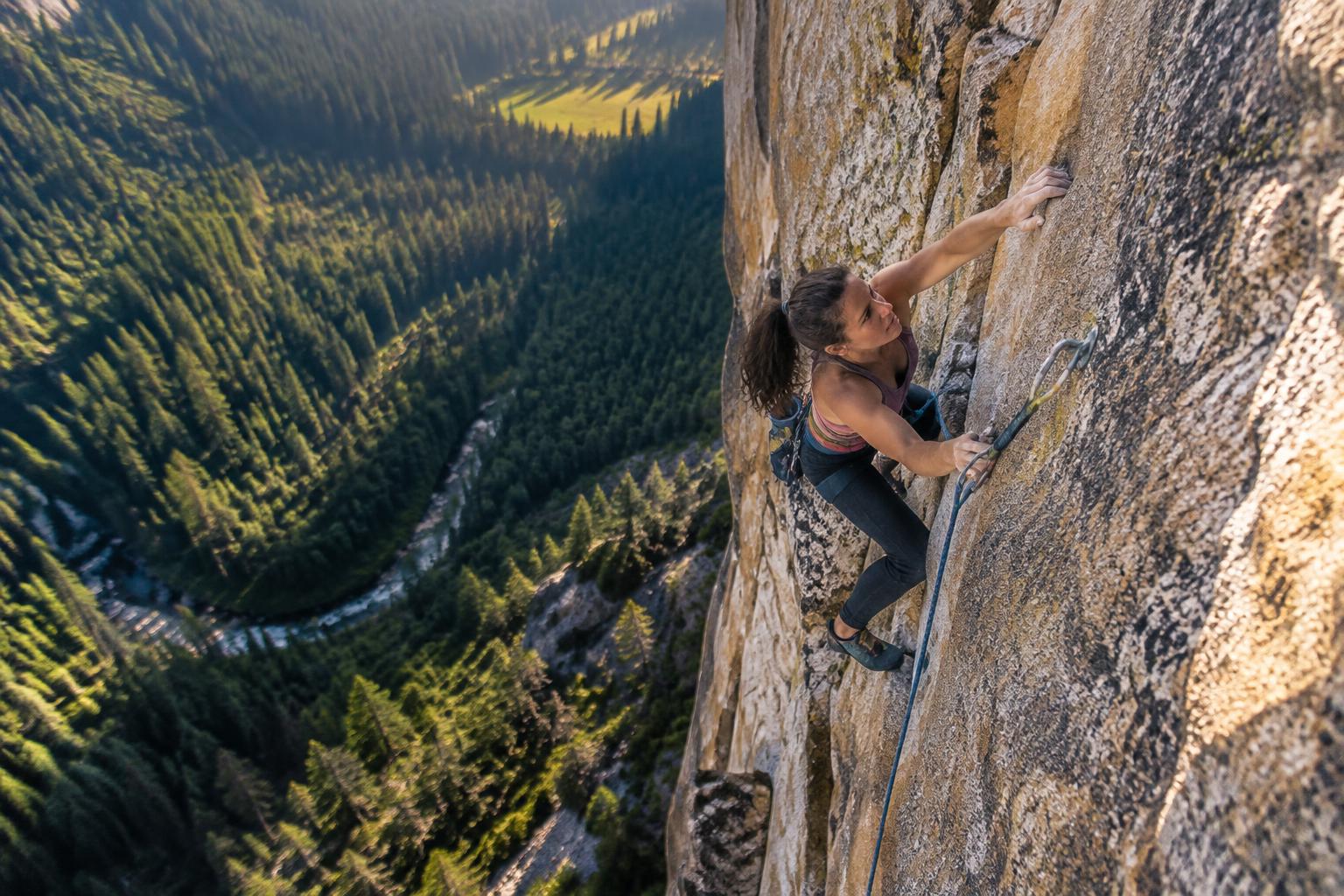
Climbing is a movement sport wrapped in a safety system. Progress comes from footwork and mileage; safety comes from checking the system every single time, no matter how routine it feels.
Season: Best in dry shoulder seasons; alpine rock in midsummer.
Climbing is a systems sport: knots, belays, anchors and communication keep you safe. Learn them from qualified instruction before you trust them outside.
Gym climbing is a great base, but outdoor rock adds loose holds, weather and anchors you have to judge yourself.
Gym belay certification, figure-eight, top-rope outdoors with a mentor.
Sport leading, cleaning anchors, rappelling with backups.
Trad leading, multi-pitch, self-rescue.
Before every climb: harness buckled and doubled back where needed, figure-eight follow-through dressed, belay device and locker loaded right and locked, knot in the rope end.
Keep a brake hand on the rope at all times. Learn soft catches only after solid basic belays.
Climbing is mostly feet. Look for footholds first and keep weight over them, not on your arms.
Take a course or go with a mentor to learn anchors, cleaning and rappelling before leaving the gym.
Spring and fall give the best friction; summer means chasing shade, winter means chasing sun.
Sources: Access Fund — Climbing access and stewardship · Leave No Trace — 7 Principles
Our Top 10 lists for the kit this pursuit leans on, each with real product photos.

The top approach shoes for technical scrambling, crag walks, and long alpine descents, ranked across independent gear reviews and practical field durability.

A definitive guide to the top bike helmets for road, trail, and downhill riding, evaluated on real-world protection, ventilation, weight, and long-term value.

The best climbing helmets balance critical impact protection, ventilation, and weight. Here are the top 10 models for cragging, alpine routes, and ski mountaineering.

Field-ready climbing pants evaluated on mobility, rock abrasion resistance, and harness compatibility across budget and alpine picks.

A research-backed guide to the best climbing skins for backcountry touring, evaluating glide, traction, glue dependability, and packability across top industry picks.

We synthesized evaluations from leading independent gear testing outlets to rank the 10 best climbing shoes for indoor gyms, technical granite, steep sport routes, and trad cracks.

Alberta, Canada
Kananaskis Country offers a diverse array of ice climbing opportunities, ranging from easily accessible single-pitch flows to serious multi-pitch alpine routes, all within an hour or two's drive of Calgary.

Alberta, Canada
The Ghost River Wilderness, located west of Calgary, offers a more rugged and adventurous ice climbing experience compared to the readily accessible Parkway.

Alberta, Canada
The Icefields Parkway, stretching between Lake Louise and Jasper, is arguably the world's most concentrated corridor of accessible, high-quality ice climbs.

Alberta, Canada
While often lumped in with the Icefields Parkway, Jasper National Park offers its own distinct flavor of ice climbing, particularly further north.

Alberta, Canada
Waterton Lakes National Park, located in the southern Alberta Rockies, offers a unique and often overlooked ice climbing experience.

Wyoming, United States
Wyoming's granite high country — alpine lakes, golden trout, and the least-crowded big peaks in the Rockies.

British Columbia, Canada
Yoho National Park, nestled just west of Lake Louise in British Columbia, is home to some truly classic ice and mixed climbs, often with a slightly different character than those in Banff.

Wyoming, United States
A ring of granite spires above Lonesome Lake — the most photographed basin in the Wind Rivers.

British Columbia, Canada
While primarily famous for its summer granite spires, Bugaboo Provincial Park offers extremely adventurous and challenging ice and mixed climbing in winter for those willing to brave the deep snow and remote access.
Spring and fall — cool, dry friction days between summer heat and winter ice.
Peak daylight and stable overnight temps; heat and afternoon storms set the schedule.
The best conditions of the year: cool days, few bugs, cold nights that reward a real sleep system.
Long light returns but the ground is wet, snow lingers up high, and creeks run big.
Quiet and beautiful, but it becomes a cold-weather trip with cold-weather consequences.
See live conditions and seasonal averages the same way destination pages show them.
Browse the destinations mapPlanning ranges are typical temperate-latitude values — always verify the forecast, flow, avalanche, and fire advisories for your specific area and elevation before you commit.
Every link below opens a planner already set to rock climbing — the right trip type, temperature band, checklist and builder, so your kit starts from the skills and hazards this pursuit actually demands.
Gym first for movement and belay fundamentals, then hire a guide or go with an experienced mentor for your first outdoor days.
Rarely indoors, but always outdoors. Rockfall and inverted falls are the reason.