


Summer
- Days
- 70–90°F
- Nights
- 48–62°F
Peak daylight and stable overnight temps; heat and afternoon storms set the schedule.
- Afternoon thunderstorms on ridges and passes
- Heat and dehydration on exposed miles
- Fire closures and smoke drift
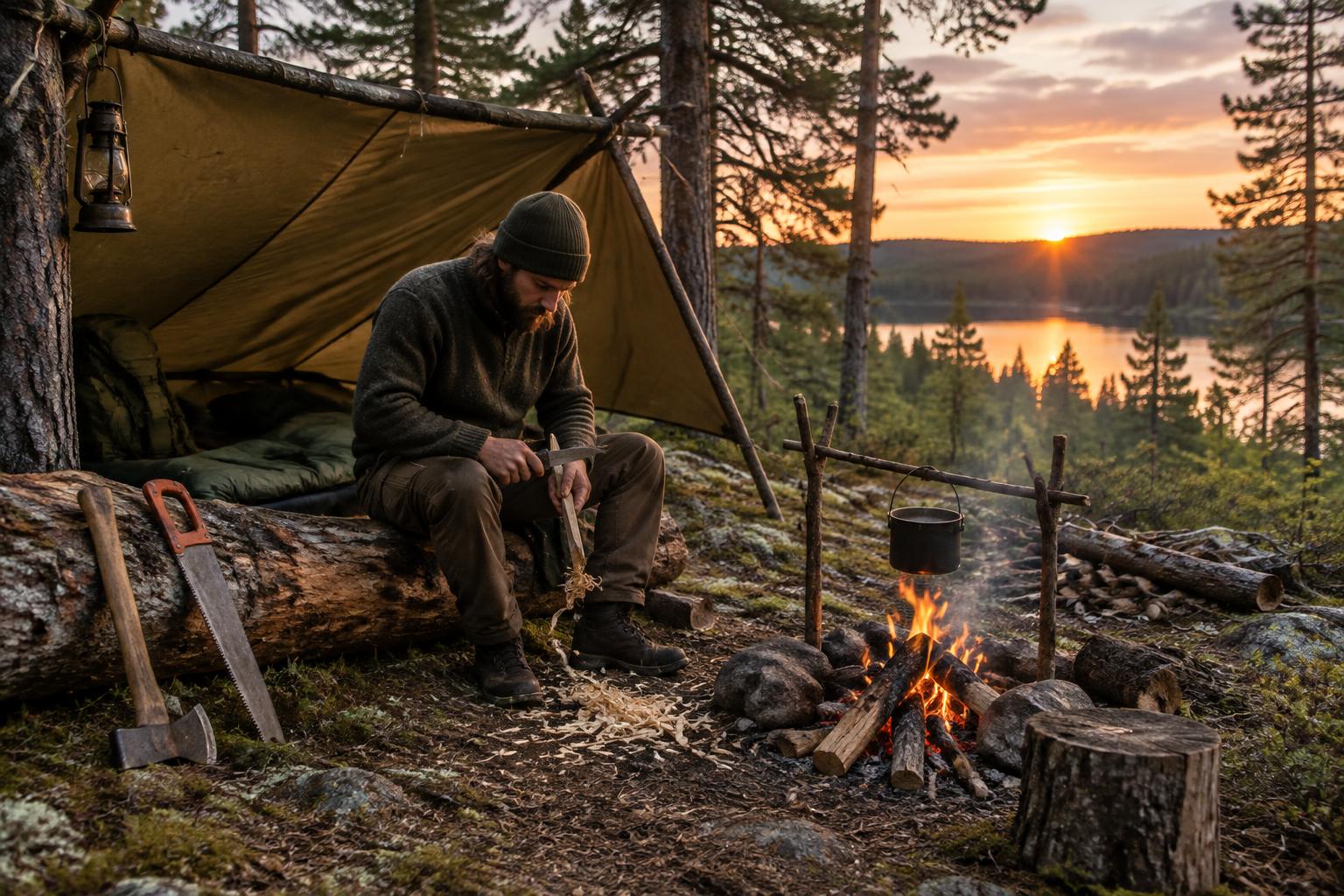
Bushcraft is the slow set of skills: making fire in the wet, shaping wood with a sharp edge, and building shelter from what the forest already offers. It rewards practice far more than purchases.
Season: Year-round; wet and cold conditions teach the most.
Bushcraft is the craft of living comfortably with fewer tools: fire, shelter, cordage, safe knife and axe work. It rewards patient, repeated practice far more than gear purchases.
Practice on private land or where it's allowed — many public areas restrict cutting live wood and building structures.
Safe knife grips, fire with a ferro rod, tarp pitches, basic knots.
Wet-weather fire, axe and saw work, overnight with a minimal kit.
Natural cordage, debris shelters, multi-day minimal-kit trips.
Grade fuel by size: tinder, then pencil-lead, pencil, thumb and wrist thickness. Gather twice what you think you need before striking.
Cut away from your body and keep a clear 'blood circle' around you. Use chest-lever and knee-brace grips for control.
A tarp ridgeline with a taut-line hitch is the most useful single setup. Pitch low to the wind side.
Learn the bowline, clove hitch, taut-line hitch and trucker's hitch until you can tie them in the dark.
Fall and winter are the best training seasons — wet, cold conditions show whether your skills actually work.
Sources: Leave No Trace — 7 Principles
Our Top 10 lists for the kit this pursuit leans on, each with real product photos.

Find the best bushcraft pants. Built with heavy canvas, waxed hybrids, or wool, featuring reinforced knees and ember resistance for hard camp work.

Expertly researched pyramid tarps ranked for weather resistance, weight efficiency, and storm-worthiness in rough backcountry conditions.

Full-tang and stick-tang blades that earn their place around a working camp.

Silnylon, Dyneema, and canvas tarps ranked on hydrostatic head, tie-out strength, and pitch versatility.

From belt hatchets to full felling axes — the working range for camp and shelter craft.

Folding saws, bucksaws and pull-stroke monsters that turn deadfall into firewood faster than any axe.

Minnesota, United States
Over a million acres of interconnected lakes and portages.

Maine, United States
A traditional New England wilderness river with campsites, portages, and a strong outfitter scene.

Wyoming, United States
The Gros Ventre Wilderness, located southeast of Jackson Hole, offers a magnificent blend of towering peaks, lush river valleys, and extensive timbered slopes.

California, United States
340 km through California's High Sierra, from Yosemite Valley to the summit of Mount Whitney.

Wyoming, United States
The North Absaroka Wilderness, stretching north from Cody towards the Montana border, is a rugged and remote expanse of volcanic plateaus, deep canyons, and high ridges.

Newfoundland and Labrador, Canada
Newfoundland fjords, tablelands and coastal trail — geology you can walk across in a single day.

Alberta, Canada
Kananaskis Country offers a diverse array of ice climbing opportunities, ranging from easily accessible single-pitch flows to serious multi-pitch alpine routes, all within an hour or two's drive of Calgary.
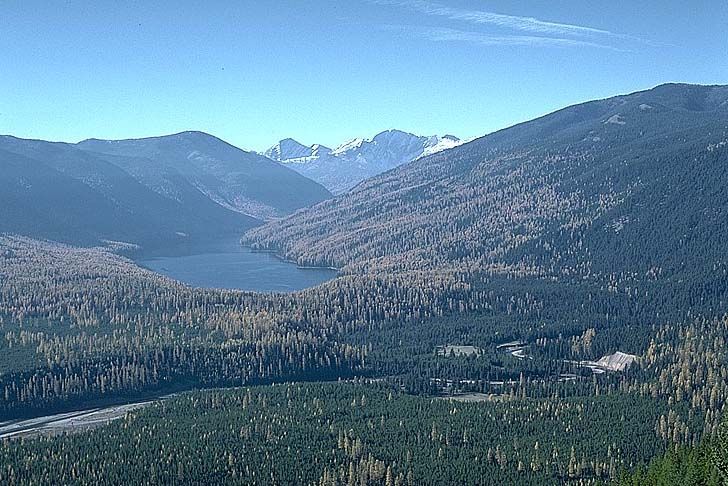
Montana, United States
A million roadless acres of Montana grizzly country anchored by the Chinese Wall.

Alaska, United States
No roads, no trails, no facilities — America's wildest national park, entirely above the Arctic Circle.
Fall through early spring, when fire is welcome, bugs are gone, and the woods are open.
Peak daylight and stable overnight temps; heat and afternoon storms set the schedule.
The best conditions of the year: cool days, few bugs, cold nights that reward a real sleep system.
Long light returns but the ground is wet, snow lingers up high, and creeks run big.
Quiet and beautiful, but it becomes a cold-weather trip with cold-weather consequences.
See live conditions and seasonal averages the same way destination pages show them.
Browse the destinations mapPlanning ranges are typical temperate-latitude values — always verify the forecast, flow, avalanche, and fire advisories for your specific area and elevation before you commit.
Every link below opens a planner already set to bushcraft — the right trip type, temperature band, checklist and builder, so your kit starts from the skills and hazards this pursuit actually demands.
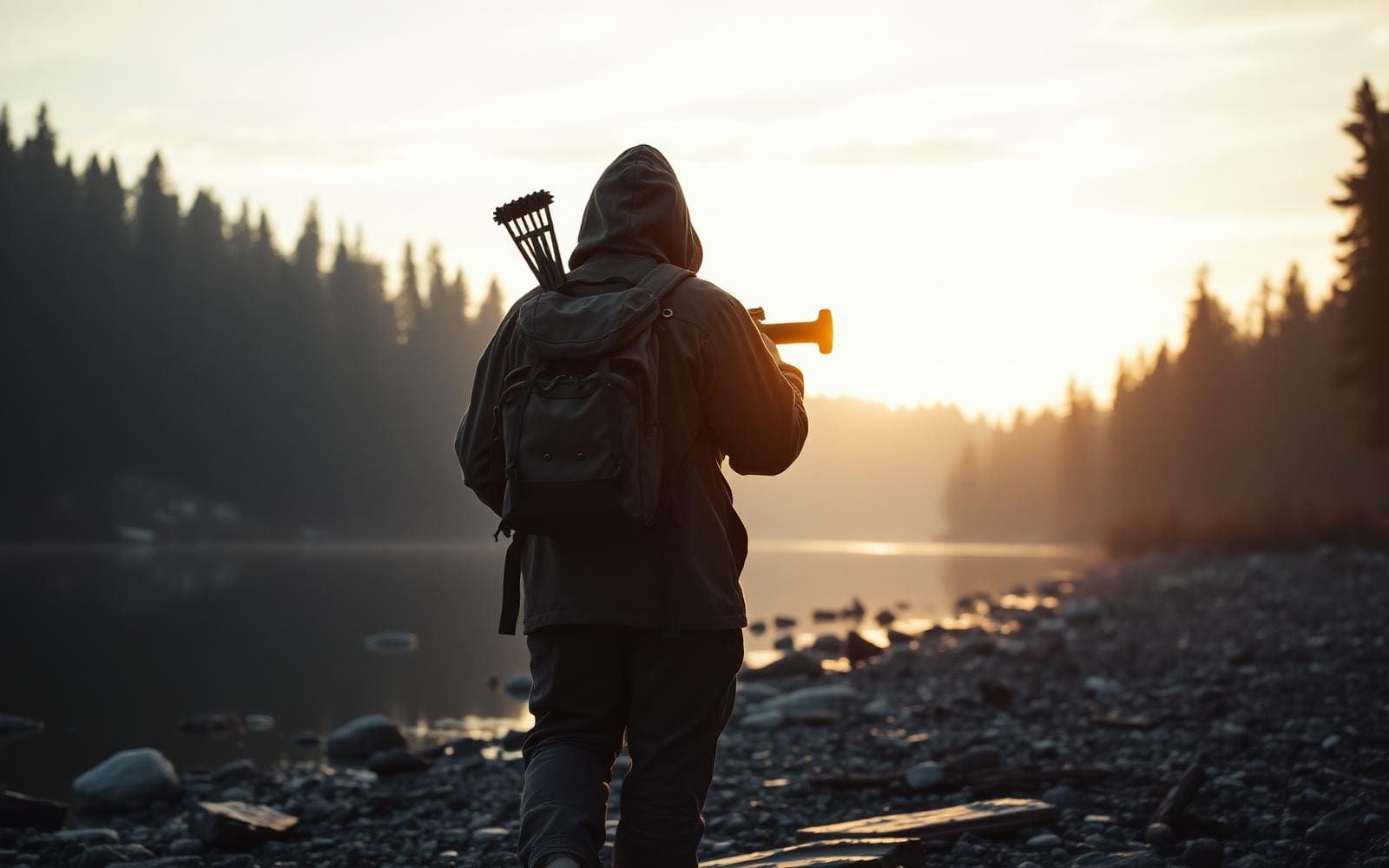
In Alone Season 6, Episode 6, the remaining survivalists confront deep physical depletion as cold conditions test shelter integrity and fire-maintenance protocols in the sub-arctic.

When spring snow turns slick and you only carry trekking poles, your body mechanics must do the work of steel. Here is how to arrest a slide using friction and poles.

A quinzhee isn't just a pile of snow; it's an engineered structure. Understand the science of snow sintering, crystal bonds, and catenary arches to build a safe, strong shelter that won't collapse on you.

Running a wood stove in a sub-zero tent feels like a luxury, but it's also an invitation for condensation. This deep dive explains the dew point, fabric performance, and practical steps to keep your winter shelter dry and comfortable.

It's easy to build a snow shelter, but how well does it really protect you in high-elevation cold? We've measured the internal temperatures, 'cold well' efficacy, and wall insulation of various designs to cut through the theory and get to the practical reality of heat retention.

Episode 11 of Alone Season 13 aired August 26, 2026. A mistake nearly burns a shelter down, a bear raids a critical food cache, and the last four face real famine in the Arctic winter.

When the coastal rainforest has absorbed weeks of rain, finding dry fuel for a fire can feel impossible. This guide cuts through the wet to show you where to look, what to use, and how to process materials for a successful blaze, even in the soggiest conditions.

A stock axe is a starting point. Rehanging, re-profiling the bit, tuning the grip, and building a better sheath turn a factory head into a tool that fits your hands and your woods.
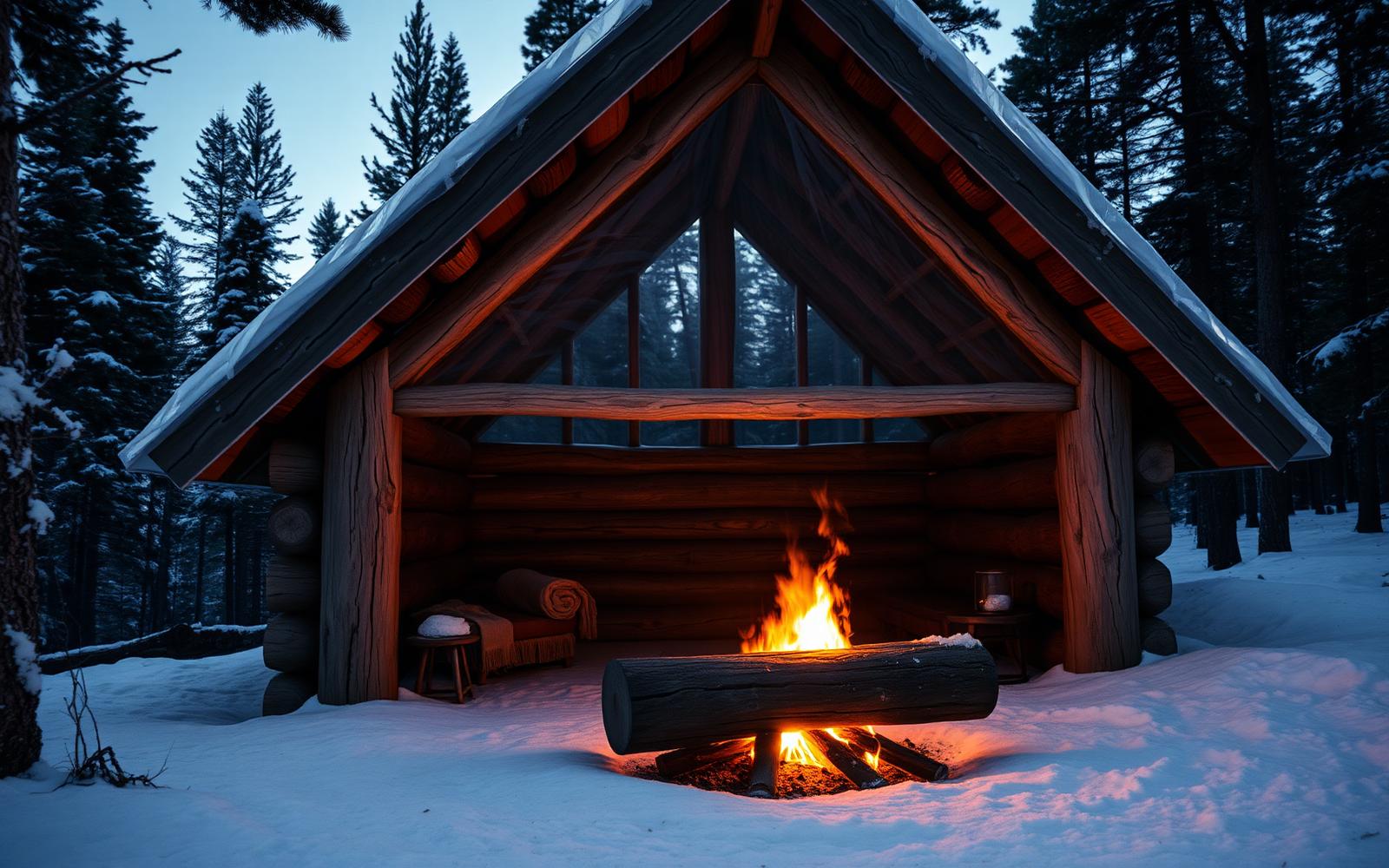
Forget the romantic notions of firecraft. When your life might depend on it, what's truly reliable in the backcountry: a ferro rod or a simple Bic lighter? We break down the real-world performance.
Fire in wet conditions. It's the skill that most often separates a bad night from a merely uncomfortable one.
No. A simple carbon-steel fixed blade you keep sharp outperforms a premium knife you're afraid to use.