




Summer
- Days
- 72–92°F
- Nights
- 50–65°F
Warm water, long evenings, forgiving swims — the season most paddlers plan around.
- Afternoon wind on lakes and bays
- Thunderstorms with nowhere to shelter
- Low, bony flows on rain-fed rivers
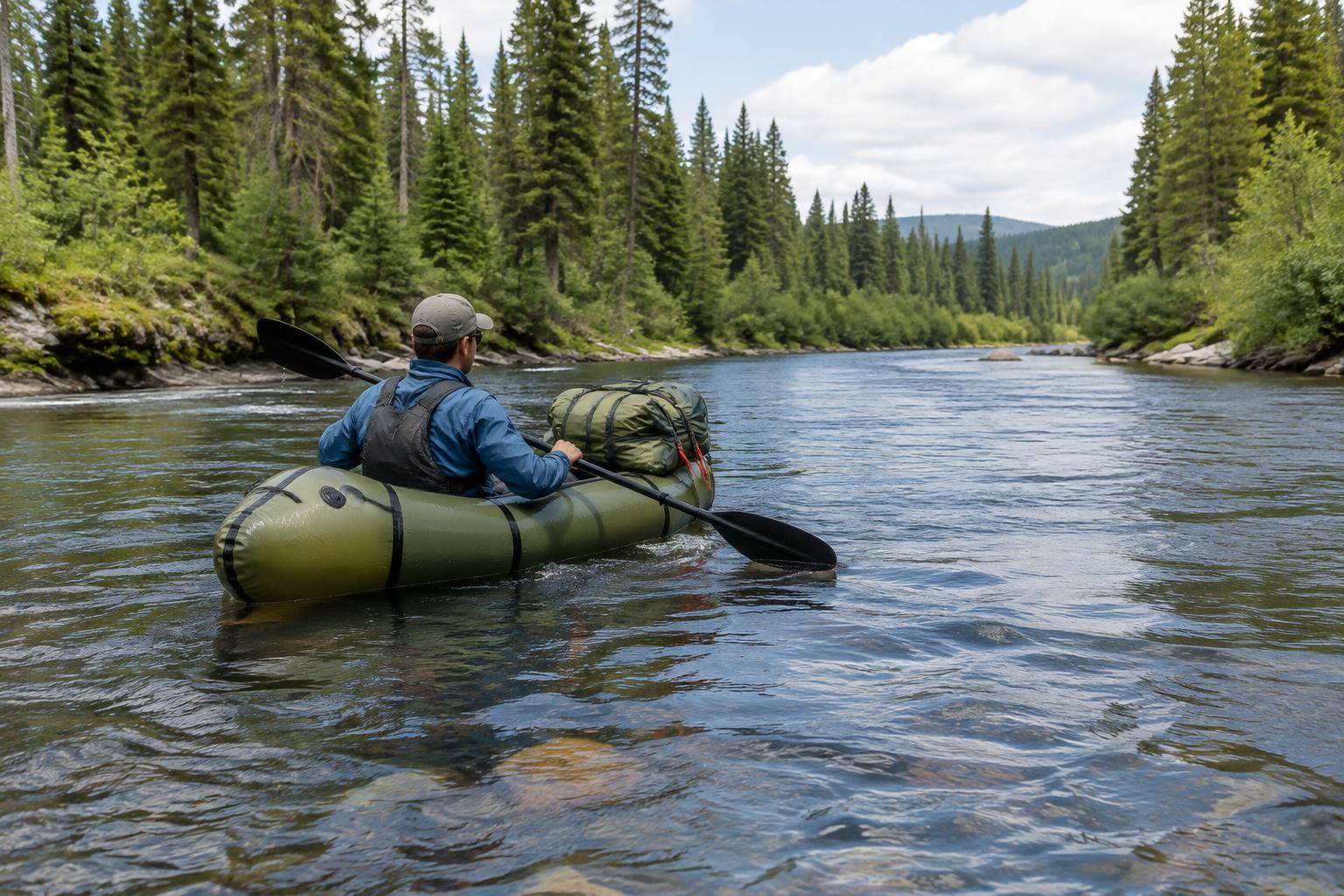
Packrafting stitches walking and paddling into routes neither could do alone. A boat that fits in your pack turns a river from an obstacle into the fastest line out.
Season: Summer flows; cold-water gear extends the season.
Packrafting links hiking and paddling: carry a light raft in, float out. It opens loop routes nothing else can, but rivers are still rivers — learn whitewater skills.
Start on slow, warm, easy water and practice re-entering the boat.
Flatwater and Class I, inflation, packing, re-entry.
Class II, hike-and-float overnights, swiftwater training.
Remote traverses, multi-day wilderness routes.
Packrafts spin easily — learn to keep the bow pointed with forward and sweep strokes before running rapids.
Top up with mouth or pump after the cold water shrinks the air, and protect the floor from sharp rocks.
Plan hike-in and float-out legs and carry the extra weight of paddle, PFD and dry clothes.
Same rules as kayaking: scout blind drops, eddy out, and take a swiftwater course.
Summer flows are kindest; snowmelt and rain can push rivers up fast.
Sources: American Whitewater — International Scale of River Difficulty · American Whitewater — Safety Code · National Weather Service — Cold water safety
Our Top 10 lists for the kit this pursuit leans on, each with real product photos.

Alaska, United States
No roads, no trails, no facilities — America's wildest national park, entirely above the Arctic Circle.

Minnesota, United States
Over a million acres of interconnected lakes and portages.

Maine, United States
A traditional New England wilderness river with campsites, portages, and a strong outfitter scene.
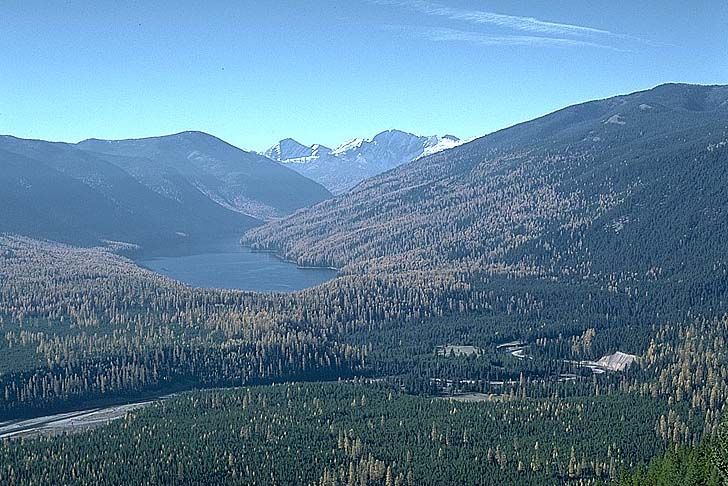
Montana, United States
A million roadless acres of Montana grizzly country anchored by the Chinese Wall.

South Island, New Zealand
Rainforest walls, waterfalls by the thousand, and New Zealand's most serious multi-day tracks.

Nepal, Nepal
The full route is expedition-scale; sections like Manaslu or Kanchenjunga are trip-of-a-lifetime treks.

Wyoming, United States
The Gros Ventre Wilderness, located southeast of Jackson Hole, offers a magnificent blend of towering peaks, lush river valleys, and extensive timbered slopes.

Montana, United States
HD 210 plunges hunters into the heart of the Bob Marshall Wilderness Complex, offering an unparalleled backcountry elk experience.

California, United States
340 km through California's High Sierra, from Yosemite Valley to the summit of Mount Whitney.
June through September, once water temperature is high enough that a swim is survivable without a wetsuit.
Warm water, long evenings, forgiving swims — the season most paddlers plan around.
Big water and empty rivers — the strongest flows and the coldest swims of the year.
Quiet water and superb light, with water temperatures dropping faster than the air.
Drysuit-only territory with ice on gear, ramps, and hands.
See live conditions and seasonal averages the same way destination pages show them.
Browse the destinations mapPlanning ranges are typical temperate-latitude values — always verify the forecast, flow, avalanche, and fire advisories for your specific area and elevation before you commit.
Every link below opens a planner already set to packrafting — the right trip type, temperature band, checklist and builder, so your kit starts from the skills and hazards this pursuit actually demands.

A technical guide to reading tea-colored currents, bedrock shelves, and deadfall strainers on remote, ungauged boreal rivers where mistakes carry high consequences.

River wood doesn't yield. Learn how to identify downstream strainers, read subtle surface hydraulics from water level, and bail out before passing the point of no return.

How you load your packraft isn't just about fitting gear; it profoundly affects performance. This deep dive compares internal tube storage with deck-bag placement, examining their impact on draft, tracking, and capsize recovery.

Moving bulk from your packraft's bow deck to internal cargo tubes can be a game-changer for stability and wet-entry recovery on Class III wilderness rivers. Here's why.

A paddling day trip requires more than a boat and optimism. Water temperature, wind, current, waves, traffic, reentry ability, flotation, communication, and a return plan determine safety. Every paddler should wear a properly fitted life ja

Moving water deserves suspicion. Depth alone does not determine risk; speed, footing, temperature, width, obstacles, downstream hazards, group strength, and the consequences of a fall all matter. The correct crossing is often a bridge, a sa

Plan a Ozark National Scenic Riverways trip around canoeing, kayaking, hiking, and camping, with a flexible itinerary, skill gates, official-source checks, gear priorities, turnaround triggers, and low-impact travel.

Plan a Ozark National Scenic Riverways trip around canoeing, kayaking, hiking, and camping, with a flexible itinerary, skill gates, official-source checks, gear priorities, turnaround triggers, and low-impact travel.

Plan a Buffalo National River trip around canoeing, kayaking, hiking, and camping, with a flexible itinerary, skill gates, official-source checks, gear priorities, turnaround triggers, and low-impact travel.
Typically 8–13 pounds for boat, paddle, and PFD — light enough to carry over a pass and still walk out.
For flatwater and Class I, no. For anything with real current, get whitewater instruction first.