


Summer
- Days
- 70–90°F
- Nights
- 48–62°F
Peak daylight and stable overnight temps; heat and afternoon storms set the schedule.
- Afternoon thunderstorms on ridges and passes
- Heat and dehydration on exposed miles
- Fire closures and smoke drift
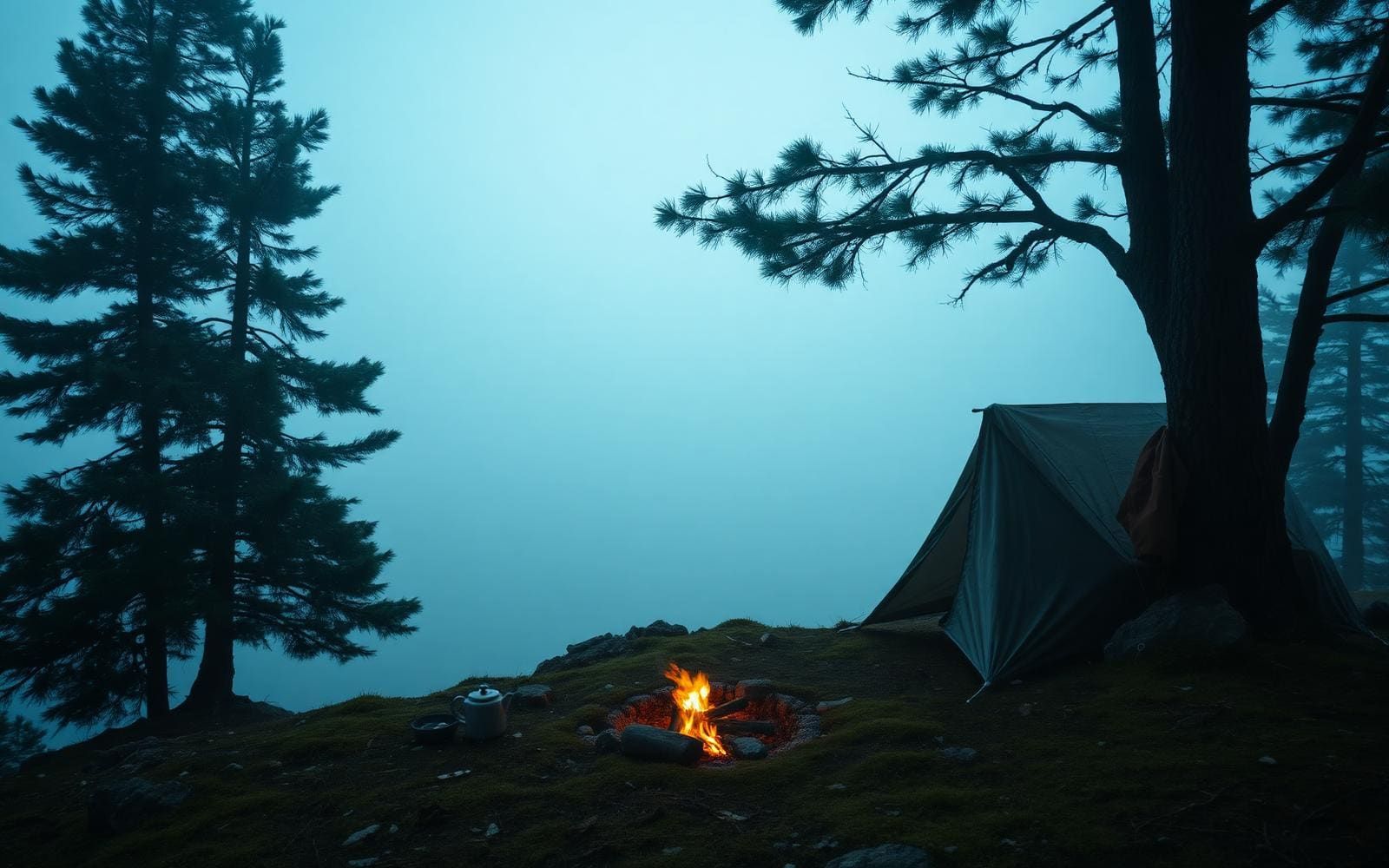
When weight stops mattering, camping becomes about comfort and systems: a kitchen that works in the dark, a site that drains, and a setup you can pitch and strike without arguing.
Season: Year-round with the right shelter and sleep system.
Camping is the easiest way to spend real time outside: drive or walk a short way in, set a comfortable camp and enjoy it. Comfort comes from a good sleep system and a kitchen that works in wind and rain.
Pick campgrounds with amenities for your first trips, then move toward dispersed sites once your setup is dialed.
Reserved campground, practice pitching the tent at home first.
Dispersed sites, cold-weather nights, cooking real meals at camp.
Winter or remote camps, multi-week basecamps, group trip leadership.
Your pad's R-value matters as much as the bag. Use R 4+ for cold ground and stack pads in winter.
Cook on a stable surface out of the wind, with water boiling before you start prep. Clean as you go to keep critters away.
Pitch on high, flat ground with the door away from the wind. Stake and guy out the tent before dark, not when the storm arrives.
Use existing fire rings, keep fires small and drown, stir and feel them until cold to the touch.
Reserve popular campgrounds well ahead for summer weekends; spring and fall are quieter but much colder at night.
Sources: Leave No Trace — 7 Principles · Don't Move Firewood
Our Top 10 lists for the kit this pursuit leans on, each with real product photos.

Single and double camping hammocks for backyard lounging, car camping, and backcountry nights, with bug-net and budget picks included.

We evaluated leading two-person backpacking shelters across weight, interior volume, storm protection, and long-term durability to find the best options for any trip.

Solo backpacking tents compared by livable space, weight trade-offs, pitch style and weather protection.

A synthesized guide to the ten best four-season tents of 2026, comparing alpine assault shelters, pyramid tarps, and winter basecamp fortresses based on aggregated field reviews.

A data-backed guide to the best backpacking sleeping bags, comparing warmth-to-weight ratios, comfort cuts, and long-term durability across top independent reviews.

A research-driven guide to the best ultralight sleeping bags and quilts of 2026, comparing warmth, packability, and durability across top-tier outdoor brands.

Minnesota, United States
Over a million acres of interconnected lakes and portages.

Maine, United States
A traditional New England wilderness river with campsites, portages, and a strong outfitter scene.

Alberta, Canada
Kananaskis Country offers a diverse array of ice climbing opportunities, ranging from easily accessible single-pitch flows to serious multi-pitch alpine routes, all within an hour or two's drive of Calgary.

Nepal, Nepal
The full route is expedition-scale; sections like Manaslu or Kanchenjunga are trip-of-a-lifetime treks.

Wyoming, United States
The Gros Ventre Wilderness, located southeast of Jackson Hole, offers a magnificent blend of towering peaks, lush river valleys, and extensive timbered slopes.

Montana, United States
HD 210 plunges hunters into the heart of the Bob Marshall Wilderness Complex, offering an unparalleled backcountry elk experience.

California, United States
340 km through California's High Sierra, from Yosemite Valley to the summit of Mount Whitney.

Wyoming, United States
The North Absaroka Wilderness, stretching north from Cody towards the Montana border, is a rugged and remote expanse of volcanic plateaus, deep canyons, and high ridges.

Ontario, Canada
Ontario's canoe wilderness — a thousand lakes, portage trails, and no motors anywhere.
Late May through mid-October, with the sweet spot in September when bugs drop and trails empty.
Peak daylight and stable overnight temps; heat and afternoon storms set the schedule.
The best conditions of the year: cool days, few bugs, cold nights that reward a real sleep system.
Long light returns but the ground is wet, snow lingers up high, and creeks run big.
Quiet and beautiful, but it becomes a cold-weather trip with cold-weather consequences.
See live conditions and seasonal averages the same way destination pages show them.
Browse the destinations mapPlanning ranges are typical temperate-latitude values — always verify the forecast, flow, avalanche, and fire advisories for your specific area and elevation before you commit.
Every link below opens a planner already set to camping — the right trip type, temperature band, checklist and builder, so your kit starts from the skills and hazards this pursuit actually demands.

Running a wood stove in a sub-zero tent feels like a luxury, but it's also an invitation for condensation. This deep dive explains the dew point, fabric performance, and practical steps to keep your winter shelter dry and comfortable.
Ever wonder why your once-waterproof tent now leaks? It's likely a coating issue. We break down the science of polyurethane (PU) and silicone coatings, examining how they stand up to 100 days of sun and rain.
Seven nights in the damp without sun. We put hydrophobic down and untreated down head-to-head to see how each holds up when the moisture just won't quit. The results shed light on real-world performance.

MagnaCut wins overall, MagnaMax leads edge retention, 14C28N wins value, 3V rules hard use, Vanax and LC200N own saltwater. A ranked, comparative guide to 100+ knife steels with T/E/C data.

A good stargazing camp combines dark sky, clear horizon, weather, moon phase, legal access, warmth, and patient eyes. The telescope is optional; a blanket, red light, star map, and binoculars can reveal plenty. The greatest technical challe

A first camping trip should test a simple system, not your ability to relocate the contents of a house. Bring reliable shelter, sleep equipment, weather protection, water, food, illumination, first aid, and a plan. Most comfort problems com

Low-impact camping is not a performance of purity. It is a series of practical choices that reduce damage, protect water and wildlife, and leave room for other people. Plan ahead, use durable surfaces, manage waste, leave natural and cultur

A useful camp kitchen turns meals into a short, controlled process instead of scattering food, flame, knives, and wildlife attractants across the site. Plan the menu around the equipment, create clean and dirty zones, protect cold food, and

Rain does not ruin a tent setup; disorganization does. The objective is to keep the tent body and sleep system protected while anchors, poles, and rainfly go into place. Practice the sequence before the trip, pack components in the order th
Sleep. A thick pad or cot and a proper pillow changes more about a weekend than any other purchase.
Hard-sided vehicle storage or a certified canister in bear country, and never inside your tent — including toothpaste and wrappers.