


Summer
- Days
- 72–92°F
- Nights
- 50–65°F
Warm water, long evenings, forgiving swims — the season most paddlers plan around.
- Afternoon wind on lakes and bays
- Thunderstorms with nowhere to shelter
- Low, bony flows on rain-fed rivers
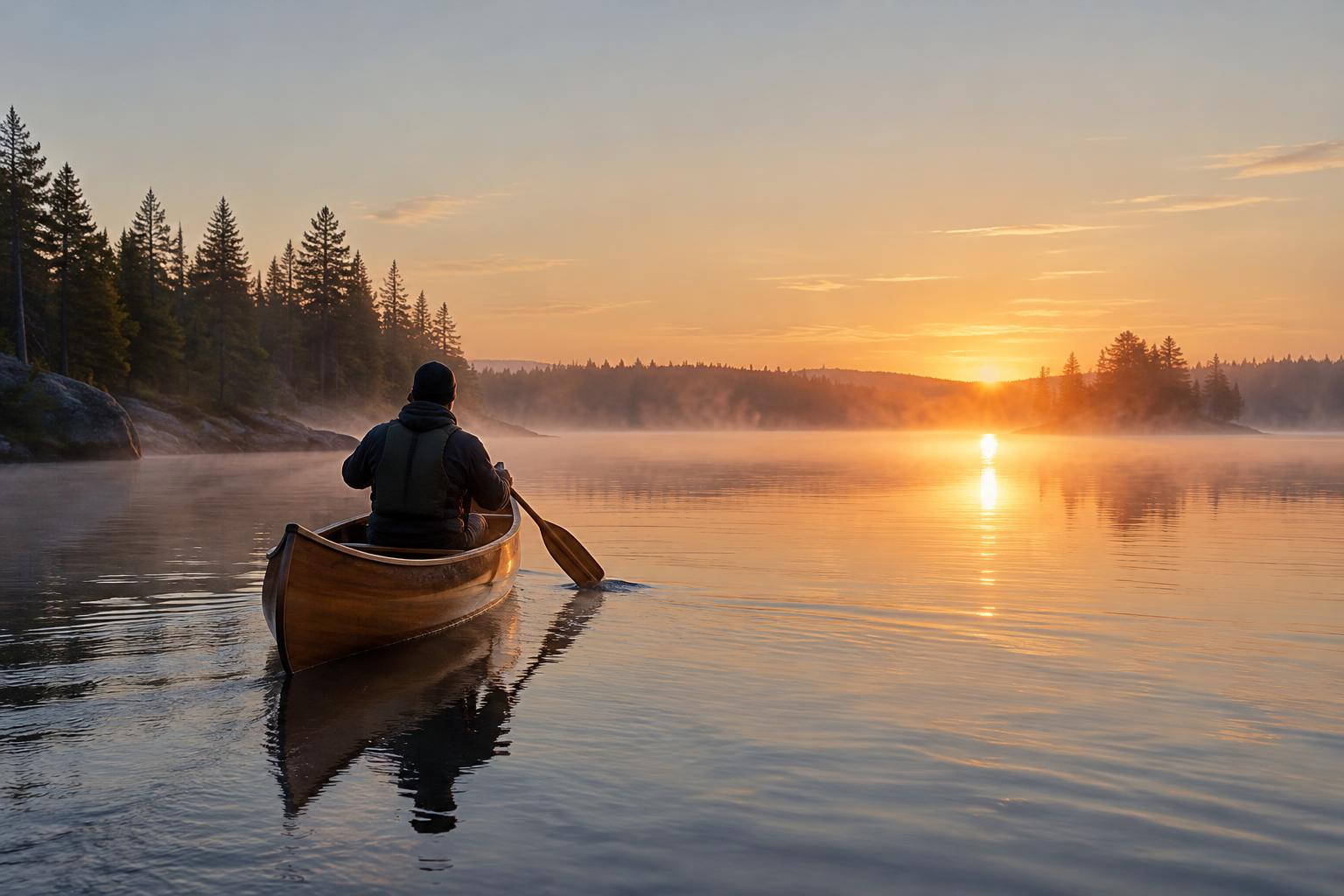
Canoe travel carries more gear than any pack and takes you where roads don't. The craft is in strokes, trim, and portage systems that keep a long carry from breaking the day.
Season: Ice-out through fall; bugs peak early summer.
Canoe tripping trades your back for your shoulders: you can carry more comfort, but wind, waves and portages set the pace. Learn to read a lake before you cross it.
A trip that stays close to shore with short portages is the right first route; most trouble starts on big open water in afternoon wind.
Day paddles, J-stroke, wet exit and rescue practice in warm water.
2–4 night lake routes, efficient portaging, packing in dry bags.
Remote wilderness routes, river travel, cold-water shoulder seasons.
Forward, J-stroke (to steer from the stern without switching sides), draw, pry and sweep. The J-stroke is the one to master first.
Keep heavy packs low and centred, and trim the boat slightly stern-heavy in a headwind.
Cross big water early in the day, hug sheltered shorelines and wait out whitecaps.
Practise a solo canoe lift and carry with the yoke before a trip, and keep packs ready to swap quickly.
Early season means cold water and bugs; late summer brings warmer water, and fall the calmest crowds but cold nights.
Sources: U.S. Coast Guard — 2024 Recreational Boating Statistics · National Weather Service — Cold water safety · Leave No Trace — 7 Principles
Our Top 10 lists for the kit this pursuit leans on, each with real product photos.

Proven cold-weather canoeing gloves and mitts evaluated for thermal insulation, paddle grip, waterproof protection, and cockpit dexterity.

Paddles ranked on swing weight, blade flutter, and grip comfort after eight hours of paddling.

We put the top canoe portage packs through their paces, evaluating comfort, durability, and hauling capacity on long carries. Here’s what stood up to the grind.

Tripping and solo canoes ranked on hull efficiency, portage weight, and rough-water behavior.

Life jackets you'll actually wear all day — fitted, vented, and matched to how you paddle.

For those seeking the tranquility of the Boundary Waters without the grind of long portages or crowded campsites, these routes offer prime multi-day flatwater canoeing with low-density camping.

Minnesota, United States
Over a million acres of interconnected lakes and portages.

Maine, United States
A traditional New England wilderness river with campsites, portages, and a strong outfitter scene.

Ontario, Canada
Ontario's canoe wilderness — a thousand lakes, portage trails, and no motors anywhere.

Minnesota, United States
Similar to the Knife Lake route, this trip leverages the Moose Lake entry point and towboats to shorten the initial paddle, but aims for Basswood Lake.

Manitoba, Canada
Classic Canadian Shield river — pictographs, whitewater, and a real sense of scale.

British Columbia, Canada
116 km loop through connected lakes — the rare wilderness paddle you can do without a shuttle.

Indiana, United States
This route takes you into the heart of some magnificent BWCA scenery with relatively short portages, ultimately leading to the expansive Crooked Lake.

California, United States
This loop is a classic for a reason, but it still maintains a more secluded feel than many central BWCA routes.

Minnesota, United States
This loop offers a scenic and manageable multi-day trip for those seeking a mix of river and lake paddling.
June through September, once water temperature is high enough that a swim is survivable without a wetsuit.
Warm water, long evenings, forgiving swims — the season most paddlers plan around.
Big water and empty rivers — the strongest flows and the coldest swims of the year.
Quiet water and superb light, with water temperatures dropping faster than the air.
Drysuit-only territory with ice on gear, ramps, and hands.
See live conditions and seasonal averages the same way destination pages show them.
Browse the destinations mapPlanning ranges are typical temperate-latitude values — always verify the forecast, flow, avalanche, and fire advisories for your specific area and elevation before you commit.
Every link below opens a planner already set to canoeing — the right trip type, temperature band, checklist and builder, so your kit starts from the skills and hazards this pursuit actually demands.

Fishing the Boundary Waters Canoe Area Wilderness is an experience unlike any other. This guide covers everything from target species and ideal seasons to the right tackle and effective canoe-fishing tactics, ensuring a successful and memorable trip.

A paddling day trip requires more than a boat and optimism. Water temperature, wind, current, waves, traffic, reentry ability, flotation, communication, and a return plan determine safety. Every paddler should wear a properly fitted life ja

Learn paddling navigation basics through a practical sequence, common failure points, a controlled field drill, gear notes, and the safety checks that should happen before a real paddling trip.

Learn shoulder-season paddling mistakes through a practical sequence, common failure points, a controlled field drill, gear notes, and the safety checks that should happen before a real paddling trip.

Learn beginner kayaking trip through a practical sequence, common failure points, a controlled field drill, gear notes, and the safety checks that should happen before a real paddling trip.

Learn group kayaking safety through a practical sequence, common failure points, a controlled field drill, gear notes, and the safety checks that should happen before a real paddling trip.

Learn assisted kayak rescue through a practical sequence, common failure points, a controlled field drill, gear notes, and the safety checks that should happen before a real paddling trip.

Learn paddling life jacket mistakes through a practical sequence, common failure points, a controlled field drill, gear notes, and the safety checks that should happen before a real paddling trip.

Learn spring and fall kayaking through a practical sequence, common failure points, a controlled field drill, gear notes, and the safety checks that should happen before a real paddling trip.
Yes, on lake routes with short portages. Save moving-water routes for after you can hold a line in wind.
A tandem tripping canoe commonly handles 700–900 pounds total including paddlers, which is why canoe camping eats so well.